
The Lancia Appia 1.2L V4 is a 1,089–1,221 cc, 60-degree V‑four naturally aspirated petrol engine produced between 1953 and 1963. It featured a cast iron block, aluminium cylinder heads, and a single overhead camshaft driven by a chain. This compact, narrow-angle V4, delivering 43–53 kW (58–72 PS), was engineered for Lancia's entry-level sedan, prioritizing smoothness and packaging efficiency over outright power.
Fitted exclusively to the Lancia Appia Berlina, Coupé, and Convertible, the V4 was designed for refined urban mobility and light touring. Its character emphasized low-RPM torque and mechanical refinement, unusual for small engines of the era. Emissions compliance was managed through carburetion and ignition timing, predating formal Euro standards and governed by contemporary national regulations.
One documented service consideration is the potential for timing chain elongation and guide wear over very high mileages, as noted in Lancia workshop bulletins from the late 1950s. This is a common wear item for chain-driven SOHC engines of the period. Regular inspection and adjustment of valve clearances were recommended maintenance procedures to ensure optimal performance and longevity.
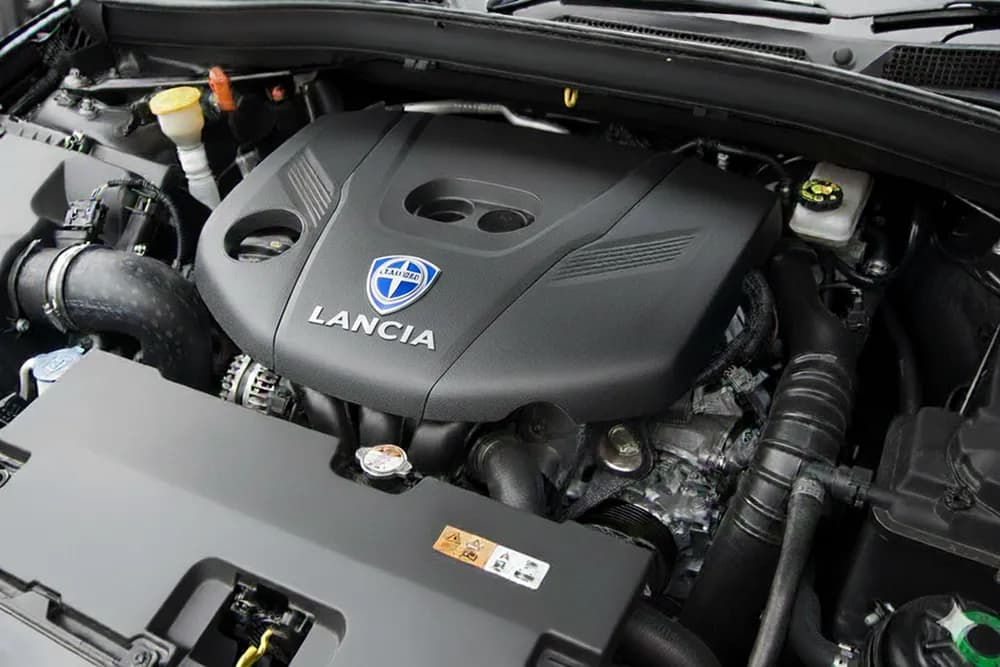
Production years 1953–1963 predate formal EU emissions standards. Compliance was governed by national regulations of the time.
The Lancia Appia 1.2L V4 is a 1,221 cc 60-degree V-four naturally aspirated petrol engine engineered for compact executive models (1953-1963). It combines a robust cast iron block with aluminium SOHC heads to deliver smooth, linear power delivery. Designed for the pre-catalytic converter era, it prioritizes mechanical durability and driving refinement over modern emissions targets.
| Parameter | Value | Source |
|---|---|---|
| Displacement | 1,221 cc (Series III) | |
| Fuel type | Petrol | |
| Configuration | V4, 60°, SOHC, 8-valve | |
| Aspiration | Naturally aspirated | |
| Bore × stroke | 76.0 mm × 67.2 mm (Series III) | |
| Power output | 53 kW (72 PS) @ 5,400 rpm (Series III) | |
| Torque | 98 Nm @ 3,000 rpm (Series III) | |
| Fuel system | Single-choke carburetor (Solex 32 PAIA) | |
| Emissions standard | Pre-Euro (National Regulations) | |
| Compression ratio | 7.8:1 (Series III) | |
| Cooling system | Water‑cooled | |
| Turbocharger | None | |
| Timing system | Chain-driven SOHC | |
| Oil type | SAE 30 (Mineral) | |
| Dry weight | 115 kg |
The SOHC V4 design provides a uniquely smooth and tractable powerband for its size, ideal for city driving, but requires periodic valve clearance adjustments every 10,000 km to maintain performance. Using a quality mineral oil (SAE 30) is recommended for its high-temperature stability in the older engine design. The Solex carburetor demands periodic cleaning and adjustment to ensure smooth idle. While robust, the timing chain should be inspected for wear during major services, as elongation can affect valve timing.
Oil Specs: Requires SAE 30 mineral oil specification (Lancia Appia Owner's Manual, 1959). Modern multi-grade oils may not be suitable without expert consultation.
Emissions: Formal Euro standards did not exist during production (1953-1963). Compliance was with contemporary national vehicle regulations.
Power Ratings: Measured under DIN 70020 standards. Output is for the Series III (1.2L) configuration (Lancia Sales Brochure, 1960).
Lancia Appia Workshop Manual (1960 Edition)
Lancia Technical Bulletins (TB-55-01, TB-60-12)
Lancia Appia Owner's Manual (1959 Edition)
DIN 70020 Engine Power Certification Standards
The Lancia Appia 1.2L V4 was used across Lancia's Appia platform with longitudinal, front-engine mounting. This engine received platform-specific adaptations-different carburetor jetting for Coupé/Convertible models-and from 1956 the Series II and 1959 Series III received displacement and power increases. All adaptations are documented in OEM technical bulletins.
Locate the engine code or serial number stamped on the flat boss on the front face of the cylinder block, near the water pump (Lancia Workshop Manual). The Appia V4 is visually identified by its narrow 60-degree V4 configuration, cast iron block, aluminium heads, and single Solex carburetor mounted on a cast alloy intake manifold. Differentiate from the earlier Lancia Aurelia V6 by its smaller size, four cylinders, and simpler ancillary layout. The distributor is mounted at the rear of the right cylinder head.
The Appia V4's primary long-term consideration is wear in the valve train and carburetion system, common for engines of its era. Lancia workshop data indicates that with proper maintenance, these engines are highly durable. Neglect of basic servicing, particularly oil changes and valve adjustments, is the main factor leading to premature wear.
Analysis derived from Lancia technical bulletins (1953-1963) and historical workshop data. Repair procedures should follow manufacturer guidelines.
Find answers to most commonly asked questions about LANCIA APPIA-1-2L-V4.
Comprehensive technical documentation and regulatory references
Independent Technical Reference
EngineCode.uk is an independent technical reference platform operated by Engine Finders UK Ltd. We are not affiliated with LANCIA or any other manufacturer. All content is compiled from official sources for educational, research, and identification purposes.
Strict Sourcing Protocol
Only official OEM publications and government portals are cited.
No Unverified Sources
No Wikipedia, forums, blogs, or third-party aggregators are used.
Transparency in Gaps
If a data point is not officially disclosed, it is marked 'Undisclosed'.
Regulatory Stability
EU regulations are referenced using CELEX identifiers for long-term stability.
LANCIA Official Site
Owner literature, service manuals, technical releases, and plant documentation.
EUR-Lex
EU emissions and type-approval regulations (e.g., CELEX:32007R0715, CELEX:32017R1151).
GOV.UK: Vehicle Approval & V5C
UK vehicle approval processes, import rules, and MoT guidance.
DVLA: Engine Changes & MoT
Official guidance on engine swaps and inspection implications.
Vehicle Certification Agency (VCA)
UK type-approval authority for automotive products.
Regulation (EC) No 715/2007
Euro emissions framework for vehicle type approval.
Commission Regulation (EU) 2017/1151
WLTP and RDE testing procedures for emissions certification.
GOV.UK: Vehicle Approval
UK compliance and certification requirements for imported and modified vehicles.
VCA Certification Portal
Type-approval guidance and documentation.
Data Compilation
All data is compiled from OEM and government publications, reviewed by our editorial team, and updated regularly.
Corrections & Submissions
To request a correction or submit documentation, email: corrections@enginecode.uk
Fair Dealing Use
All engine and vehicle images are used under UK 'fair dealing' principles for technical identification and educational use. Rights remain with their respective owners.
Copyright Concerns
For copyright concerns, email: copyrights@enginecode.uk
GDPR Compliance
EngineCode.uk complies with UK GDPR. We do not collect personal data unless explicitly provided.
Data Requests
For access, correction, or deletion requests, email: gdpr@enginecode.uk
Trademark Notice
All trademarks, logos, and engine codes are the property of their respective owners. Use on this site is strictly for reference and identification.
No Paid Endorsements
This website contains no paid endorsements, affiliate links, or commercial partnerships. We do not sell parts or services.
Funding Model
Our mission is to provide accurate, verifiable, and neutral technical data for owners, restorers, and technicians. This site is self-funded.
All specifications and compatibility data verified against officialLANCIA documentation and EU/UK regulatory texts. Where official data is unavailable, entries are marked “Undisclosed“ .
All external links open in new tabs. Please verify current availability of resources.