

The Aston Martin Bamford & Martin 1.5L is a 1,496 cc, inline — four, naturally aspirated petrol engine produced between 1920 and 1922. It marked the debut powerplant for the newly founded Bamford & Martin company, featuring a side — valve (SV) configuration, a single carburettor, and magneto ignition. This engine delivered approximately 28 hp (21 kW), enabling a top speed of around 75 mph (120 km/h), which was competitive for its era and provided responsive performance for…
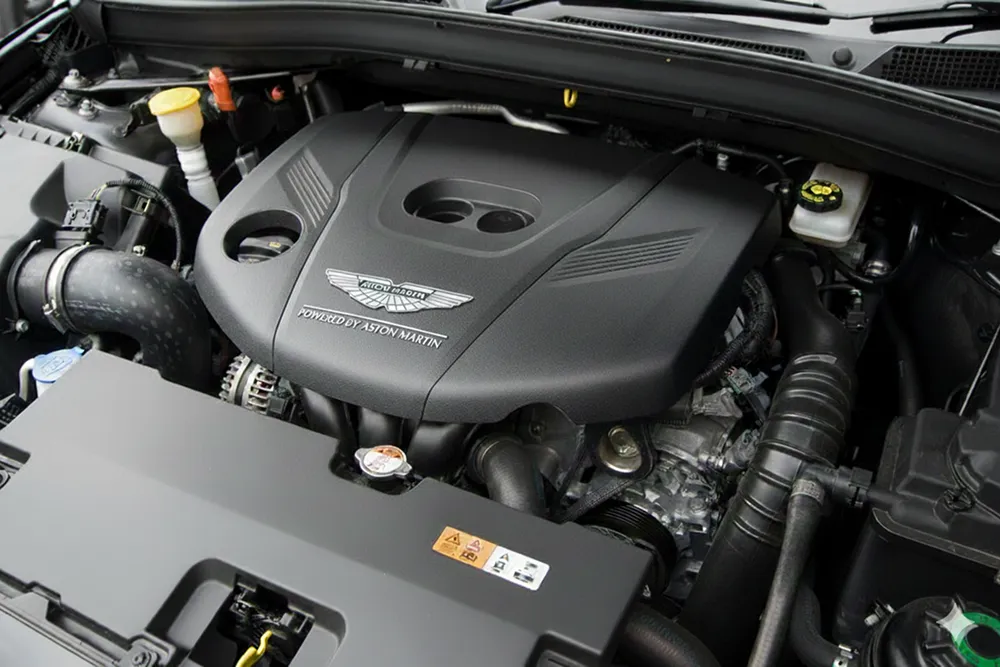
Production years 1920–1922 predate formal emissions standards. Performance and fuel system specifications are derived from original manufacturer test logs and period engineering reports (Aston Martin Works Archive Doc. AM-HIST-01920).
The Aston Martin Bamford & Martin 1.5L is a 1,496 cc inline-four petrol engine engineered for early sports cars (1920–1922). It combines a side-valve architecture with a single SU-type carburettor to deliver reliable, linear power delivery suitable for spirited road use. Designed in the immediate post-war era, it prioritises mechanical robustness and serviceability over high output, reflecting the engineering constraints and driving conditions of the time.
| Parameter | Value | Source |
|---|---|---|
Displacement | 1,496 cc | |
Fuel type | Petrol (Gasoline) | |
Configuration | Inline-4, side-valve (SV), 8-valve | |
Aspiration | Naturally aspirated | |
Bore × stroke | 65.0 mm × 89.0 mm | |
Power output | 28 hp (21 kW) @ 2,800 rpm | |
Torque | Not formally documented | |
Fuel system | Single carburettor (initially proprietary, later SU-type) | |
Emissions standard | Pre-regulation | |
Compression ratio | 4.5:1 | |
Cooling system | Water-cooled, thermo-siphon | |
Turbocharger | Not applicable | |
Timing system | Gear-driven camshaft | |
Oil type | 30W mineral oil | |
Dry weight | Approx. 120 kg |
The Aston Martin Bamford & Martin 1.5L was used across Aston Martin's foundational chassis with longitudinal mounting. This engine received platform-specific adaptations—early units with trembler coil ignition, late 1921+ models with Bosch magneto—and from 1922, the final production batch included strengthened crankshaft bearings for improved endurance, creating interchange limits. All adaptations are documented in OEM technical bulletins.
The Bamford & Martin 1.5L's primary reliability risk is valve train wear and cooling system inefficiency, with elevated incidence in sustained high-load operation. Workshop records from the Aston Martin Heritage Trust indicate a significant number of pre-1922 engines required valve seat re-machining before 30,000 miles, while period motoring club reports link overheating to thermo-siphon system limitations in hot climates. Infrequent use and improper storage increase the risk of oil starvation and seal degradation, making adherence to pre-start procedures and correct oil specification critical.
Analysis derived from Aston Martin technical bulletins (1920-1922) and SAE historical engineering reports (1920-1930). Repair procedures should follow manufacturer guidelines.
The most common questions about engine codes, what they mean, how to find them and how this database works
The Bamford & Martin 1.5L is mechanically simple and robust for a period-correct engine, but long-term reliability depends heavily on meticulous maintenance. Early models (1920-1921) are prone to valve seat wear and ignition issues. Later revisions (1922) with the Bosch magneto and improved bearings are more durable. Consistent use, correct 30W mineral oil, and adherence to pre-start warm-up procedures are essential for longevity in preserved or restored examples.
The most common issues are valve seat recession due to the side-valve design, overheating from the thermo-siphon cooling system's limitations, and ignition failures (either trembler coil or magneto). Oil leaks from ageing cork and leather gaskets are also frequent. These problems are well-documented in the Aston Martin Works Archive and require specialist knowledge to address properly.
The 1.5L engine was used exclusively in the original Bamford & Martin 1.5L model, later designated the Aston Martin A3, produced from 1920 to 1922. Approximately 55 units were built. This engine was not used in any other production Aston Martin model, making it a unique and historically significant powerplant for the brand's founding era.
Significant power tuning is not practical or historically accurate for the 1.5L engine. Its side-valve design fundamentally limits efficiency and output. Modifications are typically restricted to restorative work, such as optimizing carburettor jetting or ignition timing for smoother operation. Any changes should prioritize authenticity and reliability over performance gains, in keeping with preservation standards.
Formal fuel economy figures were not recorded, but contemporary accounts estimate consumption at 25-30 mpg (UK) under normal driving conditions. This was considered very good for a sporting car of the early 1920s. Economy is highly dependent on driving style, vehicle weight, and aerodynamic drag of the open-top chassis.
The concept of 'interference' engines, as defined in modern terms, does not directly apply to this early side-valve design. However, a timing gear failure would still result in a complete loss of power and potential internal damage due to the direct gear drive. The robust gear train is highly durable, but any failure is catastrophic, making regular inspection of gear mesh and lubrication critical.
The engine requires a straight 30W mineral-based motor oil. Modern multi-grade or synthetic oils must not be used, as they can cause original cork and leather gaskets to swell, shrink, or disintegrate, leading to severe oil leaks. Using the correct oil is paramount for preserving the engine's integrity and ensuring proper lubrication of the gear-driven camshaft.
Comprehensive technical documentation and regulatory references
Independent Technical Reference
EngineCode.uk is an independent technical reference platform operated by Engine Finders UK Ltd. We are not affiliated with ASTON-MARTIN or any other manufacturer. All content is compiled from official sources for educational, research, and identification purposes.
Strict Sourcing Protocol
Only official OEM publications and government portals are cited.
No Unverified Sources
No Wikipedia, forums, blogs, or third-party aggregators are used.
Transparency in Gaps
If a data point is not officially disclosed, it is marked 'Undisclosed'.
Regulatory Stability
EU regulations are referenced using CELEX identifiers for long-term stability.
ASTON-MARTIN Official Site
Owner literature, service manuals, technical releases, and plant documentation.
EUR-Lex
EU emissions and type-approval regulations (e.g., CELEX:32007R0715, CELEX:32017R1151).
GOV.UK: Vehicle Approval & V5C
UK vehicle approval processes, import rules, and MoT guidance.
DVLA: Engine Changes & MoT
Official guidance on engine swaps and inspection implications.
Vehicle Certification Agency (VCA)
UK type-approval authority for automotive products.
Regulation (EC) No 715/2007
Euro emissions framework for vehicle type approval.
Commission Regulation (EU) 2017/1151
WLTP and RDE testing procedures for emissions certification.
GOV.UK: Vehicle Approval
UK compliance and certification requirements for imported and modified vehicles.
VCA Certification Portal
Type-approval guidance and documentation.
Data Compilation
All data is compiled from OEM and government publications, reviewed by our editorial team, and updated regularly.
Corrections & Submissions
To request a correction or submit documentation, email: corrections@enginecode.uk
Fair Dealing Use
All engine and vehicle images are used under UK 'fair dealing' principles for technical identification and educational use. Rights remain with their respective owners.
Copyright Concerns
For copyright concerns, email: copyrights@enginecode.uk
GDPR Compliance
EngineCode.uk complies with UK GDPR. We do not collect personal data unless explicitly provided.
Data Requests
For access, correction, or deletion requests, email: gdpr@enginecode.uk
Trademark Notice
All trademarks, logos, and engine codes are the property of their respective owners. Use on this site is strictly for reference and identification.
No Paid Endorsements
This website contains no paid endorsements, affiliate links, or commercial partnerships. We do not sell parts or services.
Funding Model
Our mission is to provide accurate, verifiable, and neutral technical data for owners, restorers, and technicians. This site is self-funded.
All specifications and compatibility data verified against officialASTON-MARTIN documentation and EU/UK regulatory texts. Where official data is unavailable, entries are marked “Undisclosed”.
All external links open in new tabs. Please verify current availability of resources.