


Covers Bentley petrol and hybrid engines used across UK and European models - from classic L-series V8 to modern W12 and Volkswagen Group-sourced V8 turbocharged units. Each engine code includes specifications, compatible vehicles, and emissions data, sourced from official Bentley, Volkswagen Group and EU records.
Data sourced from Bentley Motors Technical Documentation, Volkswagen Group Technical Documentation, EU Regulation (EC) No 715/2007, and Bentley Workshop Manuals.
Find Bentley engine codes by family, model, or generation

| Engine Code | Fuel Type | Series | Specifications |
|---|

See where Bentley powertrains are shared across Audi, Porsche, and Volkswagen.
Explore Bentley's electrified powertrain technologies.
Engine specifications and technical data sourced from Bentley Motors Technical Documentation, Volkswagen Group Technical Documentation and EU Vehicle Type Approval Database. All specifications are verified against official Bentley service documentation.
The engine code is essential for ordering parts, diagnosing issues, and verifying compatibility. It is not the same as the VIN or chassis number. This guide shows exactly where to find it - by model and engine type - using official Bentley and DVLA sources

A unique identifier stamped on the engine block or cover used for parts and service.
The vehicle identification number that holds encoded vehicle and engine information.
The chassis or frame number used for registration and legal identification.
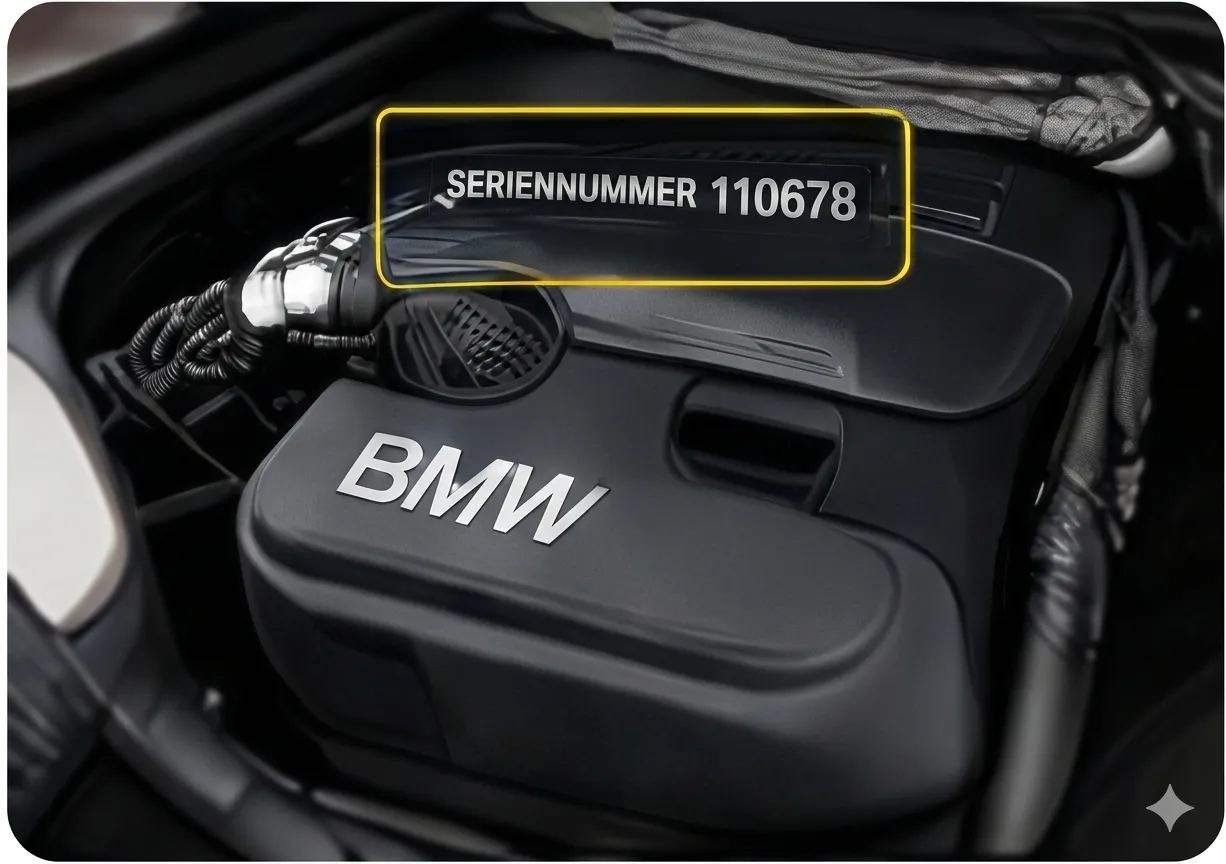
Locate the engine code on a white label attached to the front valve cover, visible when looking at the front of the engine. It reads 'W12' or similar. The code may also be stamped into the engine block near the oil filter housing.
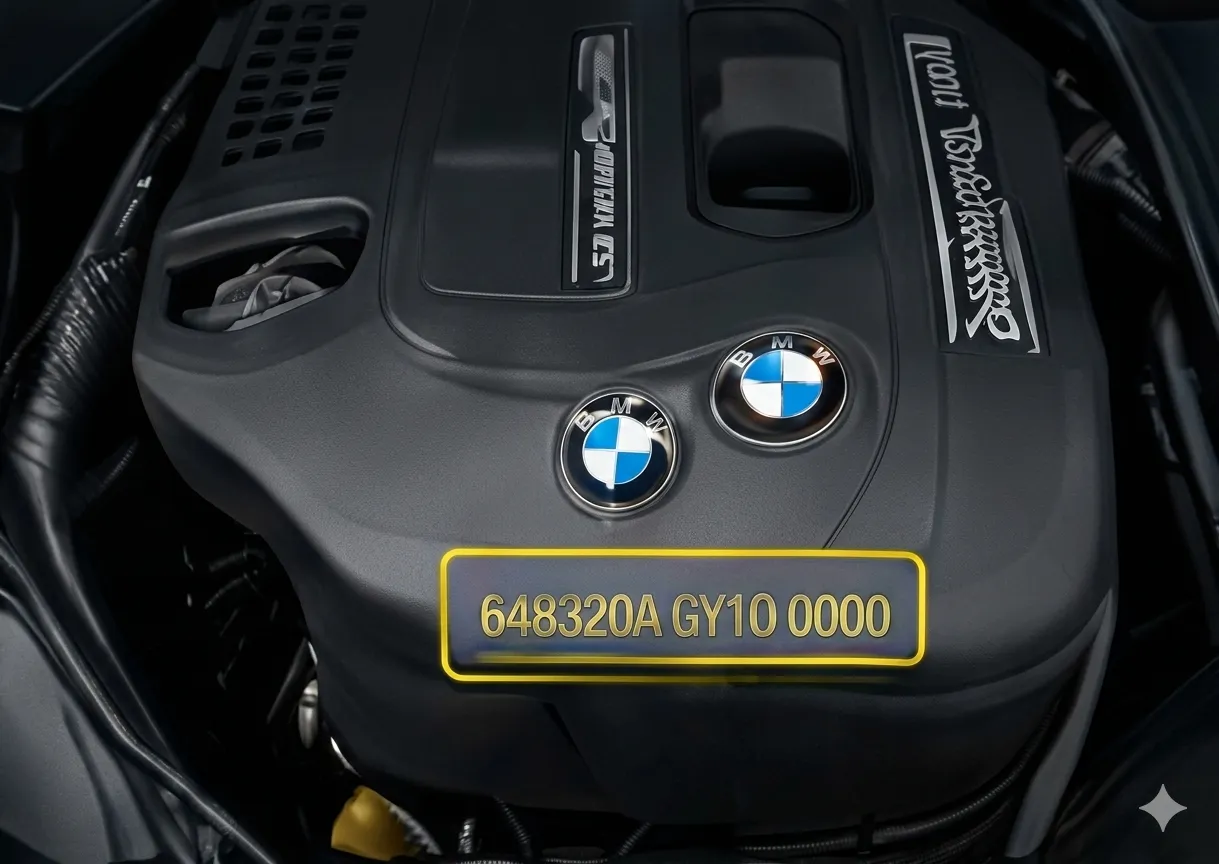
The engine code is located on a label attached to the timing cover near the turbocharger. It references the Volkswagen Group V8 architecture. Also check the data sticker in the boot or driver's door jamb.
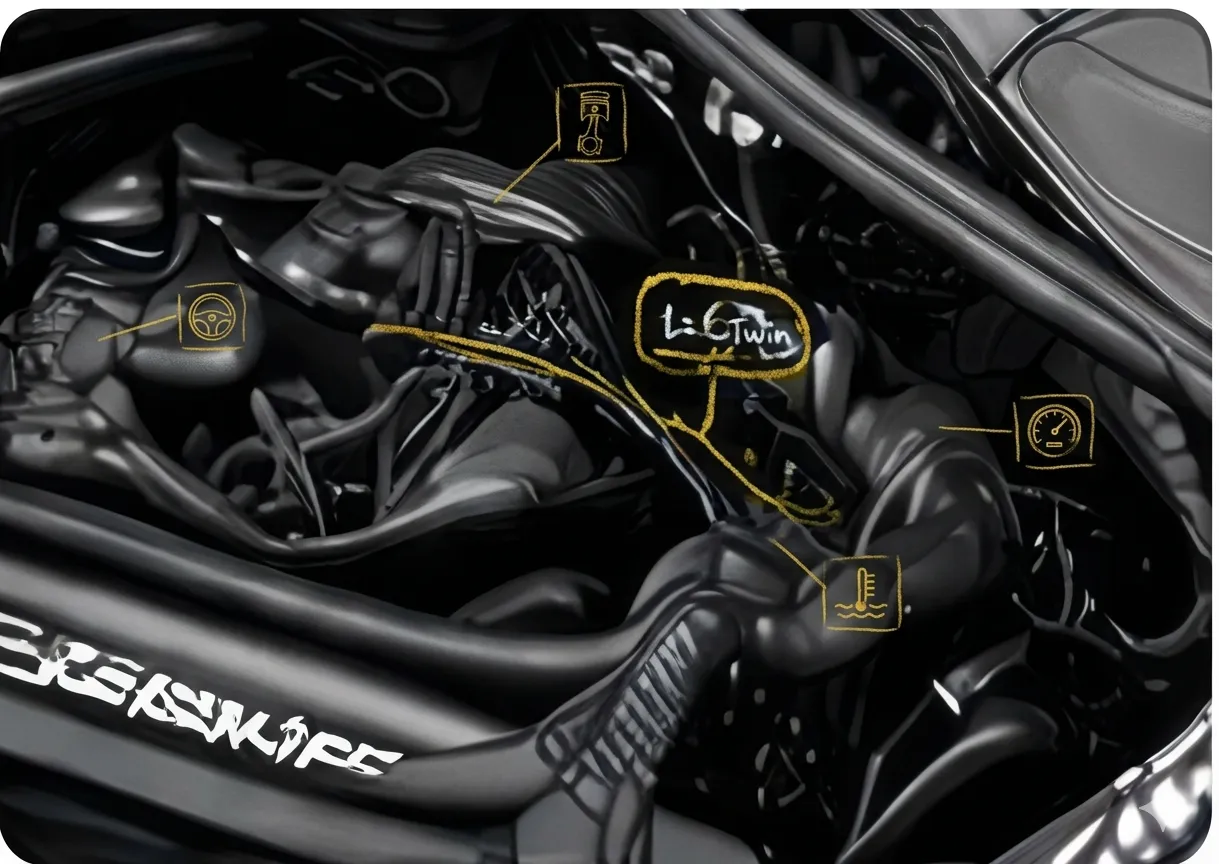
Open the bonnet and look at the intake manifold area. The engine code is on a white label near the turbocharger and electric motor integration point. Confirm 'Hybrid' designation for plug-in hybrid variants.
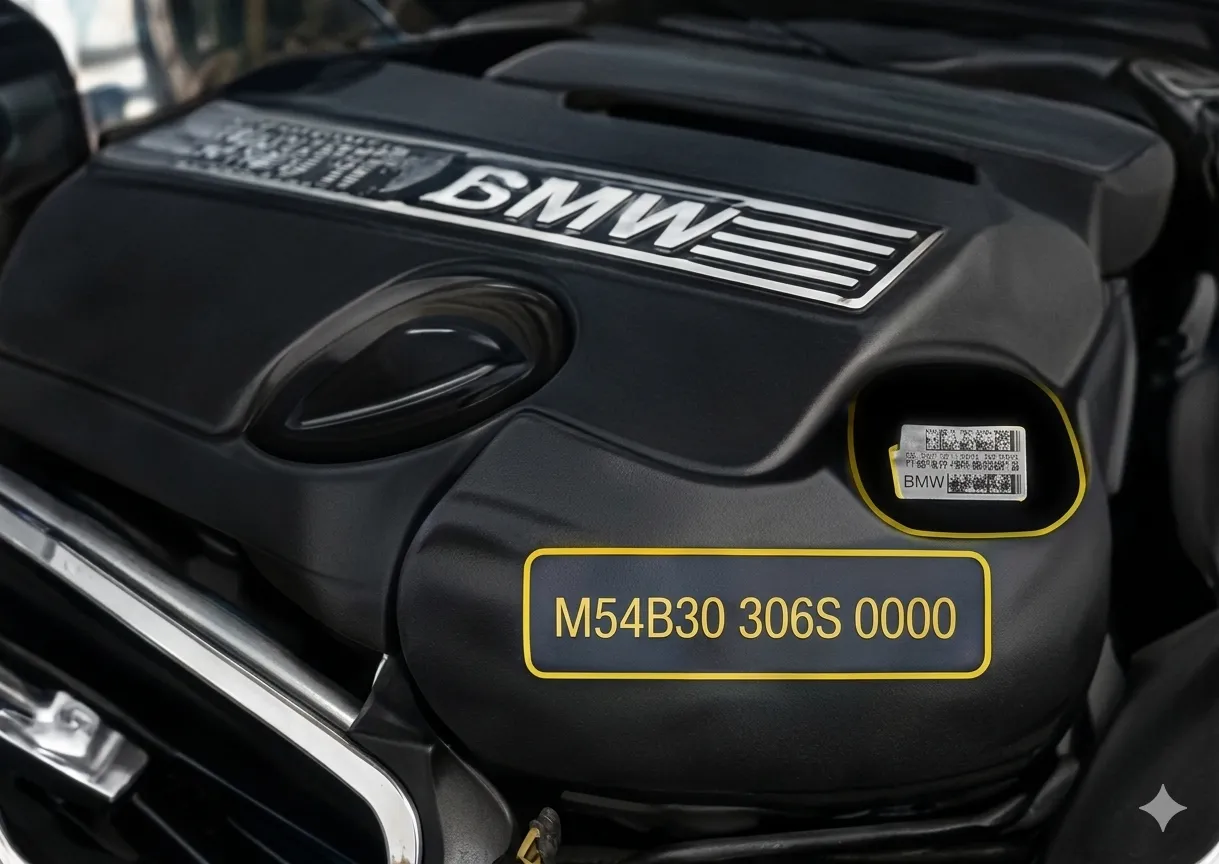
The engine code is cast into the front of the cylinder head, near the thermostat housing. Look for 'L4328T' or similar. The code may also appear on a label attached to the camshaft cover.
Engine code locations per Bentley Motors Workshop Manual. V5C field definitions from DVLA Guide to Vehicle Registration. VIN structure compliant with EU Regulation (EC) No 715/2007, Article 7. Note: Post-2003 Bentleys use Volkswagen Group VIN coding.
A technical breakdown of Bentley's core engine systems including W12 architecture, VW Group V8 integration, timing systems and Hybrid electrification with documented reliability impacts. All data sourced from Bentley Motors Technical Documentation, VW Group ELSA/WIS and EU Regulation (EC) No 715/2007
Bentley's W12 engine combines two narrow-angle VR6 banks at 72°, creating a compact 6.0L twelve-cylinder powerplant. Introduced in 2003, it delivers exceptional smoothness and torque for luxury grand touring applications.
Two VR6 cylinder banks share a common crankshaft and cylinder head design. Twin turbochargers provide forced induction. Direct injection and variable valve timing optimise efficiency. Compact packaging enables transverse mounting in Bentley platforms.

6.0L W12 (2003)
552 HP, twin-turbo, port injection
6.0L W12 (2011)
567 HP, direct injection, revised turbos
6.0L W12 (2018)
626 HP, cylinder deactivation, Euro 6d
Turbocharger wear
Early units (2003–2010): bearing wear, oil feed line leaks
Cooling system leaks
Water pump, thermostat housing seals common wear items
HPFP failure
High-pressure fuel pump service item at 100,000+ miles
Bentley's W12 engine combines two narrow-angle VR6 banks at 72°, creating a compact 6.0L twelve-cylinder powerplant. Introduced in 2003, it delivers exceptional smoothness and torque for luxury grand touring applications.
Two VR6 cylinder banks share a common crankshaft and cylinder head design. Twin turbochargers provide forced induction. Direct injection and variable valve timing optimise efficiency. Compact packaging enables transverse mounting in Bentley platforms.
6.0L W12 (2003)
552 HP, twin-turbo, port injection
6.0L W12 (2011)
567 HP, direct injection, revised turbos
6.0L W12 (2018)
626 HP, cylinder deactivation, Euro 6d
Turbocharger wear
Early units (2003–2010): bearing wear, oil feed line leaks
Cooling system leaks
Water pump, thermostat housing seals common wear items
HPFP failure
High-pressure fuel pump service item at 100,000+ miles
All technical descriptions and failure data sourced from Bentley Motors Product Technical Reports, VW Group ELSA/WIS Service Information, and EU Regulation (EC) No 715/2007 on vehicle type-approval.
Track BMW engineering across decades
Standardisation of the 6.75L L-series V8 that became synonymous with Bentley luxury.

6.75L V8 OHV petrol. Iconic L-series displacement. Pushrod design. Used in T2, Mulsanne, Turbo R. Legendary durability, exceptional torque. Produced for 43 years.
Engine production years verified via Bentley Motors Product Reports and EU type-approval records
Authoritative data on Bentley's global engine production, plant operations, and strategic partnerships within Volkswagen Group. All figures sourced from Bentley Motors Annual Reports, Volkswagen Group Sustainability Reports, and EU industrial compliance records.
Bentley manufactures and assembles engines primarily at its Crewe facility, with Volkswagen Group-sourced components integrated from German plants.


Bentley produces approximately 15,000 engines per year. Note the steady increase in Hybrid production as part of Bentley's Beyond100 electrification strategy.
Note: W12 production ceased in 2024. Hybrid and V8 production rising in line with Bentley's electrification strategy and EU emissions policy.
Strategic platform and powertrain sharing across Volkswagen Group brands. Bentley benefits from VW Group's V8 architecture, hybrid systems, and electrification technology while maintaining unique calibration and assembly at Crewe.
V8 4.0L TFSI based on EA888 evo, used in Bentley, Audi, Porsche with brand-specific tuning
V8 blocks built in Germany, final assembly and calibration at Bentley Crewe
Bentley Motors Platform Strategy Documentation
Shift in production reflects Bentley's Beyond100 electrification strategy and changing consumer demand.
This aligns with Commission Regulation (EU) 2017/1151 (WLTP/RDE) and Bentley's Beyond100 electrification roadmap.
Engine production years verified via Bentley Motors Product Reports and EU type-approval records
The most common questions about engine codes, what they mean, how to find them and how this database works
A Bentley engine code identifies the engine family, fuel type, displacement, and variant. Pre-2003: L-series codes (e.g., L4328T for 6.75L V8). Post-2003: Volkswagen Group codes (e.g., W12 for 6.0L twin-turbo, EA888-derived V8). Suffix letters denote revision and market variant. Source: Bentley Motors Workshop Manual.
Bentley has ceased production of the W12 engine as of 2024. The final W12-powered models were the Continental GT Speed and Flying Spur Speed. Bentley now focuses on V8 and Hybrid powertrains, with full electrification planned by 2030. Source: Bentley Motors Press Release, December 2023.
The Volkswagen Group-sourced 4.0L twin-turbo V8 (post-2018) is widely regarded as Bentley's most reliable modern engine, benefiting from VW Group's extensive development. The classic L-series 6.75L V8 (pre-2003) is also durable if maintained. Early W12 units (2003–2010) can experience turbo and cooling system issues.
All modern Bentley engines use timing chains, including the W12 and VW Group V8 families. The classic L-series 6.75L V8 (pre-2003) also uses a chain. Chains are designed for extended service life but should be inspected at 150,000 km per Bentley service guidelines.
Technically possible within the same platform (e.g., Continental GT), but highly complex. Requires ECU remapping, wiring harness changes, emissions system modifications, and DVLA notification. Not recommended without expert tuning. Ensure compliance with UK MoT emissions rules.
On the W12 engine, the code is stamped on a label attached to the front valve cover or on the engine block near the oil filter housing. Also check the V5C logbook under 'Engine Number' and the data sticker in the boot or driver's door jamb.
On the UK V5C registration document, look for the 'Engine Number' field (not VIN). This matches the engine code. If the engine was replaced, this may not reflect the current unit. Always verify physically on the engine block.
The W12 is mechanically robust but complex. Common issues include turbocharger wear (100,000+ miles), cooling system leaks, and high-pressure fuel pump failures. With proper maintenance and specialist servicing, W12 engines can exceed 150,000 miles. Source: Bentley Motors Service Bulletin.
Bentley's 4.0L twin-turbo V8 is based on the Volkswagen Group EA888 evo architecture but features Bentley-specific calibration, components, and assembly at Crewe. It shares core design with Audi/Porsche V8s but has unique Bentley tuning for refinement and torque delivery.
Yes. The engine code is required for ordering correct parts (ECU, turbo, injectors). Using VIN alone can lead to errors due to platform sharing across Volkswagen Group brands. Always verify with the physical engine code on the block.
Yes. High-performance engines (W12, V8 S) or engines with known issues (early W12) can increase premiums. Insurers use engine type to assess risk. Always declare correct engine code to avoid policy invalidation.
The VW Group-sourced 4.0L V8 (post-2018) is designed for 200,000+ miles with proper maintenance. Known for aluminium block, direct injection, and twin-scroll turbos. Carbon buildup on intake valves is a common service item. Use Bentley-approved specification oil.
Yes. All modern Bentley engines (W12, VW Group V8) are interference engines. If the timing chain fails, internal damage is likely. Immediate towing required. Adhere strictly to service intervals per Bentley Motors guidelines.
Early W12 engines (2003–2010): turbocharger bearing wear, oil feed line leaks. VW Group V8 (post-2018): generally reliable but turbo actuator faults reported. Symptoms: loss of boost, error codes P0299. Source: Bentley Motors Technical Service Bulletin.
Yes, but must be declared to DVLA. Changing engine code may affect MoT emissions testing, insurance classification, and road tax. Source: DVLA Vehicle Registration Guidelines.
Yes. The Bentayga Hybrid and Flying Spur Hybrid use the VW Group-sourced 3.0L V6 petrol engine paired with an electric motor and high-voltage battery. The engine is calibrated for hybrid efficiency with Atkinson-cycle operation in certain modes.
The L-series 6.75L V8 (1959–2003) is generally reliable with proper maintenance. Known for simple pushrod design and robust construction. Common issues include oil leaks, carburettor/fuel injection tuning, and cooling system maintenance. With care, these engines can exceed 300,000 miles.
Positions 4–6 of the VIN indicate engine type for Bentley vehicles. Post-2003 Bentleys use Volkswagen Group VIN coding. Use a Bentley-specific VIN decoder via official dealer portal or VW Group ELSA for accuracy. Source: Bentley Motors VIN Structure Guide.
Some are. The L-series 6.75L V8 is simpler and easier to repair than modern turbocharged units. However, VW Group-sourced V8 and Hybrid engines offer better efficiency, emissions compliance under Euro 6, and refined performance. Choice depends on use case: restoration vs daily driving.
Use Bentley Motors Workshop Manual or Volkswagen Group ELSA/WIS. Public data also in EU type-approval documents via the Vehicle Certification Agency (VCA) database. Source: CELEX:32007R0715.
The EngineCode.uk is an independent technical resource dedicated to providing accurate, non-commercial engine data for BMW and related powertrains. This section outlines our sources, disclaimers, and compliance policies in accordance with Google's E-E-A-T (Experience, Expertise, Authoritativeness, Trustworthiness) guidelines.
EngineCode.uk is operated by Engine Finders UK Ltd as a standalone reference platform. We are not affiliated with Bentley Motors Limited, Volkswagen Group, or any other manufacturer or trademark holder. All content is created independently for educational and diagnostic purposes only. The Bentley name, logo, and engine codes are trademarks of Bentley Motors Limited, Crewe, United Kingdom.
All engine and vehicle images used on this site are for technical identification and educational purposes under fair use principles. If you believe any image infringes your copyright, please contact us at copyrights@enginecode.uk. We will review the claim promptly and remove or license the content as required.
EngineCode.uk complies with the UK General Data Protection Regulation (UK GDPR) and the EU GDPR. We do not collect personal data through this platform unless explicitly provided (e.g., contact forms).
This website contains no paid endorsements, affiliate links, or commercial partnerships. We do not sell parts, services, or recommendations. Our mission is to provide accurate, verifiable, and neutral technical data to support vehicle owners, restorers, and technicians across the UK and Europe.
Information accurate as of 2025