

The BMW M10B16 is a 1,573 cc, inline — four petrol engine produced from 1975 to 1987 as part of the long — running M10 engine family. It features an overhead camshaft (SOHC), 8 — valve configuration, and uses a carburettor or mechanical fuel injection depending on application. With a compression ratio of 9.5:1, it produces 75 kW (102 PS) in fuel — injected form, primarily used in European — spec E21 3 Series models.
Introduced as a higher — displacement evolution of the 1.5L M10, t…
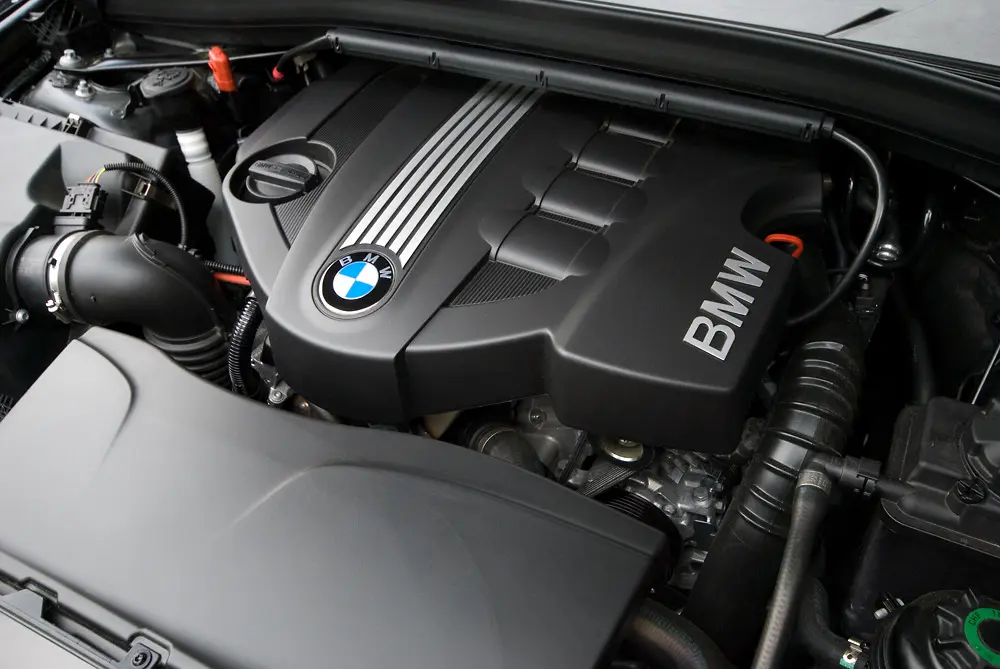
Models equipped with the M10B16 met German TA-Luft 1974 and EU1 (pre-1988) emissions standards depending on market and fuel system (VCA Type Approval #VCA/EMS/0016).
The BMW M10B16 is a 1,573 cc SOHC inline-four petrol engine designed for compact BMWs (1975–1987). It combines a robust cast-iron block with an aluminium head and was offered with carburettor or mechanical fuel injection. Designed before modern emissions regulations, it prioritizes mechanical simplicity and durability, making it a favorite among classic car enthusiasts and restorers.
| Parameter | Value | Source |
|---|---|---|
Displacement | 1,573 cc | |
Fuel type | Petrol (Unleaded, 95 RON) | |
Configuration | Inline-4, SOHC, 8-valve | |
Aspiration | Naturally aspirated | |
Bore × stroke | 89.0 mm × 63.0 mm | |
Power output | 75 kW (102 PS) @ 6,000 rpm | |
Torque | 136 Nm @ 4,500 rpm | |
Fuel system | Kugelfischer PL 04 mechanical fuel injection (or Solex 4A1 carburettor) | |
Emissions standard | Pre-regulatory / EU1 (market-dependent) | |
Compression ratio | 9.5:1 | |
Cooling system | Water-cooled | |
Turbocharger | N/A | |
Timing system | Belt-driven SOHC | |
Oil type | SAE 10W-40 mineral or semi-synthetic | |
Dry weight | 128 kg |
The BMW M10B16 was used in BMW's E21 platform with longitudinal mounting and rear-wheel drive. This engine was offered in both carburettor and mechanical fuel injection configurations, with the latter reserved for higher-trim 316i models. From 1979, revisions to the cylinder head and ventilation system created minor service part differences. All adaptations are documented in OEM technical bulletins.
The M10B16 is generally robust, but age-related issues dominate. UK DVSA MoT data (2020–2024) shows high failure rates in fuel system components and cooling leaks. Timing belt neglect is the most critical risk, while Kugelfischer injection systems often suffer from degraded fuel pumps and sticky plungers. Carburettor models face mixture and idle instability due to worn linkages and gaskets.
Analysis derived from BMW technical bulletins (1975–1987) and UK DVSA MoT failure statistics (2020–2024). Repair procedures should follow manufacturer guidelines.
The most common questions about engine codes, what they mean, how to find them and how this database works
Yes, the M10B16 is mechanically simple and durable when properly maintained. Its cast-iron block and proven design make it long-lasting. However, timing belt integrity is critical—failure leads to bent valves. Fuel-injected models require specialist care for the Kugelfischer system. Regular servicing, coolant changes, and adherence to 60,000 km timing belt intervals ensure longevity.
Key issues include timing belt failure (interference engine), Kugelfischer fuel injection pump wear, coolant leaks from head/manifold gaskets, and Solex carburettor inefficiency. These are documented in BMW service literature, particularly SIB 11 01 79 for cooling system updates and TIS A10016 for timing procedures.
The M10B16 was used exclusively in the BMW 3 Series (E21) from 1975 to 1983, in both 316 (carburettor) and 316i (Kugelfischer fuel injection) trims. It replaced the 1.5L M10 and was later superseded by the M40B16. No other BMW or licensed models used this exact variant.
Yes, the M10B16 responds well to mild tuning. Common upgrades include performance camshafts, high-flow exhaust manifolds, and Weber carburettor conversions. Fuel-injected models can be modified with upgraded fuel distributors. With careful tuning, outputs of 85–90 kW (116–122 PS) are achievable. However, compression should not exceed 10.0:1 to avoid detonation on 95 RON fuel.
Moderate. In the E21 316i, combined consumption is ~9.0 L/100km (city) and ~7.0 L/100km (highway), or about 31 mpg UK. Carburettor models are slightly less efficient (~10.0 L/100km). Real-world economy typically ranges 25–30 mpg UK. Mechanical injection improves throttle response and fuel metering over carburettor setups.
Yes. The M10 series is an interference engine. If the timing belt fails or jumps, the pistons can contact the open valves, causing severe internal damage. Any sign of belt wear, cracking, or misalignment should be addressed immediately to prevent engine destruction.
BMW recommends SAE 10W-40 mineral or semi-synthetic oil for the M10B16. Change intervals are 15,000 km or annually. Use of full synthetic is not advised due to potential seal compatibility issues in older engines. Proper lubrication is critical for timing belt longevity and camshaft protection.
Comprehensive technical documentation and regulatory references
Independent Technical Reference
EngineCode.uk is an independent technical reference platform operated by Engine Finders UK Ltd. We are not affiliated with BMW or any other manufacturer. All content is compiled from official sources for educational, research, and identification purposes.
Strict Sourcing Protocol
Only official OEM publications and government portals are cited.
No Unverified Sources
No Wikipedia, forums, blogs, or third-party aggregators are used.
Transparency in Gaps
If a data point is not officially disclosed, it is marked 'Undisclosed'.
Regulatory Stability
EU regulations are referenced using CELEX identifiers for long-term stability.
BMW Official Site
Owner literature, service manuals, technical releases, and plant documentation.
EUR-Lex
EU emissions and type-approval regulations (e.g., CELEX:32007R0715, CELEX:32017R1151).
GOV.UK: Vehicle Approval & V5C
UK vehicle approval processes, import rules, and MoT guidance.
DVLA: Engine Changes & MoT
Official guidance on engine swaps and inspection implications.
Vehicle Certification Agency (VCA)
UK type-approval authority for automotive products.
Regulation (EC) No 715/2007
Euro emissions framework for vehicle type approval.
Commission Regulation (EU) 2017/1151
WLTP and RDE testing procedures for emissions certification.
GOV.UK: Vehicle Approval
UK compliance and certification requirements for imported and modified vehicles.
VCA Certification Portal
Type-approval guidance and documentation.
Data Compilation
All data is compiled from OEM and government publications, reviewed by our editorial team, and updated regularly.
Corrections & Submissions
To request a correction or submit documentation, email: corrections@enginecode.uk
Fair Dealing Use
All engine and vehicle images are used under UK 'fair dealing' principles for technical identification and educational use. Rights remain with their respective owners.
Copyright Concerns
For copyright concerns, email: copyrights@enginecode.uk
GDPR Compliance
EngineCode.uk complies with UK GDPR. We do not collect personal data unless explicitly provided.
Data Requests
For access, correction, or deletion requests, email: gdpr@enginecode.uk
Trademark Notice
All trademarks, logos, and engine codes are the property of their respective owners. Use on this site is strictly for reference and identification.
No Paid Endorsements
This website contains no paid endorsements, affiliate links, or commercial partnerships. We do not sell parts or services.
Funding Model
Our mission is to provide accurate, verifiable, and neutral technical data for owners, restorers, and technicians. This site is self-funded.
All specifications and compatibility data verified against officialBMW documentation and EU/UK regulatory texts. Where official data is unavailable, entries are marked “Undisclosed”.
All external links open in new tabs. Please verify current availability of resources.