

The Honda IMA (Integrated Motor Assist) is a parallel hybrid system, not a standalone engine, introduced in 1999 and produced until 2015. It combines a small electric motor/generator, integrated between the petrol engine and transmission, with a 144V nickel — metal hydride (NiMH) battery pack. This system provided modest power assist and regenerative braking, enhancing fuel economy without requiring external charging.
Fitted to models such as the Insight (ZE1, ZE2)…
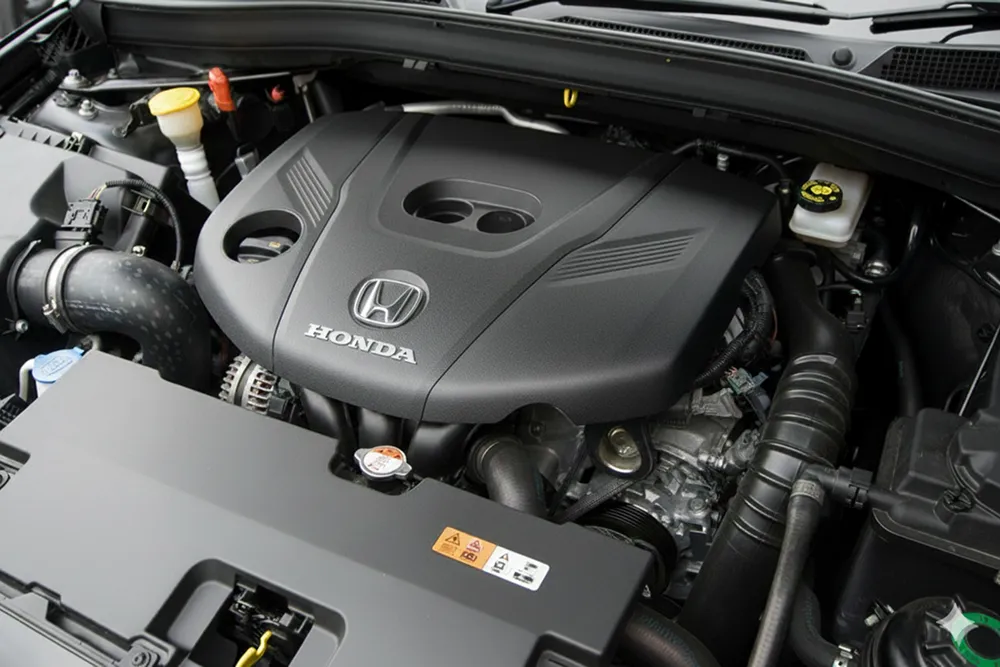
Production from 1999–2015 meets Euro 4 and Euro 5 emissions standards depending on model year and market (EU Regulation (EC) No 715/2007, as amended).
The Honda IMA system is a mild parallel hybrid architecture engineered for compact cars (1999-2015). It combines a petrol engine with an electric motor to deliver enhanced fuel economy through engine stop-start and torque assist. Designed to meet Euro 4 and Euro 5 standards, it prioritizes low emissions and efficiency for daily commuting.
| Parameter | Value | Source |
|---|---|---|
System Type | Parallel Hybrid (Mild Hybrid) | |
Electric Motor | DC Brushless Motor (10-20 kW assist) | |
Battery Type | Nickel-Metal Hydride (NiMH) | |
Battery Voltage | 144V | |
Petrol Engine Base | Varies (e.g., L13A, L15A, R18A) | |
System Power Output | Varies by model (e.g., 85-120 kW combined) | |
Regenerative Braking | Yes | |
Emissions standard | Euro 4 / Euro 5 (model dependent) | |
Cooling system | Air-cooled battery pack | |
Transmission | CVT (Continuously Variable Transmission) | |
Oil type (Engine) | Honda 0W-20 or 5W-30 (spec. HTO-06) | |
System Weight (approx.) | 65-85 kg (including battery) |
The Honda IMA system was used across Honda's Global Hybrid platforms with transverse mounting. This system received platform-specific adaptations-different motor sizes for the Insight vs. Civic Hybrid-and from 2011 the CR-Z introduced a sportier calibration with a 6-speed manual option, creating software and component differences. All adaptations are documented in OEM technical bulletins.
The IMA system's primary reliability concern is battery pack degradation, with Honda's internal data indicating a higher failure rate in vehicles operated in hot climates or with over 150,000 km. UK DVSA MOT statistics show battery-related warning lights as a common advisory item for these models. Ensuring the 12V battery is in good health and the IMA battery cooling system is unobstructed is critical for long-term system function.
Analysis derived from Honda technical bulletins (1999-2015) and UK DVSA failure statistics (2010-2023). Repair procedures should follow manufacturer guidelines.
The most common questions about engine codes, what they mean, how to find them and how this database works
The IMA system itself is mechanically robust, but its Achilles' heel is the 144V NiMH battery pack, which typically degrades after 8-10 years or 150,000 km, especially in hot climates. Replacement is costly. The petrol engine and CVT are generally reliable if maintained. Overall, long-term ownership requires budgeting for a potential battery replacement.
The most common problem by far is IMA battery pack failure, indicated by the IMA warning light. Other frequent issues include failure of the DC-DC converter (which charges the 12V battery), and Check Engine Lights related to the lean-burn engine's sensitivity. These are well-documented in Honda service information.
The IMA system was used in the first- and second-generation Honda Insight (1999-2006, 2009-2014), the first- and second-generation Civic Hybrid (2001-2005, 2005-2012), and the CR-Z (2010-2015). It was Honda's primary hybrid system before being replaced by the more advanced e:HEV system.
Tuning the IMA system for more power is extremely limited and not practical. The electric motor provides only modest assist. Modifying the system can destabilize the complex energy management software and potentially damage components. Honda did not release any official performance upgrades for IMA vehicles.
Fuel economy is very good for its era. Official figures for the second-gen Civic Hybrid are around 4.5 L/100km (63 mpg UK). Real-world results typically range from 5-6 L/100km (47-56 mpg UK). Economy suffers significantly if the IMA battery is degraded or has failed, as the engine must work harder.
This question applies to the petrol engine, not the IMA system itself. The petrol engines used with IMA (like the L13A, L15A, R18A) are interference designs. If their timing belt or chain fails, severe engine damage will occur. Always adhere to the manufacturer's timing component replacement schedule.
The IMA system doesn't require oil, but the petrol engine it assists does. The required oil (e.g., 0W-20 or 5W-30 HTO-06) depends on the specific engine model (L13A, R18A, etc.). Always consult your owner's manual. Using the correct oil is crucial for the engine's variable valve timing system and overall health.
Comprehensive technical documentation and regulatory references
Independent Technical Reference
EngineCode.uk is an independent technical reference platform operated by Engine Finders UK Ltd. We are not affiliated with HONDA or any other manufacturer. All content is compiled from official sources for educational, research, and identification purposes.
Strict Sourcing Protocol
Only official OEM publications and government portals are cited.
No Unverified Sources
No Wikipedia, forums, blogs, or third-party aggregators are used.
Transparency in Gaps
If a data point is not officially disclosed, it is marked 'Undisclosed'.
Regulatory Stability
EU regulations are referenced using CELEX identifiers for long-term stability.
HONDA Official Site
Owner literature, service manuals, technical releases, and plant documentation.
EUR-Lex
EU emissions and type-approval regulations (e.g., CELEX:32007R0715, CELEX:32017R1151).
GOV.UK: Vehicle Approval & V5C
UK vehicle approval processes, import rules, and MoT guidance.
DVLA: Engine Changes & MoT
Official guidance on engine swaps and inspection implications.
Vehicle Certification Agency (VCA)
UK type-approval authority for automotive products.
Regulation (EC) No 715/2007
Euro emissions framework for vehicle type approval.
Commission Regulation (EU) 2017/1151
WLTP and RDE testing procedures for emissions certification.
GOV.UK: Vehicle Approval
UK compliance and certification requirements for imported and modified vehicles.
VCA Certification Portal
Type-approval guidance and documentation.
Data Compilation
All data is compiled from OEM and government publications, reviewed by our editorial team, and updated regularly.
Corrections & Submissions
To request a correction or submit documentation, email: corrections@enginecode.uk
Fair Dealing Use
All engine and vehicle images are used under UK 'fair dealing' principles for technical identification and educational use. Rights remain with their respective owners.
Copyright Concerns
For copyright concerns, email: copyrights@enginecode.uk
GDPR Compliance
EngineCode.uk complies with UK GDPR. We do not collect personal data unless explicitly provided.
Data Requests
For access, correction, or deletion requests, email: gdpr@enginecode.uk
Trademark Notice
All trademarks, logos, and engine codes are the property of their respective owners. Use on this site is strictly for reference and identification.
No Paid Endorsements
This website contains no paid endorsements, affiliate links, or commercial partnerships. We do not sell parts or services.
Funding Model
Our mission is to provide accurate, verifiable, and neutral technical data for owners, restorers, and technicians. This site is self-funded.
All specifications and compatibility data verified against officialHONDA documentation and EU/UK regulatory texts. Where official data is unavailable, entries are marked “Undisclosed”.
All external links open in new tabs. Please verify current availability of resources.