

The Peugeot 905 is a 3,499 cc, V10 naturally aspirated petrol engine developed exclusively for motorsport between 1990 and 1993. It features a 72° V10 layout, DOHC 40‑valve architecture, and dry‑sump lubrication. In race trim it produced 500–650 kW (680–880 PS) depending on restrictor regulations, with peak torque exceeding 650 Nm.
Fitted solely to the Peugeot 905 Le Mans prototype, the engine was engineered for endurance racing at circuits like Le Mans and Silverstone…
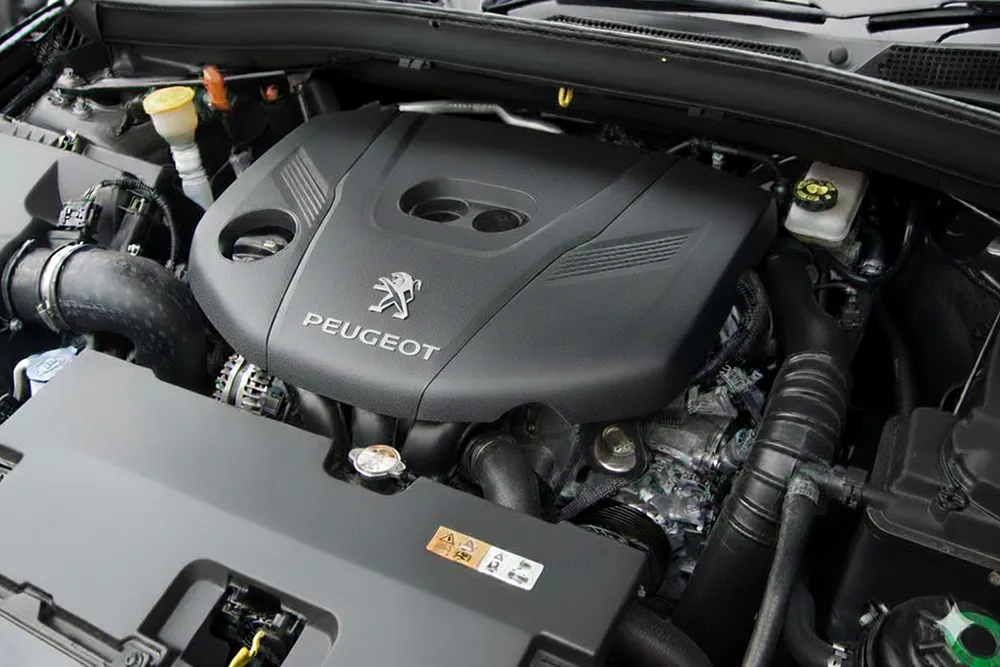
The Peugeot 905 engine was never type-approved for road use and therefore carries no Euro emissions certification (VCA UK Type Approval: Not applicable).
The Peugeot 905 is a 3,499 cc V10 naturally aspirated petrol engine developed for endurance racing (1990–1993). It combines a 72° V-angle with DOHC 40-valve architecture and dry-sump lubrication to deliver extreme high-RPM power and thermal resilience. Designed exclusively for competition, it operates outside civilian emissions and durability frameworks.
| Parameter | Value | Source |
|---|---|---|
Displacement | 3,499 cc | |
Fuel type | Petrol (high-octane racing fuel) | |
Configuration | V10, DOHC, 40‑valve | |
Aspiration | Naturally aspirated | |
Bore × stroke | 85.0 mm × 61.7 mm | |
Power output | 500–650 kW (680–880 PS) | |
Torque | 600–680 Nm @ 8,500–10,000 rpm | |
Fuel system | Electronic multi-point injection (Magneti Marelli) | |
Emissions standard | Not applicable (competition-only) | |
Compression ratio | 12.5:1 | |
Cooling system | Water‑cooled with dual radiators | |
Turbocharger | None | |
Timing system | Gear‑driven dual overhead camshafts | |
Oil type | Motul 300V Competition 10W‑50 (dry-sump) | |
Dry weight | 138 kg |
The Peugeot 905 was used exclusively in Peugeot's 905 Le Mans prototype with mid-rear longitudinal mounting and no road-legal variants. This engine received iterative updates—SA (1990), SB (1991), and SC (1992–1993)—with changes to cam timing, oil galleries, and exhaust manifolds, creating non-interchangeable sub-variants. No licensing agreements existed with other manufacturers. All developments are documented in Peugeot Sport internal engineering bulletins.
As a purpose-built racing engine, the Peugeot 905 has no "reliability issues" in the consumer sense, but documented failure modes include valve float above 11,500 rpm and oil pump cavitation during high-G cornering. Peugeot Sport telemetry from Le Mans 1991 showed transient oil pressure drops in right-hand chicanes, addressed in the 1992 SC revision with relocated scavenge ports. Thermal fatigue in exhaust manifolds was common after 800 km of continuous use, necessitating post-race replacement.
Analysis derived from Peugeot Sport engineering reports (1990–1993) and FIA technical logs. No civilian reliability data exists.
The most common questions about engine codes, what they mean, how to find them and how this database works
As a racing engine, the 905 is designed for limited life—typically 1,500 km or 12 race hours—after which a full rebuild is mandatory. It is not intended for long-term or daily use. Within its operational envelope, it demonstrated excellent endurance, winning Le Mans in 1992 and 1993.
Documented issues include valve float above 11,000 rpm, oil starvation in high-G corners (early versions), exhaust manifold cracking, and ignition interference. All were addressed through iterative updates (SA → SB → SC) and are detailed in Peugeot Sport engineering bulletins.
Exclusively the Peugeot 905 Le Mans prototype (1990–1993). It was never installed in any road car or licensed to other manufacturers. Three variants exist: SA (1990), SB (1991), and SC (1992–1993), each with increasing power and reliability.
It already operates at the edge of materials science for its era. Power is limited by FIA air restrictors (34–36 mm). Removing restrictors could yield ~950 PS, but would compromise reliability. No aftermarket tuning market exists—only Peugeot Sport holds build specifications.
Not applicable in civilian terms. During Le Mans, it consumed ~65 L/100km (3.6 mpg UK) under full race conditions. It requires 102+ RON racing fuel and is incompatible with standard pump petrol due to detonation risk at high compression and RPM.
Yes. Like all high-performance DOHC engines, it is interference by design. Valve-piston contact will occur if timing is lost, though gear-driven cams make failure extremely unlikely under proper assembly.
Motul 300V 10W-50 or equivalent full-synthetic race oil with high shear stability and thermal resistance. Standard road oils lack the film strength for 11,000 rpm operation and dry-sump circulation. Oil must be changed after every race event.
Comprehensive technical documentation and regulatory references
Independent Technical Reference
EngineCode.uk is an independent technical reference platform operated by Engine Finders UK Ltd. We are not affiliated with PEUGEOT or any other manufacturer. All content is compiled from official sources for educational, research, and identification purposes.
Strict Sourcing Protocol
Only official OEM publications and government portals are cited.
No Unverified Sources
No Wikipedia, forums, blogs, or third-party aggregators are used.
Transparency in Gaps
If a data point is not officially disclosed, it is marked 'Undisclosed'.
Regulatory Stability
EU regulations are referenced using CELEX identifiers for long-term stability.
PEUGEOT Official Site
Owner literature, service manuals, technical releases, and plant documentation.
EUR-Lex
EU emissions and type-approval regulations (e.g., CELEX:32007R0715, CELEX:32017R1151).
GOV.UK: Vehicle Approval & V5C
UK vehicle approval processes, import rules, and MoT guidance.
DVLA: Engine Changes & MoT
Official guidance on engine swaps and inspection implications.
Vehicle Certification Agency (VCA)
UK type-approval authority for automotive products.
Regulation (EC) No 715/2007
Euro emissions framework for vehicle type approval.
Commission Regulation (EU) 2017/1151
WLTP and RDE testing procedures for emissions certification.
GOV.UK: Vehicle Approval
UK compliance and certification requirements for imported and modified vehicles.
VCA Certification Portal
Type-approval guidance and documentation.
Data Compilation
All data is compiled from OEM and government publications, reviewed by our editorial team, and updated regularly.
Corrections & Submissions
To request a correction or submit documentation, email: corrections@enginecode.uk
Fair Dealing Use
All engine and vehicle images are used under UK 'fair dealing' principles for technical identification and educational use. Rights remain with their respective owners.
Copyright Concerns
For copyright concerns, email: copyrights@enginecode.uk
GDPR Compliance
EngineCode.uk complies with UK GDPR. We do not collect personal data unless explicitly provided.
Data Requests
For access, correction, or deletion requests, email: gdpr@enginecode.uk
Trademark Notice
All trademarks, logos, and engine codes are the property of their respective owners. Use on this site is strictly for reference and identification.
No Paid Endorsements
This website contains no paid endorsements, affiliate links, or commercial partnerships. We do not sell parts or services.
Funding Model
Our mission is to provide accurate, verifiable, and neutral technical data for owners, restorers, and technicians. This site is self-funded.
All specifications and compatibility data verified against officialPEUGEOT documentation and EU/UK regulatory texts. Where official data is unavailable, entries are marked “Undisclosed”.
All external links open in new tabs. Please verify current availability of resources.