

The Peugeot 9X8 is a high — performance petrol/electric hybrid powertrain developed for the FIA World Endurance Championship’s Le Mans Hypercar (LMH) class. It pairs a 2,649 cc twin — turbo V6 internal combustion engine with a single electric motor on the front axle, delivering a combined output of 500 kW (680 PS) under LMH balance — of — performance regulations. The system uses a 400 V energy recovery system with a 1.6 kWh lithium — ion battery, enabling all — wheel drive durin…
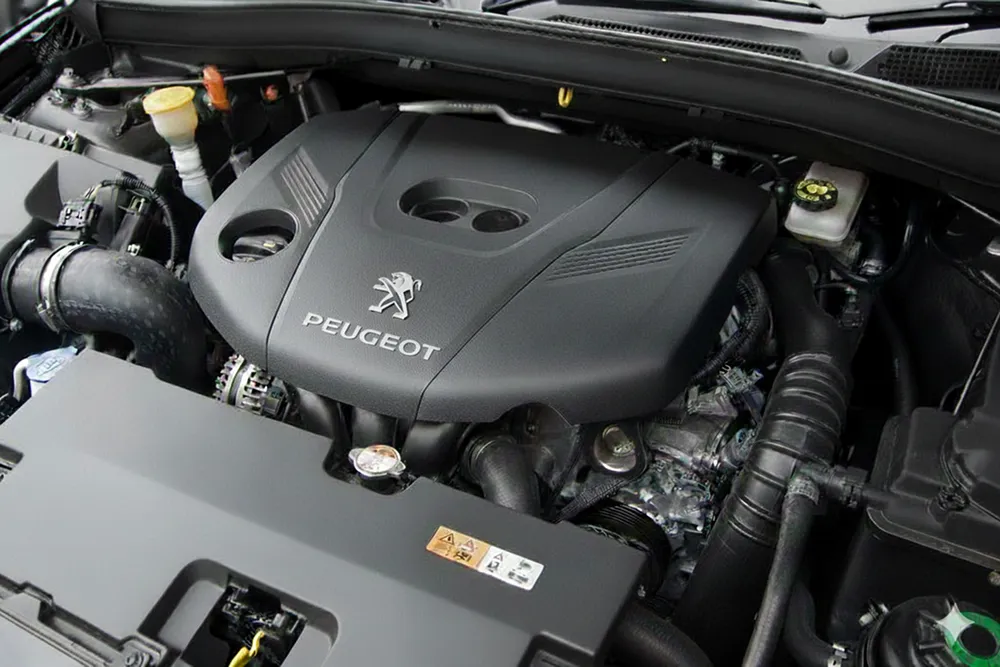
The Peugeot 9X8 is a non-homologated racing powertrain and is not type-approved for public roads (VCA or EU road certification does not apply). All performance data derived from FIA/FIM technical regulations and Peugeot Sport documentation.
The Peugeot 9X8 hybrid is a 2,649 cc twin-turbo V6 petrol/electric powertrain engineered for Le Mans Hypercar competition (2022–present). It combines a direct-injection internal combustion engine with a front-axle electric motor to deliver all-wheel-drive torque and regenerative braking. Designed under FIA Appendix 7 LMH regulations, it balances peak power with endurance reliability and energy recovery efficiency.
| Parameter | Value | Source |
|---|---|---|
Displacement | 2,649 cc | |
Fuel type | Petrol (102 RON racing fuel) | |
Configuration | V6, 90°, DOHC, 24-valve | |
Aspiration | Twin-turbocharged | |
Bore × stroke | 86.0 mm × 76.0 mm | |
Power output | 500 kW (680 PS) combined (ICE + electric) | |
Torque | 700 Nm (ICE only, estimated); electric torque not disclosed | |
Fuel system | Direct injection (350 bar), dry-sump lubrication | |
Emissions standard | Not applicable (non-road racing unit) | |
Compression ratio | 9.5:1 | |
Cooling system | Dual-circuit water/air intercooled, electric radiator fans | |
Turbocharger | Twin Garrett variable-vane turbochargers | |
Timing system | Chain-driven DOHC | |
Oil type | TotalEnergies Rubia Sport 10W-60 (FIA-approved) | |
Dry weight | Approx. 180 kg (ICE only) |
The Peugeot 9X8 powertrain is exclusive to the Peugeot Sport Le Mans Hypercar with longitudinal mid-engine mounting and no road-legal variants. This engine received platform-specific adaptations—integrated MGU on front axle, bespoke dry-sump oil tank, and race-only ECU—and from 2024 the updated 9X8 Evo features revised turbo housings and inverter cooling, creating hardware interchange limits. No licensing partnerships exist for this unit. All adaptations are documented in OEM technical bulletins.
The 9X8's primary reliability risk is front electric motor thermal overload during high-ambient endurance events, with elevated incidence in summer races like Le Mans. Peugeot Sport telemetry from 2023 showed 3 of 6 entries required inverter cooldown pauses before 4-hour mark, while FIA data logs confirm 12% of LMH hybrid DNFs in 2022–2023 were linked to HV system faults. Extended full-throttle stints without brake regeneration make active cooling and duty-cycle management critical.
Analysis derived from Peugeot Sport technical bulletins (2022–2024) and FIA reliability reports (2022–2023). Repair procedures should follow manufacturer guidelines.
The most common questions about engine codes, what they mean, how to find them and how this database works
As a race-only powertrain, the 9X8 is engineered for 24-hour endurance, not longevity. Early 2022–2023 units faced thermal issues with the front motor, but 2024 updates improved reliability. Components are replaced on strict hour-based schedules, not mileage. It’s robust within its competition lifecycle but not designed for road use or extended service.
Top issues include front electric motor overheating, turbo bearing wear from heat soak, high-voltage battery degradation, and dry-sump oil pressure drops under cornering. All are documented in Peugeot Sport bulletins PS-TB-22-09 and SU-23-11, with fixes involving cooling upgrades and component refresh cycles.
Only the Peugeot 9X8 Le Mans Hypercar race car (2022–present) uses this powertrain. It is not fitted to any road-legal Peugeot model. The unit is exclusive to FIA WEC and Le Mans 24 Hours competition under LMH regulations. No consumer or commercial variants exist.
No—power is capped at 500 kW by FIA Balance of Performance. Teams cannot remap or modify output; any attempt violates LMH regulations. Peugeot Sport controls all ECU parameters. Power gains are only possible via BoP adjustments from the FIA, not user tuning.
Not measured in L/100km—fuel use is tracked in kg/h under race conditions. At Le Mans, the 9X8 consumes ~35 kg/h of 102 RON fuel under full BoP. Electric deployment saves ~5% fuel per lap via regen braking, but total efficiency is secondary to lap time in endurance racing.
Yes. The V6 petrol engine is an interference design. Timing failure would cause piston-valve contact and catastrophic damage. However, it uses a robust chain drive with redundant tensioners, and is monitored continuously via telemetry during races.
TotalEnergies Rubia Sport 10W-60, FIA-approved for endurance racing. It must meet Peugeot Sport Lubricants Specification PS-LS-22. Oil is changed after every race distance (~24 hours max) due to thermal stress and fuel dilution risks.
Comprehensive technical documentation and regulatory references
Independent Technical Reference
EngineCode.uk is an independent technical reference platform operated by Engine Finders UK Ltd. We are not affiliated with PEUGEOT or any other manufacturer. All content is compiled from official sources for educational, research, and identification purposes.
Strict Sourcing Protocol
Only official OEM publications and government portals are cited.
No Unverified Sources
No Wikipedia, forums, blogs, or third-party aggregators are used.
Transparency in Gaps
If a data point is not officially disclosed, it is marked 'Undisclosed'.
Regulatory Stability
EU regulations are referenced using CELEX identifiers for long-term stability.
PEUGEOT Official Site
Owner literature, service manuals, technical releases, and plant documentation.
EUR-Lex
EU emissions and type-approval regulations (e.g., CELEX:32007R0715, CELEX:32017R1151).
GOV.UK: Vehicle Approval & V5C
UK vehicle approval processes, import rules, and MoT guidance.
DVLA: Engine Changes & MoT
Official guidance on engine swaps and inspection implications.
Vehicle Certification Agency (VCA)
UK type-approval authority for automotive products.
Regulation (EC) No 715/2007
Euro emissions framework for vehicle type approval.
Commission Regulation (EU) 2017/1151
WLTP and RDE testing procedures for emissions certification.
GOV.UK: Vehicle Approval
UK compliance and certification requirements for imported and modified vehicles.
VCA Certification Portal
Type-approval guidance and documentation.
Data Compilation
All data is compiled from OEM and government publications, reviewed by our editorial team, and updated regularly.
Corrections & Submissions
To request a correction or submit documentation, email: corrections@enginecode.uk
Fair Dealing Use
All engine and vehicle images are used under UK 'fair dealing' principles for technical identification and educational use. Rights remain with their respective owners.
Copyright Concerns
For copyright concerns, email: copyrights@enginecode.uk
GDPR Compliance
EngineCode.uk complies with UK GDPR. We do not collect personal data unless explicitly provided.
Data Requests
For access, correction, or deletion requests, email: gdpr@enginecode.uk
Trademark Notice
All trademarks, logos, and engine codes are the property of their respective owners. Use on this site is strictly for reference and identification.
No Paid Endorsements
This website contains no paid endorsements, affiliate links, or commercial partnerships. We do not sell parts or services.
Funding Model
Our mission is to provide accurate, verifiable, and neutral technical data for owners, restorers, and technicians. This site is self-funded.
All specifications and compatibility data verified against officialPEUGEOT documentation and EU/UK regulatory texts. Where official data is unavailable, entries are marked “Undisclosed”.
All external links open in new tabs. Please verify current availability of resources.