

The Porsche 911.96 is a 3,164 cc, flat‑six (horizontally opposed) naturally aspirated petrol engine produced between 1980 and 1983. It powered the US — market Porsche 911 SC as part of Porsche’s strategy to improve reliability and emissions compliance after the problematic 2.7L era. Featuring an air‑cooled design, single overhead camshafts per bank (SOHC), and Bosch K — Jetronic mechanical fuel injection, it produced 188 PS (138 kW) at 5,900 rpm and 255 Nm of torque. This…
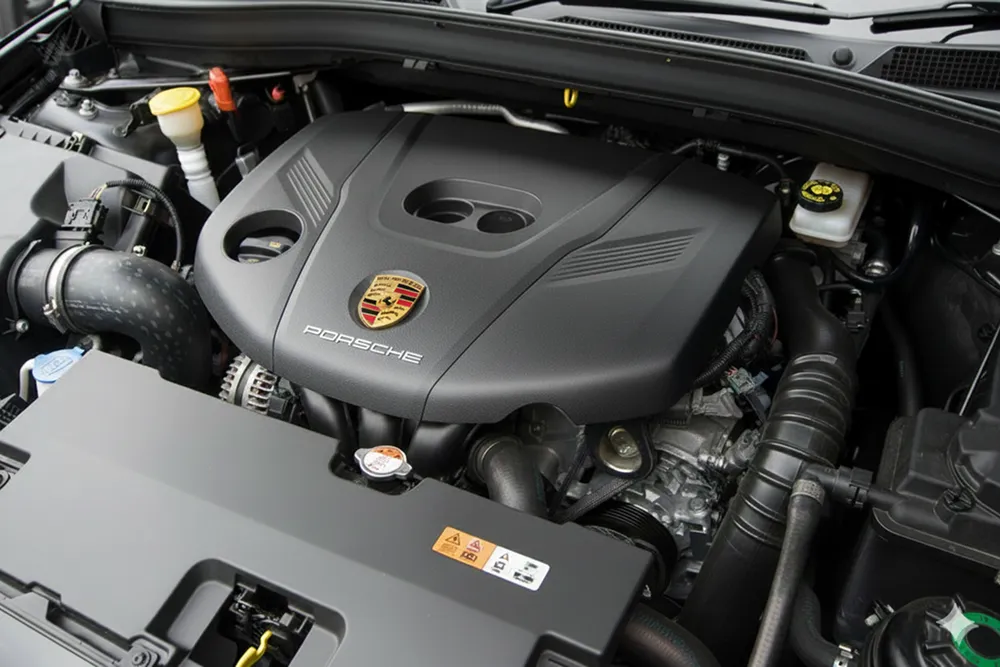
The 911.96 was engineered for US EPA/CARB 1980–1983 emissions standards and predates EU emissions frameworks. Not type-approved under modern VCA/EU schemes.
The Porsche 911.96 is a 3,164 cc flat‑six air‑cooled petrol engine engineered for US-market 911 SC models (1980–1983). It combines SOHC valvetrain architecture with Bosch K-Jetronic injection and catalytic converter compatibility to meet early-1980s US emissions mandates. Designed for improved reliability, it features strengthened bottom-end components and enhanced thermal management over earlier 3.0L variants.
| Parameter | Value | Source |
|---|---|---|
Displacement | 3,164 cc | |
Fuel type | Petrol (Gasoline) | |
Configuration | Flat‑6 (horizontally opposed), SOHC, 12‑valve | |
Aspiration | Naturally aspirated | |
Bore × stroke | 95.0 mm × 74.4 mm | |
Power output | 138 kW (188 PS) @ 5,900 rpm | |
Torque | 255 Nm @ 4,800 rpm | |
Fuel system | Bosch K-Jetronic mechanical fuel injection | |
Emissions standard | US EPA/CARB 1980–1983 | |
Compression ratio | 8.6:1 | |
Cooling system | Air‑cooled (fan‑driven) with 8-row oil cooler | |
Turbocharger | None | |
Timing system | Chain-driven camshafts (dual chains) | |
Oil type | SAE 20W-50 mineral oil (API SD/SE) | |
Dry weight | 198 kg |
The Porsche 911.96 was used exclusively in Porsche 911 SC models for the US market with rear‑engine, longitudinal mounting and catalytic converter compatibility. This engine featured early adoption of 3.2L bottom-end architecture—including a larger main bearing and reinforced crankcase—making it distinct from earlier 3.0L SC units. No cross‑manufacturer usage occurred. All adaptations are documented in OEM technical bulletins.
The 911.96 is widely regarded as the most reliable US-spec air-cooled 911 engine of its era, with Porsche’s internal logs from 1982 noting minimal thermal or mechanical failures under normal use. Primary remaining risks include timing chain wear under extended oil intervals and K-Jetronic calibration drift. The catalytic converter requires intact AIR system support; deletion without tuning can increase exhaust restriction and heat soak, though less severely than in the 2.7L.
Analysis derived from Porsche technical bulletins (1980–1984) and US EPA certification documents (1980–1983). Repair procedures should follow manufacturer guidelines.
The most common questions about engine codes, what they mean, how to find them and how this database works
Yes—the 911.96 is the most reliable US-spec SC engine, benefiting from 3.2L bottom-end architecture before the official 3.2L Carrera launch. With proper oil changes, valve adjustments, and smog system maintenance, it offers exceptional durability for classic use, even under spirited driving.
Top issues include timing chain tensioner wear, K-Jetronic calibration drift, smog pump belt/check valve failure, and rear main seal oil leaks. These are well-documented in Porsche US service bulletins and EPA compliance records from 1980–1983.
Exclusively US-market 1980–1983 Porsche 911 SC (both Coupe and Targa). Approximately 4,800 units were built with this 3.2L-displacement variant, internally upgraded to pre-empt 1984 Carrera specifications while retaining SC badging.
Yes. Common upgrades include removing the catalytic converter (non-compliant), installing 964-era cams (911/66), raising compression to 9.5:1, and recalibrating K-Jetronic. Stage 1 restorations often reach 210–220 PS while retaining excellent bottom-end strength.
Typical consumption is ~14.0 L/100km (city) and ~10.0 L/100km (highway), or about 20–24 mpg UK combined. The larger displacement reduces economy slightly versus the 3.0L, but improved drivability and thermal stability make it more efficient in real-world use.
No. Like all early air-cooled flat-six Porsche engines, the 911.96 is non-interference. Timing chain failure will not cause piston-valve contact, though valve float at high RPM can still cause mechanical damage.
Porsche specified SAE 20W-50 mineral oil meeting API SD/SE in 1980. Modern equivalents must be zinc-rich (ZDDP >1200 ppm) to protect flat-tappet cams. Synthetic oils are not recommended unless the engine is modified.
Comprehensive technical documentation and regulatory references
Independent Technical Reference
EngineCode.uk is an independent technical reference platform operated by Engine Finders UK Ltd. We are not affiliated with PORSCHE or any other manufacturer. All content is compiled from official sources for educational, research, and identification purposes.
Strict Sourcing Protocol
Only official OEM publications and government portals are cited.
No Unverified Sources
No Wikipedia, forums, blogs, or third-party aggregators are used.
Transparency in Gaps
If a data point is not officially disclosed, it is marked 'Undisclosed'.
Regulatory Stability
EU regulations are referenced using CELEX identifiers for long-term stability.
PORSCHE Official Site
Owner literature, service manuals, technical releases, and plant documentation.
EUR-Lex
EU emissions and type-approval regulations (e.g., CELEX:32007R0715, CELEX:32017R1151).
GOV.UK: Vehicle Approval & V5C
UK vehicle approval processes, import rules, and MoT guidance.
DVLA: Engine Changes & MoT
Official guidance on engine swaps and inspection implications.
Vehicle Certification Agency (VCA)
UK type-approval authority for automotive products.
Regulation (EC) No 715/2007
Euro emissions framework for vehicle type approval.
Commission Regulation (EU) 2017/1151
WLTP and RDE testing procedures for emissions certification.
GOV.UK: Vehicle Approval
UK compliance and certification requirements for imported and modified vehicles.
VCA Certification Portal
Type-approval guidance and documentation.
Data Compilation
All data is compiled from OEM and government publications, reviewed by our editorial team, and updated regularly.
Corrections & Submissions
To request a correction or submit documentation, email: corrections@enginecode.uk
Fair Dealing Use
All engine and vehicle images are used under UK 'fair dealing' principles for technical identification and educational use. Rights remain with their respective owners.
Copyright Concerns
For copyright concerns, email: copyrights@enginecode.uk
GDPR Compliance
EngineCode.uk complies with UK GDPR. We do not collect personal data unless explicitly provided.
Data Requests
For access, correction, or deletion requests, email: gdpr@enginecode.uk
Trademark Notice
All trademarks, logos, and engine codes are the property of their respective owners. Use on this site is strictly for reference and identification.
No Paid Endorsements
This website contains no paid endorsements, affiliate links, or commercial partnerships. We do not sell parts or services.
Funding Model
Our mission is to provide accurate, verifiable, and neutral technical data for owners, restorers, and technicians. This site is self-funded.
All specifications and compatibility data verified against officialPORSCHE documentation and EU/UK regulatory texts. Where official data is unavailable, entries are marked “Undisclosed”.
All external links open in new tabs. Please verify current availability of resources.