


Covers Rolls-Royce Motor Cars petrol engines used across UK and European models - all BMW-sourced powertrains from the N74 V12 to the modern B58 inline-6. Each engine code includes specifications, compatible vehicles, and emissions data, sourced from official BMW Group and Rolls-Royce documentation.
Data sourced from BMW Group PT-2023, EU Regulation (EC) No 715/2007, BMW Technical Service Information (TIS), and Rolls-Royce Motor Cars Service Documentation.
Find Rolls-Royce engine codes by model, generation, or BMW engine family

| Engine Code | Fuel Type | Series | Specifications |
|---|---|---|---|
| Electric | RR-Series | View Specs | |
| Electric | RR-Series | View Specs |

All modern Rolls-Royce vehicles use BMW powertrains.
Rolls-Royce's first production electric vehicle.
Engine specifications and technical data sourced from BMW Group Technical Documentation, Rolls-Royce Motor Cars Service Manual, and EU Vehicle Type Approval Database. All specifications are verified against official BMW and Rolls-Royce service documentation.
The engine code is essential for ordering parts, diagnosing issues, and verifying compatibility. Rolls-Royce uses BMW engine codes with Rolls-Royce-specific variant designations.
BMW-sourced identifier (e.g., N74B66) stamped on the engine block.
17-digit vehicle identification number containing encoded vehicle and engine information.
Rolls-Royce chassis designation used for registration and legal identification.
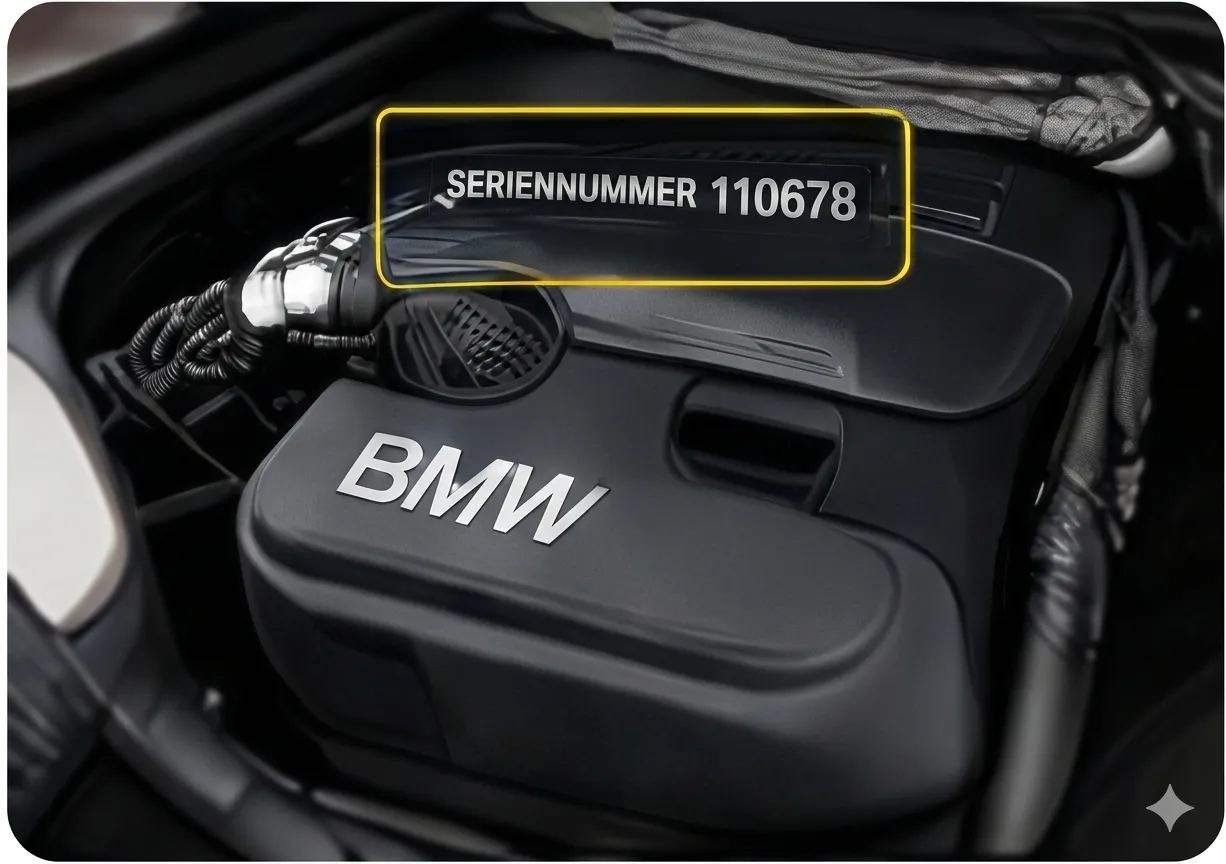
The engine code is located on a label attached to the timing cover on the front of the engine. Look for 'B58B30' or 'B58B30O1' designation. The label is white with black text.
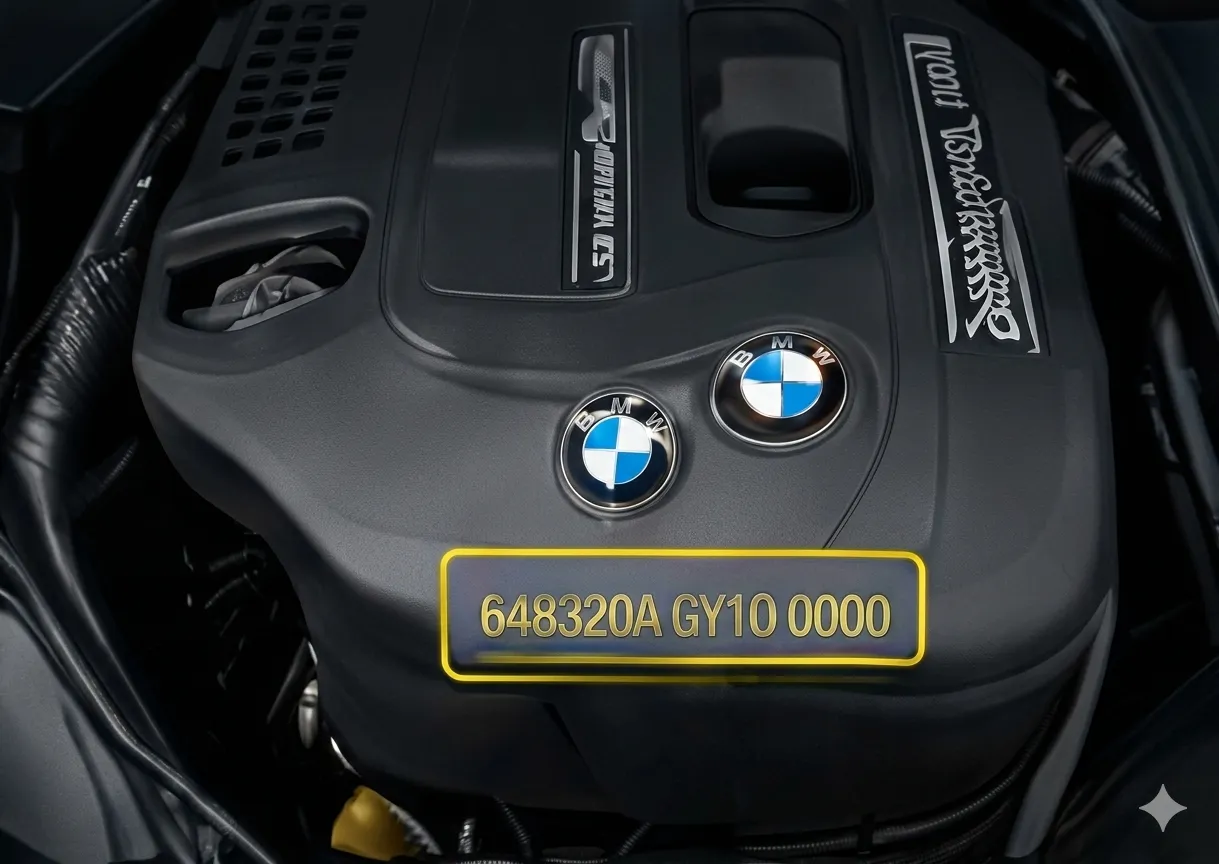
The N74B66 engine code is stamped on the engine block near the front timing cover. Access may require removing the engine cover. The code is typically 'N74B66' for the 6.6L V12 or 'N74B68' for the 6.75L variant.
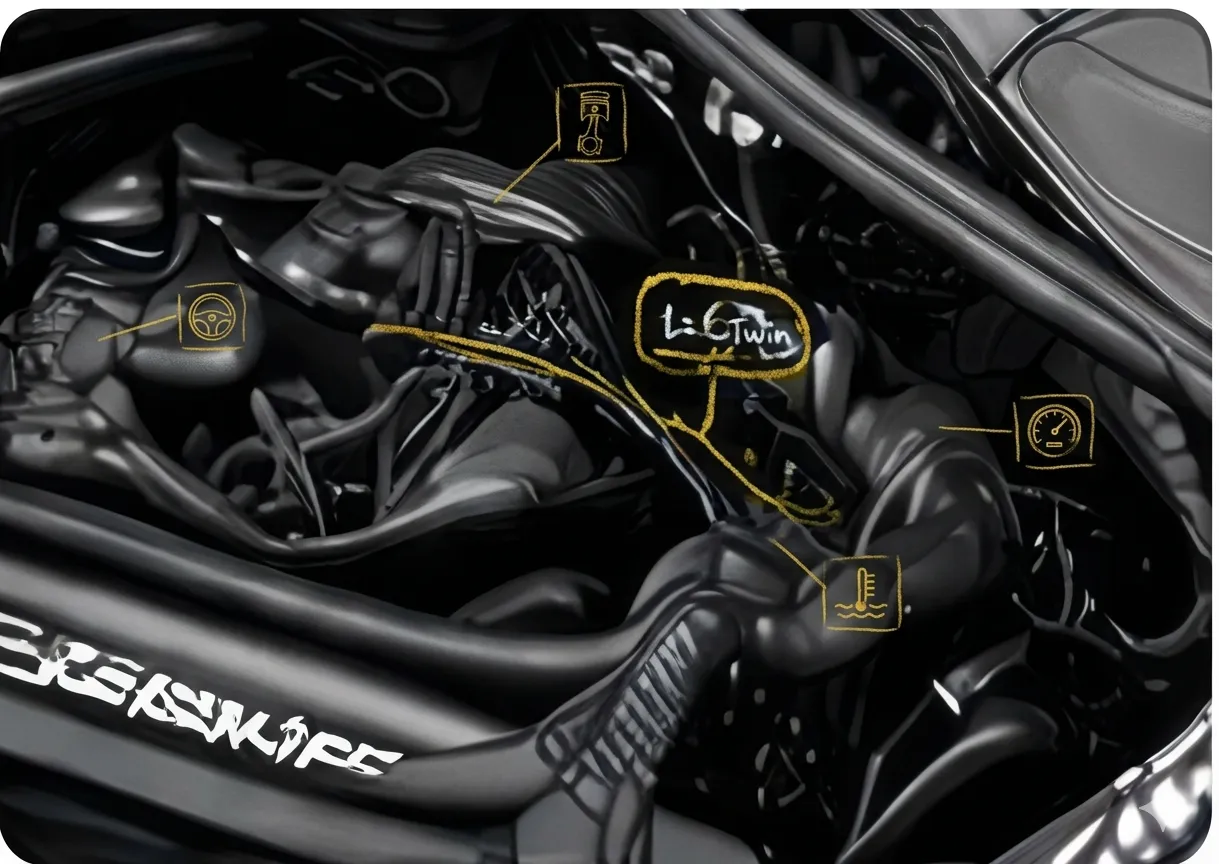
Open the bonnet and locate the engine code on the front timing cover. Early Cullinan models use N74B66 V12; newer models may use B58B30 inline-6. The code is on a white label near the timing chain housing.
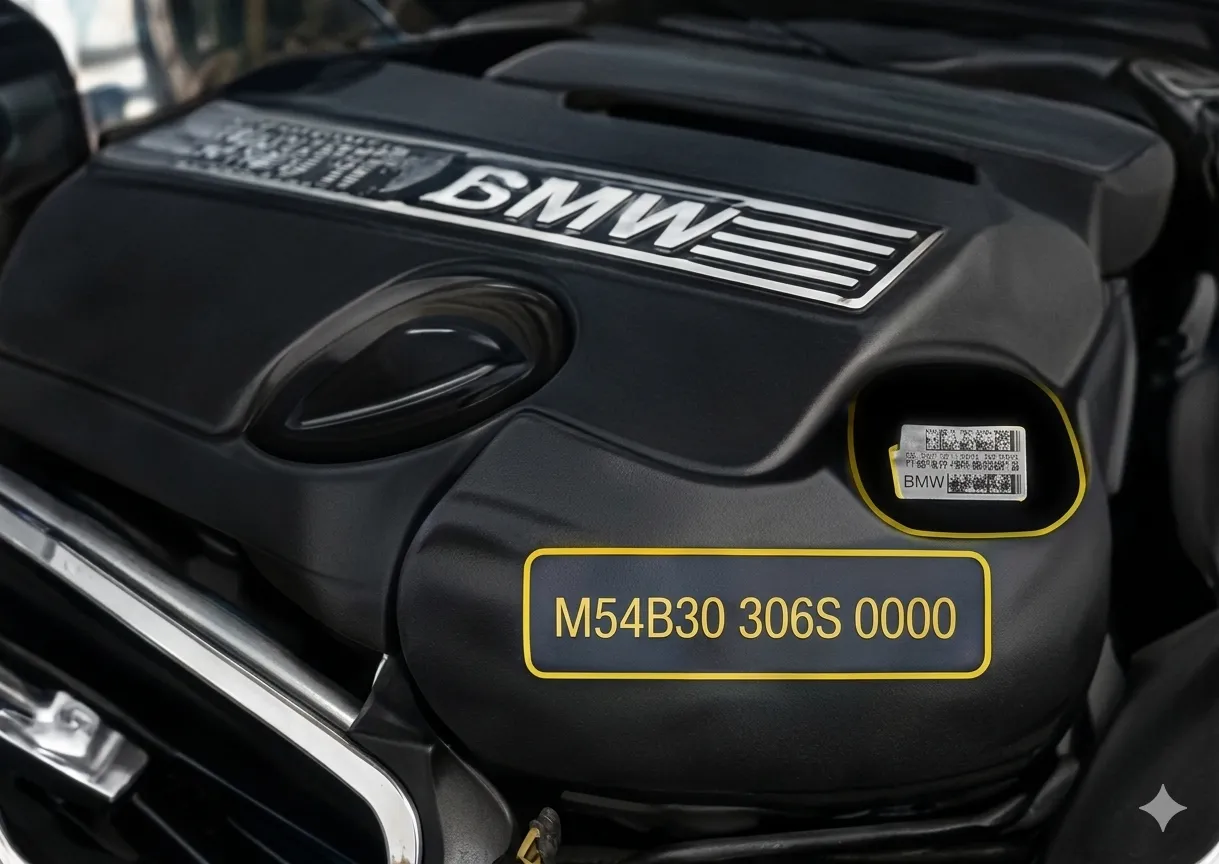
The engine code is cast into the front of the engine block or on a label near the intake manifold. Look for 'N74B66' designation. The V12 engine code is visible from the front of the engine bay.
Engine code locations per BMW TIS Document A15001 – Vehicle Identification and Rolls-Royce Motor Cars Service Manual. V5C field definitions from DVLA Guide to Vehicle Registration. VIN structure compliant with EU Regulation (EC) No 715/2007, Article 7.
A technical breakdown of BMW-sourced engine systems used in Rolls-Royce vehicles including TwinPower Turbo, VALVETRONIC, timing architectures with documented reliability impacts. All data sourced from BMW Group PT-2023, BMW TIS and EU Regulation (EC) No 715/2007
The N74 is BMW's twin-turbocharged V12 engine family, extensively used across Rolls-Royce's lineup from 2008 to present. Displacements include 6.0L (N74B60), 6.6L (N74B66), and 6.75L (N74B68). Rolls-Royce-specific calibration emphasises silent, effortless power delivery.
Twin-turbocharged V12 with direct injection, VALVETRONIC variable valve lift, and Double-VANOS variable cam timing. Twin-scroll turbos provide boost with minimal lag. Rolls-Royce-specific engine management prioritises refinement over peak performance.

6.0L V12 (2008)
Initial variant
6.6L V12 (2012)
Increased displacement for Ghost, Wraith, Dawn
6.75L V12 (2018)
Phantom VIII, Cullinan - enhanced torque
High-pressure fuel pump (HPFP)
Wear at 80,000+ miles
Valve stem seals
Oil consumption at high mileage
Turbocharger wastegate
Rattle on cold start
The N74 is BMW's twin-turbocharged V12 engine family, extensively used across Rolls-Royce's lineup from 2008 to present. Displacements include 6.0L (N74B60), 6.6L (N74B66), and 6.75L (N74B68). Rolls-Royce-specific calibration emphasises silent, effortless power delivery.
Twin-turbocharged V12 with direct injection, VALVETRONIC variable valve lift, and Double-VANOS variable cam timing. Twin-scroll turbos provide boost with minimal lag. Rolls-Royce-specific engine management prioritises refinement over peak performance.
6.0L V12 (2008)
Initial variant
6.6L V12 (2012)
Increased displacement for Ghost, Wraith, Dawn
6.75L V12 (2018)
Phantom VIII, Cullinan - enhanced torque
High-pressure fuel pump (HPFP)
Wear at 80,000+ miles
Valve stem seals
Oil consumption at high mileage
Turbocharger wastegate
Rattle on cold start
All technical descriptions and failure data sourced from BMW Group Product Technical Reports, BMW TIS Service Information, Rolls-Royce Motor Cars Service Manual, and EU Regulation (EC) No 715/2007 on vehicle type-approval.
Track BMW engineering across decades
BMW Group acquisition era begins with naturally aspirated V12 and V8 engines.

6.75L V12 naturally aspirated. BMW-sourced N73 engine. Phantom VII launch powerplant. Smooth, refined, 453 HP. Traditional Rolls-Royce character with modern reliability.
4.8L V8 naturally aspirated. BMW N62 engine. Used in select Phantom variants. VALVETRONIC technology. 367 HP output. Emphasised refinement over performance.
Engine production years verified via BMW Group Product Reports, Rolls-Royce Motor Cars Production Records, and EU type-approval records
Authoritative data on Rolls-Royce Motor Cars engine sourcing, BMW Group production, and strategic partnerships. All figures sourced from BMW Group Annual Reports, Sustainability Reports, and Rolls-Royce Motor Cars production records.
Rolls-Royce Motor Cars sources all engines from BMW Group facilities, primarily Steyr (Austria) and Munich (Germany).


Rolls-Royce Motor Cars produces 5,000–7,000 vehicles annually. All engines are BMW-sourced. Note the gradual shift towards electrification with Spectre launch in 2023.
Note: Rolls-Royce Motor Cars does not manufacture engines in-house. All powertrains are BMW Group-sourced (N74 V12, B58 inline-6) with Rolls-Royce-specific calibration.
Rolls-Royce Motor Cars operates as a wholly-owned subsidiary of BMW Group since 2003. All powertrains are BMW-sourced with Rolls-Royce-specific calibration, tuning, and testing.
Developed specifically for ultra-luxury applications including Rolls-Royce
BMW modular engine adapted for Rolls-Royce refinement requirements
BMW Group Annual Report 2023, Rolls-Royce Motor Cars Corporate Information
Rolls-Royce transition from exclusively ICE to mixed ICE/EV lineup beginning 2023.
Rolls-Royce Motor Cars committed to all-electric lineup by 2030. No diesel engines offered. Current production: N74 V12, B58 inline-6, Spectre BEV.
Production data verified via BMW Group Annual Reports 2020–2023, Rolls-Royce Motor Cars Production Review, and EU type-approval records
The most common questions about engine codes, what they mean, how to find them and how this database works
Modern Rolls-Royce Motor Cars (2003–present) use BMW-sourced engines exclusively. The primary engine is the N74 twin-turbo V12 (6.6L or 6.75L) used in Phantom, Ghost, Wraith, Dawn, and Cullinan. The newer B58 3.0L turbo inline-6 is used in Ghost and Cullinan. Spectre uses a dual-motor electric powertrain. All engines feature Rolls-Royce-specific calibration. Source: BMW Group PT-2023, Rolls-Royce Motor Cars Service Manual
Yes. Since BMW Group acquired Rolls-Royce Motor Cars in 2003, all engines have been BMW-sourced. The N74 V12, N63 V8, and B58 inline-6 are all BMW engines with Rolls-Royce-specific tuning, calibration, and sound insulation. Engines are produced at BMW plants in Steyr (Austria) and Munich (Germany), then shipped to Goodwood (UK) for installation. Source: BMW Group Annual Report 2023
Rolls-Royce engines (BMW N74 V12, B58 inline-6) are generally very reliable with proper maintenance. The B58 is considered one of BMW's most reliable modern engines. The N74 V12 is robust but can experience HPFP wear at 80,000+ miles and valve stem seal wear at high mileage. Regular servicing with correct BMW/Rolls-Royce oil specifications is critical. Overall reliability is excellent for low-mileage, well-maintained examples. Source: BMW TIS, Rolls-Royce Motor Cars Service Records
Rolls-Royce Motor Cars does not manufacture engines in-house. However, BMW-sourced N63 4.4L twin-turbo V8 has been used in select Rolls-Royce models for specific markets (primarily 2010–2018). This engine is rare in UK/EU vehicles. Current Rolls-Royce lineup uses N74 V12, B58 inline-6, or electric powertrain (Spectre). Source: Rolls-Royce Motor Cars Production Records
The primary Rolls-Royce V12 engine code is N74B66 (6.6L) or N74B68 (6.75L). These are BMW-sourced twin-turbo V12 engines. N74B66 is used in Ghost, Wraith, Dawn, and early Cullinan. N74B68 (increased displacement) is used in Phantom VIII and later Cullinan models. The code is stamped on the engine block and listed on your V5C registration document. Source: BMW TIS Document A15001
Yes. Rolls-Royce Spectre, launched in 2023, is the brand's first production electric vehicle. It uses a dual-motor all-wheel-drive system producing 577 HP (430 kW) with a 102 kWh battery pack providing 329 miles of WLTP range. Spectre marks the beginning of Rolls-Royce's transition to full electrification by 2030. Source: Rolls-Royce Motor Cars Spectre Technical Brief
On the Rolls-Royce Ghost (2020–present with B58 engine), the engine code is located on a white label attached to the front timing cover. Look for 'B58B30' or 'B58B30O1' designation. On older Ghost models (2010–2020 with N74 V12), check the front timing cover for 'N74B66' stamping. The code is also listed on your V5C registration document under 'Engine Number'. Source: Rolls-Royce Motor Cars Service Manual
With proper maintenance, Rolls-Royce engines (BMW N74 V12, B58 inline-6) can exceed 150,000–200,000 miles. The B58 is designed for 200,000+ miles with regular servicing. The N74 V12 is robust but requires meticulous maintenance. Key service items: oil changes every 12,000 miles with BMW Longlife-01 oil, HPFP replacement ~100,000 miles, water pump ~100,000 miles (B58). Most Rolls-Royce vehicles have low mileage due to their luxury status. Source: BMW TIS, Rolls-Royce Motor Cars Maintenance Schedule
Rolls-Royce Motor Cars specifies BMW Longlife-01 or Longlife-04 synthetic oil for all BMW-sourced engines. For N74 V12: 0W-30 or 5W-30 meeting BMW Longlife-01 specification. For B58 inline-6: 0W-20 or 0W-30 meeting BMW Longlife-17 FE+ specification. Oil capacity: N74 ~9.5L, B58 ~6.5L. Service interval: 12,000 miles or annually. Always use BMW-approved oil specifications. Source: Rolls-Royce Motor Cars Owner's Manual, BMW TIS
Yes. All BMW-sourced engines used in Rolls-Royce vehicles (N74 V12, N63 V8, B58 inline-6) are interference engines. If the timing chain fails, pistons will contact valves causing catastrophic engine damage. However, all these engines use timing chains designed for the life of the engine under normal operating conditions. Chain failure is extremely rare with proper maintenance. Source: BMW TIS Document SI B11 03 08
No. Rolls-Royce Motor Cars has never offered diesel engines in any production vehicle. All current and historical BMW-era Rolls-Royce vehicles (2003–present) use petrol engines (N74 V12, N63 V8, B58 inline-6) or electric powertrain (Spectre BEV from 2023). This aligns with the brand's focus on refinement and silent operation. Source: Rolls-Royce Motor Cars Product Lineup
The most powerful current Rolls-Royce engine is the Spectre's dual-motor electric powertrain producing 577 HP (430 kW) and 900 Nm torque. Among petrol engines, the N74B68 6.75L V12 twin-turbo in Phantom VIII and Cullinan produces 563–592 HP depending on calibration. The N74B66 6.6L V12 produces 563–624 HP (higher output in Black Badge variants). Source: Rolls-Royce Motor Cars Technical Specifications
While technically possible, engine tuning is not recommended for Rolls-Royce vehicles. BMW-sourced engines (N74, B58) can be remapped, but this may void warranty, affect refinement, and compromise Rolls-Royce's carefully calibrated power delivery. Some owners opt for ECU remapping for increased power, but this is uncommon given the already substantial output. Always consult Rolls-Royce Motor Cars before any modifications. Source: Rolls-Royce Motor Cars Warranty Terms
Current Rolls-Royce engines meet Euro 6d emissions standards. N74B68 V12 (2018–present) and B58B30 inline-6 (2020–present) are Euro 6d compliant. Earlier N74B66 variants (2012–2017) meet Euro 5 or Euro 6b standards depending on production date. Spectre BEV has zero tailpipe emissions. Check your V5C registration document or VIN decoder for specific emissions compliance. Source: EU Regulation (EC) No 715/2007, VCA Type Approval Database
Yes. High-performance variants like N74B66 Black Badge (624 HP) or Spectre BEV (577 HP) typically incur higher insurance premiums than standard variants. Insurers consider engine power output, vehicle value, and repair costs. Rolls-Royce vehicles are already in high insurance groups due to value and repair complexity. Always declare the correct engine code (N74B66, B58B30, etc.) when obtaining insurance quotes. Source: UK Insurance Industry Guidelines
The EngineCode.uk is an independent technical resource dedicated to providing accurate, non-commercial engine data for BMW and related powertrains. This section outlines our sources, disclaimers, and compliance policies in accordance with Google's E-E-A-T (Experience, Expertise, Authoritativeness, Trustworthiness) guidelines.
EngineCode.uk is operated by Engine Finders UK Ltd as a standalone reference platform. We are not affiliated with Rolls-Royce Motor Cars, BMW AG, BMW Group, or any other manufacturer or trademark holder. All content is created independently for educational and diagnostic purposes only. The Rolls-Royce name, logo, and engine codes are trademarks of Rolls-Royce Motor Cars Limited and BMW AG.
All engine and vehicle images used on this site are for technical identification and educational purposes under fair use principles. If you believe any image infringes your copyright, please contact us at copyrights@enginecode.uk. We will review the claim promptly and remove or license the content as required.
EngineCode.uk complies with the UK General Data Protection Regulation (UK GDPR) and the EU GDPR. We do not collect personal data through this platform unless explicitly provided (e.g., contact forms).
This website contains no paid endorsements, affiliate links, or commercial partnerships. We do not sell parts, services, or recommendations. Our mission is to provide accurate, verifiable, and neutral technical data to support vehicle owners, restorers, and technicians across the UK and Europe.
Information accurate as of 2025