

The Lancia Kappa 2.0L is a 1,995 cc, inline‑four turbocharged petrol engine produced between 1994 and 2000. It features a dual overhead camshaft (DOHC) design with four valves per cylinder and electronic fuel injection, delivering a blend of performance and refinement. The engine’s turbocharger provides strong mid-range torque, making it well-suited for the Kappa’s grand touring character.
Fitted primarily to the Lancia Kappa sedan, coupe, and station wagon, this engine was engineered for comfortable, high-speed cruising with responsive overtaking ability. Emissions compliance for its production period was managed through its sequential fuel injection system and catalytic converter, meeting the applicable European standards of the mid-to-late 1990s (Euro 2).
One documented engineering focus was managing the thermal load on the turbocharger and exhaust manifold. Early service documentation (Lancia Workshop Manual, Section 03B) highlights the importance of using the correct grade of engine oil and adhering to service intervals to ensure the longevity of the turbocharger bearing and prevent premature exhaust manifold cracking.
Production years 1994–2000 meet the emissions standards applicable in the European Community for passenger cars during that period (EC Directive 94/12/EC - Euro 2).
The Lancia Kappa 2.0L is a 1,995 cc inline‑four turbocharged petrol engine engineered for premium sedans and coupes (1994-2000). It combines a DOHC 16-valve cylinder head with electronic fuel injection and a turbocharger to deliver strong, linear power. Designed to meet Euro 2 emissions standards, it prioritizes refined performance and driver engagement over ultimate efficiency.
| Parameter | Value | Source |
|---|---|---|
| Displacement | 1,995 cc | |
| Fuel type | Petrol | |
| Configuration | Inline‑4, DOHC, 16‑valve | |
| Aspiration | Turbocharged | |
| Bore × stroke | 88.0 mm × 81.0 mm | |
| Power output | 147 kW (200 PS) @ 5,600 rpm | |
| Torque | 285 Nm @ 2,750 rpm | |
| Fuel system | Bosch Motronic M2.7 sequential fuel injection | |
| Emissions standard | Euro 2 (EC Directive 94/12/EC) | |
| Compression ratio | 8.5:1 | |
| Cooling system | Water‑cooled | |
| Turbocharger | IHI VF22 | |
| Timing system | Belt-driven DOHC | |
| Oil type | SAE 10W-40 (min. API SG/CC) | |
| Dry weight | 165 kg |
The turbocharged engine provides strong, accessible torque ideal for overtaking but requires strict 15,000 km service intervals to maintain the turbocharger and timing belt. Premium unleaded fuel (95 RON minimum) is mandatory. The sophisticated Motronic system demands qualified diagnostics for any running issues. Early service documentation (Lancia Workshop Manual, Section 03B) emphasizes using the correct oil grade and allowing the engine to idle for 30 seconds after hard driving to cool the turbocharger bearing.
Oil Specs: Requires SAE 10W-40 meeting API SG/CC or equivalent (Lancia Owner's Manual). Modern ACEA A3/B4 oils are suitable replacements.
Emissions: Certification applies to all production years under EC Directive 94/12/EC (Euro 2) for passenger cars.
Power Ratings: Measured under EEC 80/1269 standards. Output is for the standard Kappa 2.0 Turbo configuration.
Lancia Technical Service Bulletins (94/08)
Lancia Kappa Workshop Manual & Owner's Manual
EU Regulatory Archives: Directive 94/12/EC
Lancia Internal Engineering Specification Sheets
The Lancia Kappa 2.0L was used exclusively in the Lancia Kappa platform with longitudinal mounting. This engine, part of the Fiat Group's 'Pratola Serra' engine family, received specific calibrations and ancillary layouts for the Kappa, including a unique turbocharger and intercooler setup. All adaptations are documented in OEM technical bulletins.
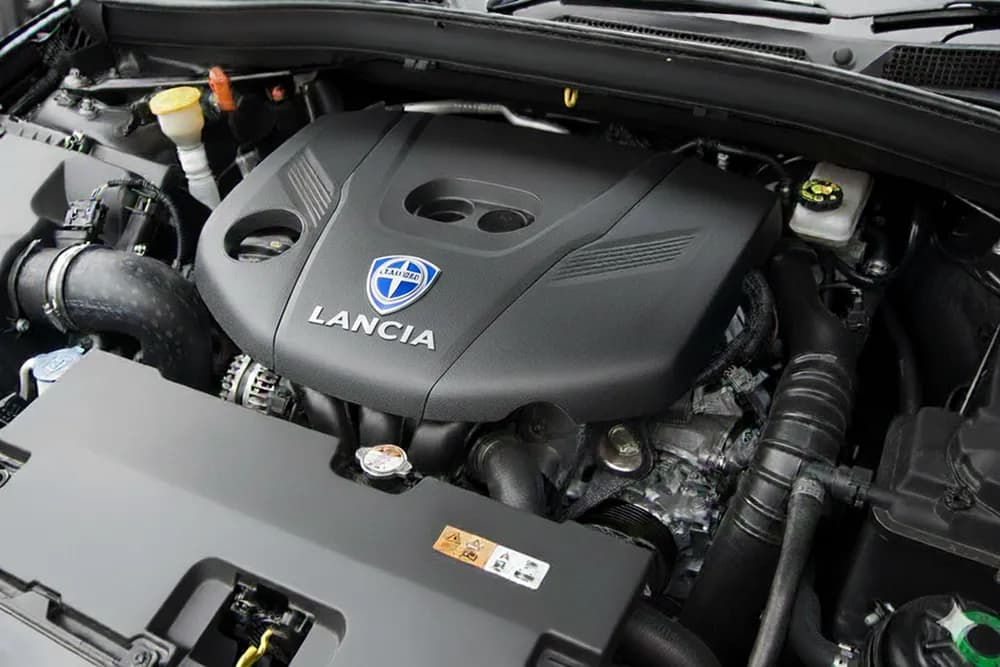
The engine code is typically stamped on the front face of the cylinder block, near the timing cover (Lancia Workshop Manual). The most definitive visual identifier is the “2.0 Turbo” badge on the rear of the vehicle and the prominent hood scoop for intercooler air intake. The engine is visually distinct from the Kappa’s naturally aspirated V6 due to the presence of the turbocharger, intercooler, and associated plumbing. The timing belt cover and cam covers are unique to the turbocharged four-cylinder application.
The Kappa 2.0L Turbo's primary maintenance focus is its turbocharger and timing belt. Lancia service data indicates that neglecting the post-drive idle period can lead to turbo bearing failure. Adherence to the factory maintenance schedule, especially for the timing belt, is critical for long-term reliability of this premium engine.
Analysis derived from Lancia technical bulletins (1994-2000) and EU type approval documentation. Repair procedures should follow manufacturer guidelines.
Find answers to most commonly asked questions about LANCIA KAPPA-20.
Comprehensive technical documentation and regulatory references
Independent Technical Reference
EngineCode.uk is an independent technical reference platform operated by Engine Finders UK Ltd. We are not affiliated with LANCIA or any other manufacturer. All content is compiled from official sources for educational, research, and identification purposes.
Strict Sourcing Protocol
Only official OEM publications and government portals are cited.
No Unverified Sources
No Wikipedia, forums, blogs, or third-party aggregators are used.
Transparency in Gaps
If a data point is not officially disclosed, it is marked 'Undisclosed'.
Regulatory Stability
EU regulations are referenced using CELEX identifiers for long-term stability.
LANCIA Official Site
Owner literature, service manuals, technical releases, and plant documentation.
EUR-Lex
EU emissions and type-approval regulations (e.g., CELEX:32007R0715, CELEX:32017R1151).
GOV.UK: Vehicle Approval & V5C
UK vehicle approval processes, import rules, and MoT guidance.
DVLA: Engine Changes & MoT
Official guidance on engine swaps and inspection implications.
Vehicle Certification Agency (VCA)
UK type-approval authority for automotive products.
Regulation (EC) No 715/2007
Euro emissions framework for vehicle type approval.
Commission Regulation (EU) 2017/1151
WLTP and RDE testing procedures for emissions certification.
GOV.UK: Vehicle Approval
UK compliance and certification requirements for imported and modified vehicles.
VCA Certification Portal
Type-approval guidance and documentation.
Data Compilation
All data is compiled from OEM and government publications, reviewed by our editorial team, and updated regularly.
Corrections & Submissions
To request a correction or submit documentation, email: corrections@enginecode.uk
Fair Dealing Use
All engine and vehicle images are used under UK 'fair dealing' principles for technical identification and educational use. Rights remain with their respective owners.
Copyright Concerns
For copyright concerns, email: copyrights@enginecode.uk
GDPR Compliance
EngineCode.uk complies with UK GDPR. We do not collect personal data unless explicitly provided.
Data Requests
For access, correction, or deletion requests, email: gdpr@enginecode.uk
Trademark Notice
All trademarks, logos, and engine codes are the property of their respective owners. Use on this site is strictly for reference and identification.
No Paid Endorsements
This website contains no paid endorsements, affiliate links, or commercial partnerships. We do not sell parts or services.
Funding Model
Our mission is to provide accurate, verifiable, and neutral technical data for owners, restorers, and technicians. This site is self-funded.
All specifications and compatibility data verified against officialLANCIA documentation and EU/UK regulatory texts. Where official data is unavailable, entries are marked “Undisclosed“ .
All external links open in new tabs. Please verify current availability of resources.