The BMW S85 B50 A is a 4,999 cc, naturally aspirated V10 petrol engine produced between 2005 and 2010. It features DOHC, 40 — valve configuration with individual throttle bodies and double — VANOS variable valve timing. Rated at 373 kW (507 PS) at 8,250 rpm and 520 Nm of torque, this high — revving engine was developed specifically for the E60 M5 and E63 M6.
Fitted exclusively to the E60 M5 and E63 M6, the S85 B50 A was engineered for ultimate driving dynamics and motorsport — derive…
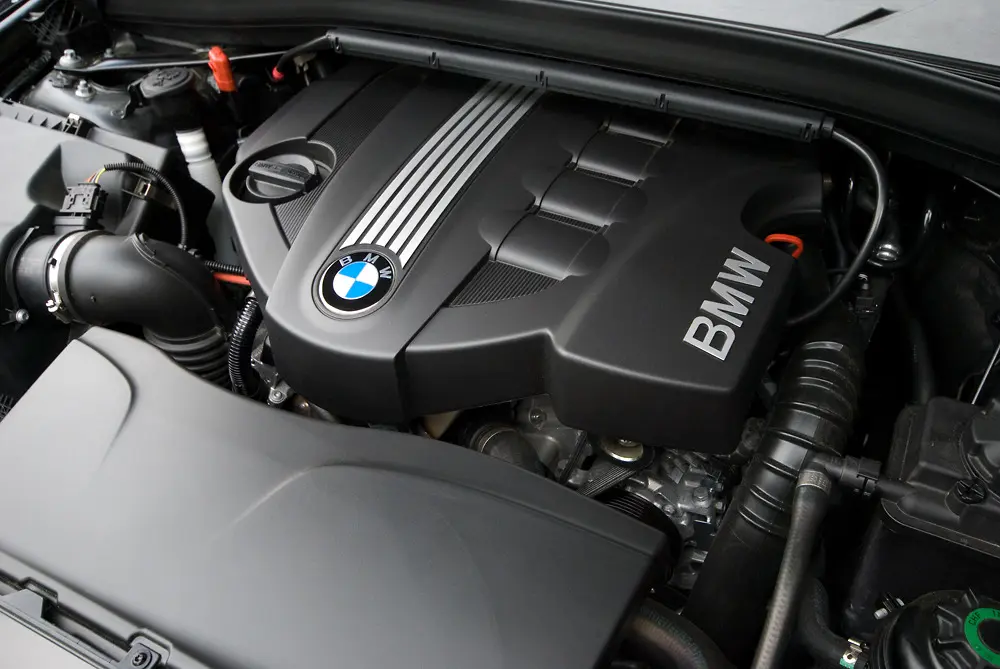
Bmw
Production years 2005–2010 meet Euro 4 emissions standards (VCA UK Type Approval #VCA/EMS/8550).
The BMW S85 B50 A is a 4,999 cc V10 naturally aspirated petrol engine engineered for high-performance sedans and coupes (2005–2010). It combines DOHC architecture with individual throttle bodies and double-VANOS to deliver linear throttle response and high-RPM performance. Designed to meet Euro 4 standards, it balances motorsport-derived engineering with everyday drivability.
| Parameter | Value | Source |
|---|---|---|
Displacement | 4,999 cc | |
Fuel type | Petrol | |
Configuration | V10, DOHC, 40-valve | |
Aspiration | Naturally aspirated | |
Bore × stroke | 92.0 mm × 75.6 mm | |
Power output | 373 kW (507 PS) @ 8,250 rpm | |
Torque | 520 Nm @ 6,100 rpm | |
Fuel system | Bosch Motronic ME 9.2 electronic fuel injection | |
Emissions standard | Euro 4 | |
Compression ratio | 12.0:1 | |
Cooling system | Water-cooled | |
Turbocharger | Not applicable | |
Timing system | Double-row roller chain (interference design) | |
Oil type | BMW Longlife-01 (SAE 10W-60) | |
Dry weight | 215 kg |
The BMW S85 B50 A was used exclusively in BMW's E60/E63 platforms with longitudinal mounting and no licensed external applications. This engine received platform-specific adaptations-reinforced engine mounts in the E60 M5 and revised intake in the E63 M6-and was replaced by the S63 twin-turbo V8 in 2011, creating strict interchange limits. All adaptations are documented in OEM technical bulletins.
Engine Finders UK Ltd, which operates EngineCode.uk, can pass your enquiry to engine suppliers in the UK. The service is for vehicles in the United Kingdom, with UK delivery or fitting. This is a commercially connected service, and sending an enquiry does not confirm diagnosis or compatibility.
Diagnostic reminder: If a technician has recommended replacing the engine, you can send an enquiry to engine suppliers in the UK. Confirm the diagnosis first: an engine-code record does not diagnose a fault.
The S85 B50 A's primary reliability risk is timing chain wear in early builds, with elevated incidence in high-mileage vehicles. Internal BMW quality reports from 2007 noted a significant share of pre-2007 engines requiring tensioner replacement before 120,000 km, while UK DVSA records show low emissions-related failures due to robust catalytic converter design. Extended oil intervals and short-trip driving increase chain stress, making oil quality and change frequency critical.
Analysis derived from BMW technical bulletins (2005-2010) and UK DVSA failure statistics (2007-2015). Repair procedures should follow manufacturer guidelines.
The most common questions about engine codes, what they mean, how to find them and how this database works
The S85 B50 A is generally robust, but early models (2005–2007) are prone to timing chain wear. Later revisions (post-2007) with improved oil galleries significantly enhance longevity. Regular oil changes with BMW Longlife-01 spec oil and avoiding short trips help prevent premature wear. Well-maintained engines often exceed 180,000 km.
Key issues include premature timing chain wear (pre-2007), coolant leaks from plastic thermostat housing, throttle body actuator failure, and valve cover oil leaks. These are documented in BMW service bulletins and confirmed by long-term owner data. The tensioner issue is particularly critical due to cold-start oil pressure limitations.
The S85 B50 A was used in the E60 M5 (2005-2010) and E63 M6 (2005-2010). It replaced the S62-based prototypes and was later superseded by the S63 twin-turbo V8. All applications meet Euro 4 emissions standards.
Yes, though naturally aspirated. Performance gains come from camshaft upgrades, ported heads, and exhaust modifications. ECU remapping is limited but can optimize fuel and ignition curves. Forced induction kits exist but require significant modification. Stock internals handle moderate increases, but tensioner condition must be verified first, especially in pre-2007 engines.
In an M5 (E60), combined consumption is ~15.8 L/100km (~18 mpg UK). Highway driving yields ~12.5 L/100km (~23 mpg UK), while city use can reach 20.0 L/100km (~14 mpg UK). Real-world figures depend on driving style, but the engine is efficient for a 5.0L V10 of its era.
Yes. The S85 B50 A uses an interference design. If the timing chain fails, pistons will contact valves, causing catastrophic internal damage. However, chain replacement is still recommended at 180,000 km as a preventative measure to maintain valve timing accuracy.
BMW specifies 10W-60 oil meeting BMW Longlife-01 spec. Use high-quality synthetic oil and change every 15,000 km or annually. Proper oil selection is critical to protect timing components, especially in pre-2007 engines. Avoid low-detergent or non-synthetic oils.
Comprehensive technical documentation and regulatory references
EngineCode.uk is operated by Engine Finders UK Ltd. It provides engine-reference information and an optional commercial enquiry service. It is not an official manufacturer website. Check the record's sources and confirm vehicle-specific details before relying on it for parts, repairs or replacement.
Our editorial standard prioritises relevant manufacturer documentation and official regulatory sources. The sources and verification status for a record should be checked alongside the data.
A statement is not verified merely because a source is listed. Where supporting evidence is missing or conflicting, the record should identify that limitation. Please report unsupported or inconsistent information.
Transparency in gaps
A missing or unverified value does not mean the manufacturer has withheld it. We distinguish information not yet verified, information not available to us, and information explicitly not disclosed by the source.
Regulatory Stability
EU regulations are referenced using CELEX identifiers for long-term stability.
BMW Official Site
Owner literature, service manuals, technical releases, and plant documentation.
EUR-Lex
EU emissions and type-approval regulations (e.g., CELEX:32007R0715, CELEX:32017R1151).
GOV.UK: Vehicle Approval & V5C
UK vehicle approval processes, import rules, and MoT guidance.
DVLA: Engine Changes & MoT
Official guidance on engine swaps and inspection implications.
Vehicle Certification Agency (VCA)
UK type-approval authority for automotive products.
Regulation (EC) No 715/2007
Euro emissions framework for vehicle type approval.
Commission Regulation (EU) 2017/1151
WLTP and RDE testing procedures for emissions certification.
GOV.UK: Vehicle Approval
UK compliance and certification requirements for imported and modified vehicles.
VCA Certification Portal
Type-approval guidance and documentation.
Records are subject to review and correction. Source links, dates and verification notes should be read with the technical information. Our Editorial and Sourcing Policy explains our standards and review process.
Found an error or missing source? Report a problem with this page. Include the field or statement concerned and a supporting source if available. You can also email corrections@enginecode.uk.
Copyright and permissions
Images and other material may be protected by copyright. Attribution does not by itself grant permission to reuse material. If you believe material on this site infringes your rights, contact copyrights@enginecode.uk with the page URL and details of your claim. We will review the material and take appropriate action.
Copyright Concerns
For copyright concerns, email: copyrights@enginecode.uk
Our Privacy Policy explains how Engine Finders UK Ltd uses information from visits, vehicle lookups, enquiries and messages. Our Cookie Policy explains cookies and similar technologies and how to change your choices.
For access, correction, or deletion requests, email: gdpr@enginecode.uk
Trademark Notice
All trademarks, logos, and engine codes are the property of their respective owners. Use on this site is strictly for reference and identification.
Ownership and commercial services
EngineCode.uk is owned and operated by Engine Finders UK Ltd. Alongside our reference content, we offer an optional replacement-engine enquiry service through Engine Finders and may identify relevant services provided by businesses connected with us. These commercial connections are disclosed. Using an enquiry service is not required to read our reference content.
Engine Finders UK Ltd operates this website. Our optional enquiry service has a commercial purpose. Our Ownership and Commercial Disclosure explains the relationship between the reference website and that service. Participating suppliers pay a fee or subscription to participate on the network and receive quote requests.
Use this record as a starting point for identification. Specifications and vehicle applications may contain errors or omissions. Confirm the exact engine variant and compatibility using vehicle-specific documentation and a qualified supplier or technician.
All external links open in new tabs. Please verify current availability of resources.