

The Chrysler 426 HEMI is a 7,015 cc, V8 petrol engine produced between 1964 and 1971. It features a cast iron block and heads, with a true hemispherical combustion chamber design and dual overhead rocker shafts actuating two valves per cylinder. In street — legal "Street HEMI" form it delivered 425 hp (317 kW), while race versions exceeded 500 hp, making it one of the most powerful American production engines of its era.
Fitted to iconic muscle cars like the Dodge Charger, Plym…
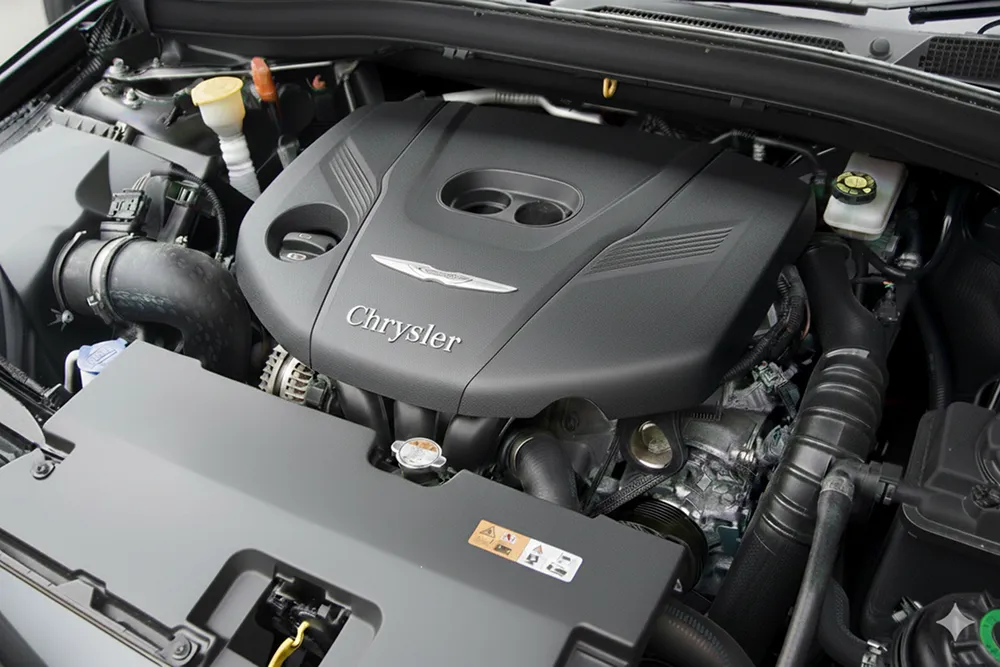
Production years 1964–1971 meet pre-regulation US Federal emissions standards (No EPA Engine Family designation applicable).
The Chrysler 426 HEMI is a 7,015 cc V8 petrol engine engineered for high-performance muscle cars (1964-1971). It combines a true hemispherical combustion chamber with dual rocker shafts to deliver explosive power and high-RPM capability. Designed before modern emissions regulations, it prioritized raw performance over environmental controls.
| Parameter | Value | Source |
|---|---|---|
Displacement | 7,015 cc | |
Fuel type | Petrol | |
Configuration | V8, OHV, 2 valves per cylinder, dual rocker shafts | |
Aspiration | Naturally aspirated | |
Bore × stroke | 4.25 in × 3.75 in (108.0 mm × 95.3 mm) | |
Power output | 425 hp (317 kW) @ 5,000 rpm (SAE gross) | |
Torque | 490 lb‑ft (664 Nm) @ 4,000 rpm (SAE gross) | |
Fuel system | Dual 4-barrel carburetors (Carter AFB) | |
Emissions standard | Pre-regulation (1964-1971) | |
Compression ratio | 10.25:1 | |
Cooling system | Water‑cooled | |
Turbocharger | None | |
Timing system | Gear-driven camshaft | |
Oil type | SAE 10W‑40 (non-detergent recommended for break-in) | |
Dry weight | 680 lb (308 kg) |
The Chrysler 426 HEMI was used exclusively in Chrysler Corporation high-performance vehicles with longitudinal mounting. This engine was a premium, low-volume option for Dodge and Plymouth muscle cars, featuring unique engine mounts, suspension, and drivetrain components. No licensing partnerships occurred. All specifications are documented in OEM service literature.
The 426 HEMI's primary reliability consideration is its complexity and fuel requirements, not inherent design flaws. Its valve train demands expert adjustment, and running on low-octane modern fuel without additives risks severe engine damage. Chrysler factory documentation emphasizes precise maintenance procedures to ensure longevity, making adherence to these protocols critical for preserving these valuable engines.
Analysis derived from Chrysler factory service manuals (1964-1971) and historical technical publications. Repair procedures should follow manufacturer guidelines.
The most common questions about engine codes, what they mean, how to find them and how this database works
The 426 HEMI is mechanically robust and can be extremely reliable long-term if maintained correctly. Its main challenges are the complexity of valve adjustments and the requirement for high-octane, additive-laced fuel. With expert care and proper fuel, these engines are known to last hundreds of thousands of miles.
The most common issues are related to maintenance complexity (valve train adjustment) and fuel compatibility (detonation from low-octane fuel). Secondary issues include oil leaks from aged gaskets and cooling system strain under high load. These are not inherent failures but consequences of age and improper upkeep.
The 426 HEMI was available in high-performance Dodge and Plymouth models from 1966-1971, including the Dodge Coronet, Charger, Plymouth Belvedere, Road Runner, and Barracuda 'Cuda. It was a factory-installed, low-production option, not an aftermarket swap in original applications.
Absolutely. The 426 HEMI is one of the most tunable engines ever made. Simple upgrades like headers, a performance camshaft, or a single 4-barrel carburetor can yield significant gains. Serious builds with aftermarket blocks, heads, and forced induction can exceed 1,000 hp. Its robust bottom end is legendary.
Fuel economy is very poor by modern standards. Expect 8-12 mpg (US) in city driving and 12-15 mpg (US) on the highway in a stock application. Aggressive driving or modifications will further reduce efficiency. This engine was designed for power, not economy.
No. The Chrysler 426 HEMI is a non-interference engine. If the timing chain were to fail, the pistons will not contact the valves, preventing catastrophic internal damage. This is a safety feature of its robust, low-RPM design philosophy.
The original specification was non-detergent SAE 10W-40 for break-in, then detergent oil. For modern use, a high-quality 10W-40 or 20W-50 conventional or synthetic oil with high zinc (ZDDP) content is essential to protect the flat-tappet camshaft and lifters from wear.
Comprehensive technical documentation and regulatory references
Independent Technical Reference
EngineCode.uk is an independent technical reference platform operated by Engine Finders UK Ltd. We are not affiliated with CHRYSLER or any other manufacturer. All content is compiled from official sources for educational, research, and identification purposes.
Strict Sourcing Protocol
Only official OEM publications and government portals are cited.
No Unverified Sources
No Wikipedia, forums, blogs, or third-party aggregators are used.
Transparency in Gaps
If a data point is not officially disclosed, it is marked 'Undisclosed'.
Regulatory Stability
EU regulations are referenced using CELEX identifiers for long-term stability.
CHRYSLER Official Site
Owner literature, service manuals, technical releases, and plant documentation.
EUR-Lex
EU emissions and type-approval regulations (e.g., CELEX:32007R0715, CELEX:32017R1151).
GOV.UK: Vehicle Approval & V5C
UK vehicle approval processes, import rules, and MoT guidance.
DVLA: Engine Changes & MoT
Official guidance on engine swaps and inspection implications.
Vehicle Certification Agency (VCA)
UK type-approval authority for automotive products.
Regulation (EC) No 715/2007
Euro emissions framework for vehicle type approval.
Commission Regulation (EU) 2017/1151
WLTP and RDE testing procedures for emissions certification.
GOV.UK: Vehicle Approval
UK compliance and certification requirements for imported and modified vehicles.
VCA Certification Portal
Type-approval guidance and documentation.
Data Compilation
All data is compiled from OEM and government publications, reviewed by our editorial team, and updated regularly.
Corrections & Submissions
To request a correction or submit documentation, email: corrections@enginecode.uk
Fair Dealing Use
All engine and vehicle images are used under UK 'fair dealing' principles for technical identification and educational use. Rights remain with their respective owners.
Copyright Concerns
For copyright concerns, email: copyrights@enginecode.uk
GDPR Compliance
EngineCode.uk complies with UK GDPR. We do not collect personal data unless explicitly provided.
Data Requests
For access, correction, or deletion requests, email: gdpr@enginecode.uk
Trademark Notice
All trademarks, logos, and engine codes are the property of their respective owners. Use on this site is strictly for reference and identification.
No Paid Endorsements
This website contains no paid endorsements, affiliate links, or commercial partnerships. We do not sell parts or services.
Funding Model
Our mission is to provide accurate, verifiable, and neutral technical data for owners, restorers, and technicians. This site is self-funded.
All specifications and compatibility data verified against officialCHRYSLER documentation and EU/UK regulatory texts. Where official data is unavailable, entries are marked “Undisclosed”.
All external links open in new tabs. Please verify current availability of resources.