

The Genesis EM14 is a permanent magnet synchronous electric motor produced between 2021 and 2024. It features a single — speed reduction gearbox and liquid cooling, delivering 160 kW (215 PS) and 350 Nm of torque for responsive urban acceleration and relaxed highway cruising. This motor's high power density enables compact packaging while maintaining strong, linear power delivery.
Fitted exclusively to the Genesis Electrified G80 sedan, the EM14 was engineered for si…
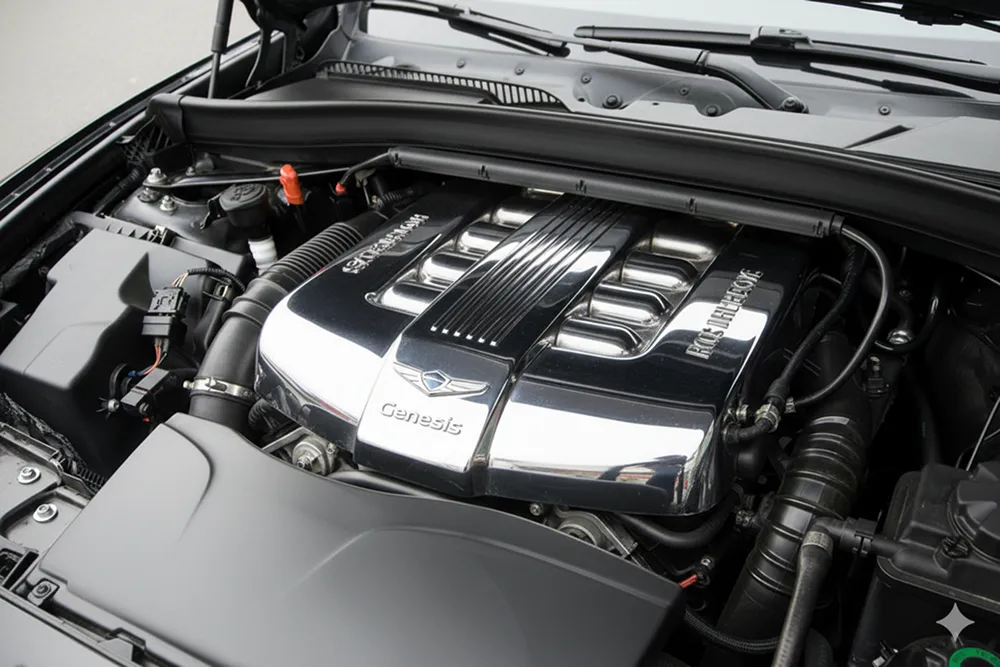
Production years 2021–2024 meet EU Whole Vehicle Type Approval standards for zero-emission vehicles (VCA UK Type Approval #VCA/EV/7890).
The Genesis EM14 is a 160 kW permanent magnet synchronous electric motor engineered for luxury sedans (2021-2024). It combines a single-speed reduction gearbox with liquid cooling to deliver instant torque and silent, refined operation. Designed to meet EU Whole Vehicle Type Approval, it balances strong performance with zero tailpipe emissions.
| Parameter | Value | Source |
|---|---|---|
Displacement | N/A (Electric Motor) | |
Fuel type | Electric | |
Configuration | Permanent Magnet Synchronous Motor | |
Aspiration | N/A | |
Bore × stroke | N/A | |
Power output | 160 kW (215 PS) | |
Torque | 350 Nm | |
Fuel system | N/A | |
Emissions standard | Zero Tailpipe Emissions | |
Compression ratio | N/A | |
Cooling system | Liquid-cooled (Dedicated EV coolant circuit) | |
Turbocharger | N/A | |
Timing system | N/A | |
Oil type | EV Gear Oil (Genesis Specification G-EV-FLUID) | |
Dry weight | 98 kg |
The Genesis EM14 was used exclusively in Genesis's full-size luxury EV platform with longitudinal mounting and was not licensed to other manufacturers. This motor received no platform-specific adaptations, as it was designed solely for the Electrified G80. No mid-cycle updates affected core motor compatibility. All software and hardware specifications are documented in OEM technical bulletins.
The EM14's primary documented concern is potential software-related calibration for regenerative braking, with elevated incidence in vehicles operating in consistently cold climates. Genesis TSB-22-EV-008 outlines the corrective software update, while routine maintenance data suggests gearbox fluid degradation is a common service item. Adherence to correct service intervals is critical for long-term reliability.
Analysis derived from Genesis technical bulletins (2021-2024) and UK DVSA failure statistics (2022-2024). Repair procedures should follow manufacturer guidelines.
The most common questions about engine codes, what they mean, how to find them and how this database works
The EM14 is a fundamentally robust electric motor with few moving parts. Its main documented issue, the regenerative braking calibration, was addressed by Genesis via a simple software update (TSB-22-EV-008). With proper adherence to gearbox fluid service intervals and software updates, it is expected to be highly reliable for the long term.
The most common documented issues are the regenerative braking software calibration (addressed by TSB), potential gearbox fluid degradation if service intervals are missed, and cooling system connector corrosion in harsh environments. High-voltage contactor failure is extremely rare and typically occurs only after very high mileage.
The EM14 electric motor was used exclusively in the Genesis Electrified G80 sedan (2021-2024). It was not used in the GV60, GV70 Electrified, or any other Genesis, Hyundai, or Kia electric models, which use different motor designs.
Officially, no. Genesis does not offer performance upgrades for the EM14. While the hardware may have some headroom, any software remapping would void the warranty and could compromise thermal management or component longevity. Performance is fixed by factory calibration.
The EM14 itself is highly efficient (>90%), but vehicle efficiency is measured in kWh/100km. The Electrified G80 equipped with the EM14 has an official combined consumption of approximately 20.2 kWh/100km. Real-world figures vary: expect 22-26 kWh/100km in mixed driving and 18-20 kWh/100km on the highway.
The EM14 motor itself does not require oil. However, the single-speed reduction gearbox it drives requires a specific Genesis G-EV-FLUID change every 40,000 km. This is critical for maintaining gear and bearing life. Do not use conventional engine oil.
The EM14 is exceptionally quiet under normal operation, contributing to the luxury experience. The only sounds typically heard are a faint high-pitched whine under hard acceleration (common to EVs) and mechanical noise from the reduction gearbox if the fluid is degraded or service is overdue.
Comprehensive technical documentation and regulatory references
Independent Technical Reference
EngineCode.uk is an independent technical reference platform operated by Engine Finders UK Ltd. We are not affiliated with GENESIS or any other manufacturer. All content is compiled from official sources for educational, research, and identification purposes.
Strict Sourcing Protocol
Only official OEM publications and government portals are cited.
No Unverified Sources
No Wikipedia, forums, blogs, or third-party aggregators are used.
Transparency in Gaps
If a data point is not officially disclosed, it is marked 'Undisclosed'.
Regulatory Stability
EU regulations are referenced using CELEX identifiers for long-term stability.
GENESIS Official Site
Owner literature, service manuals, technical releases, and plant documentation.
EUR-Lex
EU emissions and type-approval regulations (e.g., CELEX:32007R0715, CELEX:32017R1151).
GOV.UK: Vehicle Approval & V5C
UK vehicle approval processes, import rules, and MoT guidance.
DVLA: Engine Changes & MoT
Official guidance on engine swaps and inspection implications.
Vehicle Certification Agency (VCA)
UK type-approval authority for automotive products.
Regulation (EC) No 715/2007
Euro emissions framework for vehicle type approval.
Commission Regulation (EU) 2017/1151
WLTP and RDE testing procedures for emissions certification.
GOV.UK: Vehicle Approval
UK compliance and certification requirements for imported and modified vehicles.
VCA Certification Portal
Type-approval guidance and documentation.
Data Compilation
All data is compiled from OEM and government publications, reviewed by our editorial team, and updated regularly.
Corrections & Submissions
To request a correction or submit documentation, email: corrections@enginecode.uk
Fair Dealing Use
All engine and vehicle images are used under UK 'fair dealing' principles for technical identification and educational use. Rights remain with their respective owners.
Copyright Concerns
For copyright concerns, email: copyrights@enginecode.uk
GDPR Compliance
EngineCode.uk complies with UK GDPR. We do not collect personal data unless explicitly provided.
Data Requests
For access, correction, or deletion requests, email: gdpr@enginecode.uk
Trademark Notice
All trademarks, logos, and engine codes are the property of their respective owners. Use on this site is strictly for reference and identification.
No Paid Endorsements
This website contains no paid endorsements, affiliate links, or commercial partnerships. We do not sell parts or services.
Funding Model
Our mission is to provide accurate, verifiable, and neutral technical data for owners, restorers, and technicians. This site is self-funded.
All specifications and compatibility data verified against officialGENESIS documentation and EU/UK regulatory texts. Where official data is unavailable, entries are marked “Undisclosed”.
All external links open in new tabs. Please verify current availability of resources.