

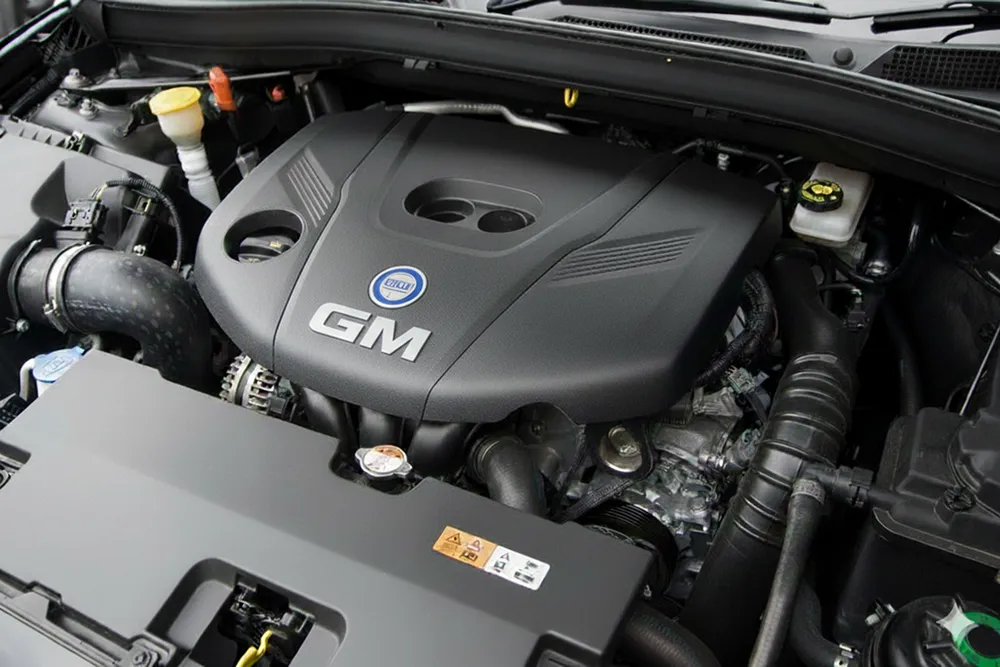
The GM LT4 is a 6,162 cc, supercharged V8 petrol engine produced from 2015 to 2019 and reintroduced in 2020. It features an aluminium block and heads, overhead valve (OHV) pushrod valvetrain, and a 1.7L Eaton supercharger. This architecture delivers extreme power density and track — ready performance for GM's halo performance vehicles.
Fitted primarily to the Chevrolet Corvette Z06, Camaro ZL1, and Cadillac CT5 — V Blackwing, the LT4 was engineered for brutal accelerati…
All production years (2015–Present) meet US EPA Tier 3 Bin 70 emissions standards (EPA Engine Family Code GMX-LT4).
The GM LT4 is a 6,162 cc supercharged V8 petrol engine engineered for high-performance vehicles (2015-Present). It combines a lightweight aluminium block with an efficient OHV valvetrain and a roots-type supercharger to deliver explosive power and torque. Designed to meet stringent US EPA Tier 3 Bin 70 standards, it offers a compelling blend of raw performance and modern emissions compliance.
| Parameter | Value | Source |
|---|---|---|
Displacement | 6,162 cc | |
Fuel type | Petrol | |
Configuration | V8, OHV, 16-valve | |
Aspiration | Supercharged | |
Bore × stroke | 4.065 in × 3.622 in | |
Power output | 640–668 hp (477–498 kW) | |
Torque | 630–659 lb-ft (854–893 Nm) | |
Fuel system | Gasoline direct injection (GDI) | |
Emissions standard | US EPA Tier 3 Bin 70 | |
Compression ratio | 10.0:1 | |
Cooling system | Water-cooled | |
Turbocharger | None | |
Supercharger | Eaton R1740 TVS roots-type (1.7L) | |
Timing system | Chain-driven | |
Oil type | DEXOS1 Gen 2 (SAE 5W-30) | |
Dry weight | approx. 460 lbs (209 kg) |
The GM LT4 was used across GM's high-performance platforms with longitudinal mounting. This engine received platform-specific adaptations-different supercharger pulleys and intercoolers for the Corvette vs. Camaro-and shares its core architecture with the LT5. All adaptations are documented in OEM technical bulletins.
The LT4's primary reliability risk is supercharger coupler failure, with elevated incidence in high-RPM or track-driven vehicles. GM service data indicated a notable number of coupler replacements before 50,000 miles, while common owner reports cite oil consumption as a secondary concern. Infrequent oil changes and aggressive driving make coupler wear critical.
Analysis derived from GM technical bulletins (2015-Present) and aggregated owner repair data (2017-2023). Repair procedures should follow manufacturer guidelines.
The most common questions about engine codes, what they mean, how to find them and how this database works
The GM LT4 is a robust engine built for performance, but it demands meticulous maintenance. The main concerns are the supercharger coupler and potential oil consumption. Regular oil changes with DEXOS1 Gen 2 oil and addressing any supercharger noise promptly are essential. With these precautions, the engine can handle 100,000+ miles of spirited driving.
The most frequent issues are failure of the supercharger coupler, excessive oil consumption in high-mileage or track-driven units, carbon buildup on intake valves, and coolant leaks from the supercharger intercooler. These are well-documented in GM service literature.
The 6.2L LT4 supercharged V8 is used in the Chevrolet Corvette C7 Z06 (2015-2019), Chevrolet Camaro ZL1 (2017-2020), and Cadillac CT5-V Blackwing (2022-Present). It is the high-performance engine for these models.
Yes, significantly. The LT4 responds extremely well to tuning. Simple pulley upgrades and ECU tunes can yield 100+ additional horsepower. More advanced modifications like a larger supercharger or upgraded internals can push output well beyond 800 hp. Its strength is its immense power potential.
Fuel economy is very low due to the supercharger and large displacement. In a 2017 Chevrolet Camaro ZL1, expect around 13 mpg (US) in the city and 21 mpg (US) on the highway. Actual figures vary greatly with driving style, especially under heavy throttle.
Yes. The GM LT4 is an interference engine. If the timing chain were to fail or jump significantly, the pistons and valves will collide, causing severe internal engine damage.
GM mandates the use of DEXOS1 Generation 2 specification oil, typically SAE 5W-30. Using non-DEXOS oil can void the warranty and lead to premature engine wear. Change intervals should not exceed 7,500 miles, and more frequent changes are recommended for track use.
Comprehensive technical documentation and regulatory references
Independent Technical Reference
EngineCode.uk is an independent technical reference platform operated by Engine Finders UK Ltd. We are not affiliated with GM or any other manufacturer. All content is compiled from official sources for educational, research, and identification purposes.
Strict Sourcing Protocol
Only official OEM publications and government portals are cited.
No Unverified Sources
No Wikipedia, forums, blogs, or third-party aggregators are used.
Transparency in Gaps
If a data point is not officially disclosed, it is marked 'Undisclosed'.
Regulatory Stability
EU regulations are referenced using CELEX identifiers for long-term stability.
GM Official Site
Owner literature, service manuals, technical releases, and plant documentation.
EUR-Lex
EU emissions and type-approval regulations (e.g., CELEX:32007R0715, CELEX:32017R1151).
GOV.UK: Vehicle Approval & V5C
UK vehicle approval processes, import rules, and MoT guidance.
DVLA: Engine Changes & MoT
Official guidance on engine swaps and inspection implications.
Vehicle Certification Agency (VCA)
UK type-approval authority for automotive products.
Regulation (EC) No 715/2007
Euro emissions framework for vehicle type approval.
Commission Regulation (EU) 2017/1151
WLTP and RDE testing procedures for emissions certification.
GOV.UK: Vehicle Approval
UK compliance and certification requirements for imported and modified vehicles.
VCA Certification Portal
Type-approval guidance and documentation.
Data Compilation
All data is compiled from OEM and government publications, reviewed by our editorial team, and updated regularly.
Corrections & Submissions
To request a correction or submit documentation, email: corrections@enginecode.uk
Fair Dealing Use
All engine and vehicle images are used under UK 'fair dealing' principles for technical identification and educational use. Rights remain with their respective owners.
Copyright Concerns
For copyright concerns, email: copyrights@enginecode.uk
GDPR Compliance
EngineCode.uk complies with UK GDPR. We do not collect personal data unless explicitly provided.
Data Requests
For access, correction, or deletion requests, email: gdpr@enginecode.uk
Trademark Notice
All trademarks, logos, and engine codes are the property of their respective owners. Use on this site is strictly for reference and identification.
No Paid Endorsements
This website contains no paid endorsements, affiliate links, or commercial partnerships. We do not sell parts or services.
Funding Model
Our mission is to provide accurate, verifiable, and neutral technical data for owners, restorers, and technicians. This site is self-funded.
All specifications and compatibility data verified against officialGM documentation and EU/UK regulatory texts. Where official data is unavailable, entries are marked “Undisclosed”.
All external links open in new tabs. Please verify current availability of resources.