

The Mitsubishi e — Evolution is not a production engine but a concept vehicle unveiled in 2017, showcasing a fully electric powertrain with no internal combustion component. It features dual electric motors (one on each axle), a high — capacity lithium — ion battery, and Mitsubishi’s S — AWC all — wheel control system adapted for EV dynamics. Total system output is rated at approximately 230 kW (313 PS) with instant torque delivery and zero tailpipe emissions.
Developed as a…
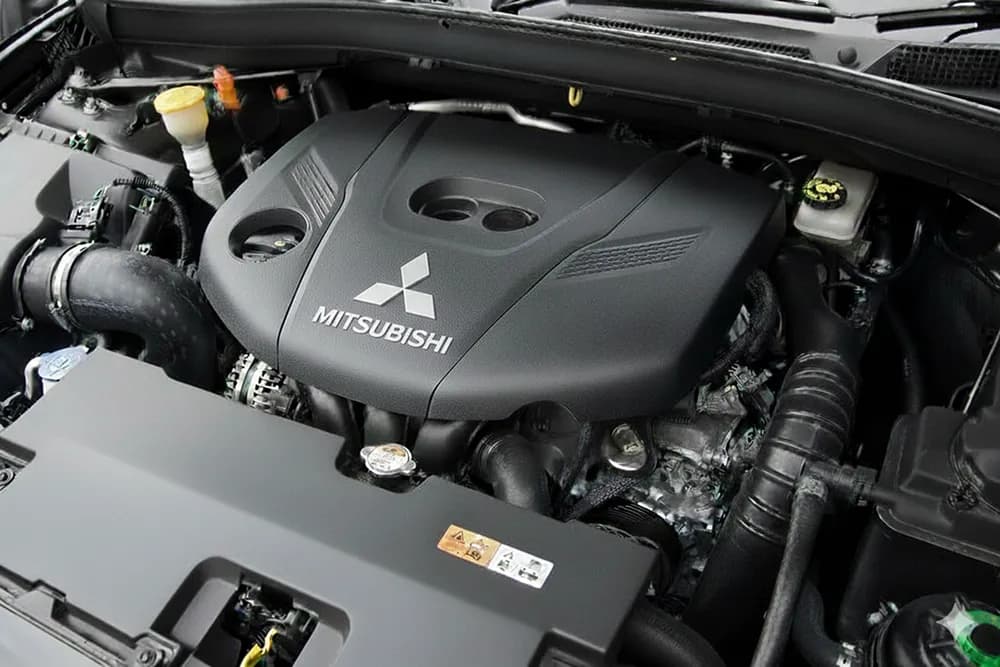
The e-Evolution is a concept vehicle with no type approval. It is not certified for road use and has no VCA or EU emissions classification.
The Mitsubishi e-Evolution is a concept all-electric SUV coupe unveiled in 2017, featuring a dual-motor AWD powertrain and advanced driver-assistance systems. It represents Mitsubishi’s vision for future EV performance and S-AWC integration but was never engineered for series production or regulatory compliance.
| Parameter | Value | Source |
|---|---|---|
Powertrain type | All-electric (dual-motor AWD) | |
System output | Approx. 230 kW (313 PS) | |
Torque | Instant, system-optimized | |
Battery type | Lithium-ion (capacity undisclosed) | |
Drivetrain | Twin-motor S-AWC (front + dual rear motors) | |
Charging | DC fast charging (specifications not disclosed) | |
Emissions | Zero tailpipe emissions (concept only) |
The Mitsubishi e-Evolution is a standalone concept vehicle with no production derivatives or platform sharing. It was not engineered for series manufacturing and has no compatible models. While it influenced Mitsubishi’s long-term EV strategy, no production vehicle (including the Outlander PHEV or future EVs) uses its exact powertrain architecture.
No reliability issues are documented, as the e-Evolution is a non-functional or limited-function concept with no consumer deployment. Mitsubishi has issued no service bulletins, recalls, or technical advisories for this vehicle.
Analysis based solely on Mitsubishi Motors official press materials (2017). No technical service documentation, government filings, or field data exist.
The most common questions about engine codes, what they mean, how to find them and how this database works
No. The Mitsubishi e-Evolution is a concept car unveiled in 2017 to showcase future EV design and S-AWC technology. It was never homologated, mass-produced, or sold to the public.
It uses a dual-motor all-electric powertrain with one motor on the front axle and two on the rear for torque vectoring. Total output is approximately 230 kW (313 PS), though exact specifications were never certified or released.
None. The e-Evolution remains a standalone concept. While it influenced Mitsubishi’s EV strategy, no production model—including the Outlander PHEV or upcoming EVs—uses its exact powertrain.
Not applicable. As a non-production prototype with no public technical data or parts, tuning or modification is not feasible outside Mitsubishi’s internal engineering team.
Mitsubishi never disclosed battery capacity or WLTP range. As a concept, it was not tested under standardized range protocols. No official figures exist.
Not applicable. The e-Evolution has no internal combustion engine—it is fully electric.
None. As a concept EV with no production intent, no maintenance schedule or fluid specifications were ever published by Mitsubishi.
Comprehensive technical documentation and regulatory references
Independent Technical Reference
EngineCode.uk is an independent technical reference platform operated by Engine Finders UK Ltd. We are not affiliated with MITSUBISHI or any other manufacturer. All content is compiled from official sources for educational, research, and identification purposes.
Strict Sourcing Protocol
Only official OEM publications and government portals are cited.
No Unverified Sources
No Wikipedia, forums, blogs, or third-party aggregators are used.
Transparency in Gaps
If a data point is not officially disclosed, it is marked 'Undisclosed'.
Regulatory Stability
EU regulations are referenced using CELEX identifiers for long-term stability.
MITSUBISHI Official Site
Owner literature, service manuals, technical releases, and plant documentation.
EUR-Lex
EU emissions and type-approval regulations (e.g., CELEX:32007R0715, CELEX:32017R1151).
GOV.UK: Vehicle Approval & V5C
UK vehicle approval processes, import rules, and MoT guidance.
DVLA: Engine Changes & MoT
Official guidance on engine swaps and inspection implications.
Vehicle Certification Agency (VCA)
UK type-approval authority for automotive products.
Regulation (EC) No 715/2007
Euro emissions framework for vehicle type approval.
Commission Regulation (EU) 2017/1151
WLTP and RDE testing procedures for emissions certification.
GOV.UK: Vehicle Approval
UK compliance and certification requirements for imported and modified vehicles.
VCA Certification Portal
Type-approval guidance and documentation.
Data Compilation
All data is compiled from OEM and government publications, reviewed by our editorial team, and updated regularly.
Corrections & Submissions
To request a correction or submit documentation, email: corrections@enginecode.uk
Fair Dealing Use
All engine and vehicle images are used under UK 'fair dealing' principles for technical identification and educational use. Rights remain with their respective owners.
Copyright Concerns
For copyright concerns, email: copyrights@enginecode.uk
GDPR Compliance
EngineCode.uk complies with UK GDPR. We do not collect personal data unless explicitly provided.
Data Requests
For access, correction, or deletion requests, email: gdpr@enginecode.uk
Trademark Notice
All trademarks, logos, and engine codes are the property of their respective owners. Use on this site is strictly for reference and identification.
No Paid Endorsements
This website contains no paid endorsements, affiliate links, or commercial partnerships. We do not sell parts or services.
Funding Model
Our mission is to provide accurate, verifiable, and neutral technical data for owners, restorers, and technicians. This site is self-funded.
All specifications and compatibility data verified against officialMITSUBISHI documentation and EU/UK regulatory texts. Where official data is unavailable, entries are marked “Undisclosed”.
All external links open in new tabs. Please verify current availability of resources.