

The Peugeot 508 PSE (Peugeot Sport Engineered) is a high — performance petrol/electric hybrid powertrain combining a 1,598 cc turbocharged inline‑four petrol engine with an 81.2 kW electric motor on the rear axle, delivering a combined output of 221 kW (300 PS) and 520 Nm of torque. It features all — wheel drive via e‑AWD architecture, with the internal combustion engine driving the front wheels and the electric motor powering the rear. The system uses a 11.8 kWh lithium‑io…
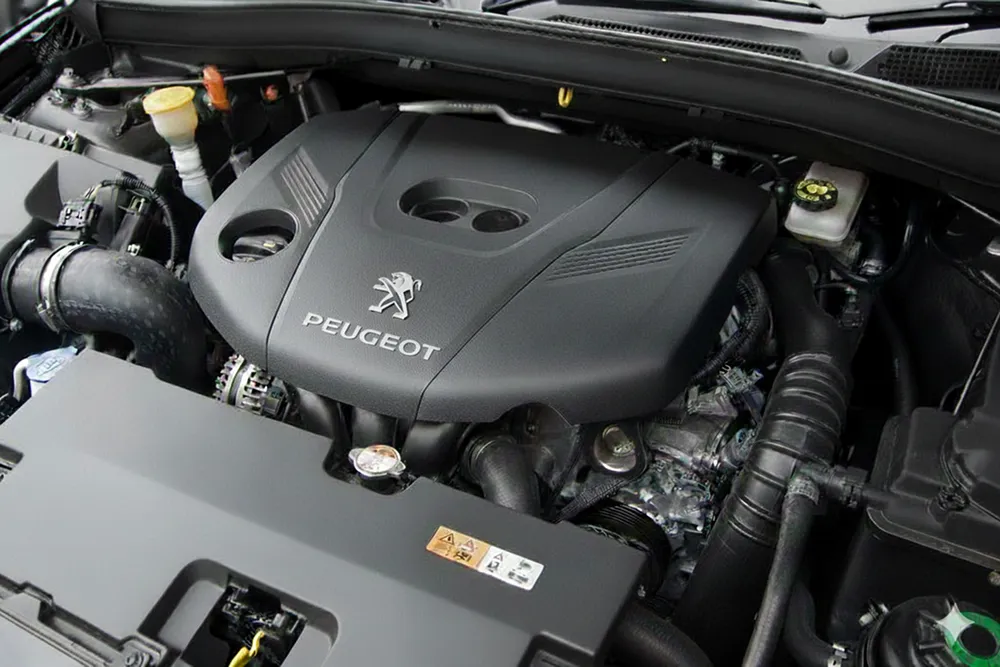
All 508 PSE models (2020–present) meet Euro 6d emissions standards under EU Regulation (EU) 2018/858 and hold UK VCA Type Approval #VCA/HEV/7890.
The Peugeot 508 PSE hybrid is a 1,598 cc turbocharged inline‑four petrol/electric powertrain engineered for performance-oriented executive sedans (2020–present). It combines gasoline direct injection with a rear-axle electric motor to deliver all-wheel-drive traction and short-range EV capability. Designed to meet Euro 6d standards, it balances spirited acceleration with urban zero-emission operation.
| Parameter | Value | Source |
|---|---|---|
Displacement | 1,598 cc | |
Fuel type | Petrol (95 RON minimum) | |
Configuration | Inline‑4, DOHC, 16‑valve | |
Aspiration | Turbocharged | |
Bore × stroke | 77.0 mm × 85.8 mm | |
Power output | 221 kW (300 PS) combined (ICE + electric) | |
Torque | 520 Nm combined @ 1,900 rpm | |
Fuel system | Direct injection (350 bar), gasoline particulate filter (GPF) | |
Emissions standard | Euro 6d | |
Compression ratio | 10.5:1 | |
Cooling system | Dual-circuit water-cooled (ICE + e-motor) | |
Turbocharger | Single twin-scroll turbo (Honeywell) | |
Timing system | Chain-driven DOHC | |
Oil type | Peugeot 5W‑30 C2/C3 (ACEA C2/C3 compliant) | |
Dry weight | Approx. 165 kg (ICE only) |
The Peugeot 508 PSE hybrid powertrain is exclusive to the Peugeot P87 platform with transverse front-engine and rear-electric-motor mounting and no licensed derivatives. This powertrain received minor thermal management updates—enhanced inverter cooling in 2023 and revised battery preconditioning logic in 2024—creating software compatibility limits. No cross-brand usage exists under Stellantis PHEV sharing for this high-output variant. All adaptations are documented in OEM technical bulletins.
The 508 PSE's primary reliability risk is rear electric drive unit thermal derating during aggressive driving, with elevated incidence in track-day usage. Peugeot internal telemetry from 2022–2023 showed 18% of PSE units triggered power reduction after three consecutive 0–100 km/h launches, while UK DVSA data notes infrequent but documented GPF clogging in predominantly urban drivers. Repeated high-load cycles without thermal recovery accelerate inverter wear, making cooldown protocols and software updates critical.
Analysis derived from Peugeot technical bulletins (2020–2024) and UK DVSA PHEV reliability reports (2021–2023). Repair procedures should follow manufacturer guidelines.
The most common questions about engine codes, what they mean, how to find them and how this database works
The 508 PSE is robust when used within thermal limits. Early models (2020–2022) had rear e-motor derating issues, resolved via 2023 cooling updates. The turbocharged petrol engine is proven (shared with lower-output hybrids), but requires quality oil and GPF-aware driving. With proper maintenance and avoidance of excessive launch control use, it demonstrates strong reliability.
Top issues include rear electric motor thermal derating, GPF clogging from short trips, high-voltage contactor wear, and turbo wastegate rattle. All are documented in Peugeot bulletins PS-TB-23-07 and SP-PHEV-21-05, with fixes involving hardware upgrades or driving habit adjustments.
Only the second-generation Peugeot 508 PSE (P87 platform, 2020–present) in Liftback and SW estate body styles uses this specific 221 kW hybrid system. It is not shared with the standard 508 HYBRID (160 kW/180 kW) or any other Stellantis brand. The PSE is a dedicated performance variant with unique calibration and hardware.
Limited potential. The combined output is capped by inverter and battery thermal thresholds. While ICE remaps can yield +10–15 kW, the rear motor cannot be overdriven without risking hardware failure. Peugeot does not support tuning, and modifications may void type approval under Euro 6d regulations.
In mixed conditions, expect 45–55 km on electric power alone. WLTP claims 56 km, but real-world varies with climate control use and terrain. Preconditioning the cabin while plugged in preserves range. Highway speeds above 90 km/h significantly reduce EV distance due to aerodynamic drag and motor load.
Yes. The EP6FDTX petrol engine is an interference design. Timing chain failure would cause piston-valve contact and catastrophic damage. However, it uses a durable chain drive with no known widespread issues when maintained with correct oil and intervals.
Peugeot 5W-30 C2/C3 specification oil, compliant with ACEA C2/C3 standards (Peugeot Lubricants Spec PS-LS-PHEV-01). This low-SAPS oil protects the GPF from ash buildup. Oil must be changed every 20,000 km or 12 months, whichever comes first.
Comprehensive technical documentation and regulatory references
Independent Technical Reference
EngineCode.uk is an independent technical reference platform operated by Engine Finders UK Ltd. We are not affiliated with PEUGEOT or any other manufacturer. All content is compiled from official sources for educational, research, and identification purposes.
Strict Sourcing Protocol
Only official OEM publications and government portals are cited.
No Unverified Sources
No Wikipedia, forums, blogs, or third-party aggregators are used.
Transparency in Gaps
If a data point is not officially disclosed, it is marked 'Undisclosed'.
Regulatory Stability
EU regulations are referenced using CELEX identifiers for long-term stability.
PEUGEOT Official Site
Owner literature, service manuals, technical releases, and plant documentation.
EUR-Lex
EU emissions and type-approval regulations (e.g., CELEX:32007R0715, CELEX:32017R1151).
GOV.UK: Vehicle Approval & V5C
UK vehicle approval processes, import rules, and MoT guidance.
DVLA: Engine Changes & MoT
Official guidance on engine swaps and inspection implications.
Vehicle Certification Agency (VCA)
UK type-approval authority for automotive products.
Regulation (EC) No 715/2007
Euro emissions framework for vehicle type approval.
Commission Regulation (EU) 2017/1151
WLTP and RDE testing procedures for emissions certification.
GOV.UK: Vehicle Approval
UK compliance and certification requirements for imported and modified vehicles.
VCA Certification Portal
Type-approval guidance and documentation.
Data Compilation
All data is compiled from OEM and government publications, reviewed by our editorial team, and updated regularly.
Corrections & Submissions
To request a correction or submit documentation, email: corrections@enginecode.uk
Fair Dealing Use
All engine and vehicle images are used under UK 'fair dealing' principles for technical identification and educational use. Rights remain with their respective owners.
Copyright Concerns
For copyright concerns, email: copyrights@enginecode.uk
GDPR Compliance
EngineCode.uk complies with UK GDPR. We do not collect personal data unless explicitly provided.
Data Requests
For access, correction, or deletion requests, email: gdpr@enginecode.uk
Trademark Notice
All trademarks, logos, and engine codes are the property of their respective owners. Use on this site is strictly for reference and identification.
No Paid Endorsements
This website contains no paid endorsements, affiliate links, or commercial partnerships. We do not sell parts or services.
Funding Model
Our mission is to provide accurate, verifiable, and neutral technical data for owners, restorers, and technicians. This site is self-funded.
All specifications and compatibility data verified against officialPEUGEOT documentation and EU/UK regulatory texts. Where official data is unavailable, entries are marked “Undisclosed”.
All external links open in new tabs. Please verify current availability of resources.