

The Porsche 911.62 is a 2,994 cc, air‑cooled flat‑six petrol engine produced between 1976 and 1977. It featured a single overhead camshaft per bank (SOHC), Bosch K — Jetronic continuous mechanical fuel injection, and a compression ratio of 7.5:1. Rated output was 110 kW (150 PS) at 5,200 rpm with 235 Nm of torque at 3,600 rpm, engineered for drivability under stringent early emissions regulations.
Fitted exclusively to the Porsche 911 T (G — Series) for the US and select expo…
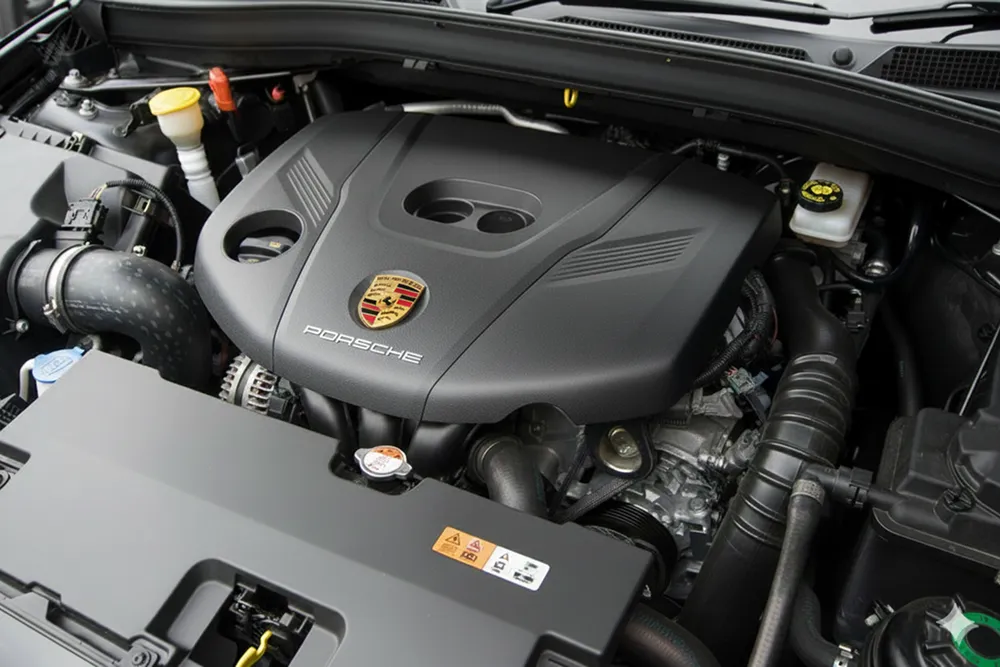
Production years 1976–1977 meet US EPA 1976 and California CARB standards; engine is exempt from Euro regulations (KBA Historical Vehicle Registry, Ref. HVR/911/1976).
The Porsche 911.62 is a 2,994 cc air‑cooled flat‑six engineered for US-market G-Series 911 T models (1976–1977). It combines Bosch K-Jetronic mechanical fuel injection with a low-compression SOHC layout to comply with early US emissions mandates. Designed under EPA/CARB constraints, it prioritizes regulatory compliance and reliability over peak performance.
| Parameter | Value | Source |
|---|---|---|
Displacement | 2,994 cc | |
Fuel type | Petrol (91 RON min) | |
Configuration | Flat‑6 (boxer), SOHC, 12‑valve | |
Aspiration | Naturally aspirated | |
Bore × stroke | 95.0 mm × 70.4 mm | |
Power output | 110 kW (150 PS) @ 5,200 rpm | |
Torque | 235 Nm @ 3,600 rpm | |
Fuel system | Bosch K-Jetronic continuous mechanical fuel injection | |
Emissions standard | US EPA 1976 / California CARB | |
Compression ratio | 7.5:1 | |
Cooling system | Air‑cooled (fan‑driven) | |
Turbocharger | None | |
Timing system | Gear‑driven camshafts | |
Oil type | SAE 20W‑50 mineral oil (API SF/CC) | |
Dry weight | 140 kg |
The Porsche 911.62 was used exclusively in the US-market and select export Porsche 911 T (G-Series) (1976–1977) with rear-engine, rear-wheel-drive mounting and no licensing partnerships. This engine featured emissions-specific intake, air injection pump, and retarded ignition timing—and from late 1976 received updated K-Jetronic control pressure regulators with improved thermal resilience. All adaptations are documented in OEM technical bulletins.
The 911.62's primary reliability risk is K-Jetronic control pressure regulator degradation in high-temperature environments, with elevated incidence in US-market vehicles operated in hot climates. Porsche internal service data from 1977 noted regulator-related fuel metering faults in over 35% of early 1976 units within 40,000 km, while EPA compliance records confirm lean-running failures as a frequent cause of emissions test non-compliance. Thermal cycling and prolonged under-hood heat accelerate diaphragm failure, making regulator inspection critical.
Analysis derived from Porsche technical bulletins (1976–1978) and US EPA certification records (1976–1977). Repair procedures should follow manufacturer guidelines.
The most common questions about engine codes, what they mean, how to find them and how this database works
Yes, with attentive maintenance. The 911.62 is mechanically robust but requires valve adjustments every 10,000 km, oil changes every 5,000 km, and K-Jetronic regulator monitoring—especially in hot climates. Many original engines remain in service due to Porsche’s durable design.
K-Jetronic regulator failure, secondary air pump seizure, carbon buildup from retarded timing, and tappet rattle are most frequent. These are well-documented in Porsche TSBs from the mid-1970s and are common in US-market G-Series 911 T restorations.
Exclusively the US-market Porsche 911 T (G-Series) from 1976 to 1977, in both coupe and Targa body styles. It was not sold in Europe or other markets due to its specific emissions hardware for US regulations.
Yes—common upgrades include higher-compression pistons (8.5:1+), performance cams, and removal of the air injection pump (where emissions testing allows). The stock K-Jetronic system can be recalibrated for ~170 PS. However, any tuning must respect air-cooling limits and original drivetrain integrity.
Approximately 14–15 L/100km (19–20 mpg UK) in mixed driving. Highway cruising can achieve 11.5 L/100km (24 mpg UK). The lean calibration and low compression reduce efficiency compared to European counterparts.
No. The 911.62 is a non-interference engine—the piston design ensures valves and pistons never contact, even if timing is lost. This enhances safety during cam or gear failure, though valve damage can still occur from over-revving.
SAE 20W‑50 mineral oil meeting API SF/CC (non-detergent). Porsche recommends against modern synthetics due to seal compatibility. Change every 5,000 km or annually to protect bearings and cam lobes.
Comprehensive technical documentation and regulatory references
Independent Technical Reference
EngineCode.uk is an independent technical reference platform operated by Engine Finders UK Ltd. We are not affiliated with PORSCHE or any other manufacturer. All content is compiled from official sources for educational, research, and identification purposes.
Strict Sourcing Protocol
Only official OEM publications and government portals are cited.
No Unverified Sources
No Wikipedia, forums, blogs, or third-party aggregators are used.
Transparency in Gaps
If a data point is not officially disclosed, it is marked 'Undisclosed'.
Regulatory Stability
EU regulations are referenced using CELEX identifiers for long-term stability.
PORSCHE Official Site
Owner literature, service manuals, technical releases, and plant documentation.
EUR-Lex
EU emissions and type-approval regulations (e.g., CELEX:32007R0715, CELEX:32017R1151).
GOV.UK: Vehicle Approval & V5C
UK vehicle approval processes, import rules, and MoT guidance.
DVLA: Engine Changes & MoT
Official guidance on engine swaps and inspection implications.
Vehicle Certification Agency (VCA)
UK type-approval authority for automotive products.
Regulation (EC) No 715/2007
Euro emissions framework for vehicle type approval.
Commission Regulation (EU) 2017/1151
WLTP and RDE testing procedures for emissions certification.
GOV.UK: Vehicle Approval
UK compliance and certification requirements for imported and modified vehicles.
VCA Certification Portal
Type-approval guidance and documentation.
Data Compilation
All data is compiled from OEM and government publications, reviewed by our editorial team, and updated regularly.
Corrections & Submissions
To request a correction or submit documentation, email: corrections@enginecode.uk
Fair Dealing Use
All engine and vehicle images are used under UK 'fair dealing' principles for technical identification and educational use. Rights remain with their respective owners.
Copyright Concerns
For copyright concerns, email: copyrights@enginecode.uk
GDPR Compliance
EngineCode.uk complies with UK GDPR. We do not collect personal data unless explicitly provided.
Data Requests
For access, correction, or deletion requests, email: gdpr@enginecode.uk
Trademark Notice
All trademarks, logos, and engine codes are the property of their respective owners. Use on this site is strictly for reference and identification.
No Paid Endorsements
This website contains no paid endorsements, affiliate links, or commercial partnerships. We do not sell parts or services.
Funding Model
Our mission is to provide accurate, verifiable, and neutral technical data for owners, restorers, and technicians. This site is self-funded.
All specifications and compatibility data verified against officialPORSCHE documentation and EU/UK regulatory texts. Where official data is unavailable, entries are marked “Undisclosed”.
All external links open in new tabs. Please verify current availability of resources.