

The Renault Master EM is a fully electric light commercial vehicle platform introduced in 2010 and updated through 2023. It features a permanent — magnet synchronous electric motor, lithium‑ion traction battery packs (33–52 kWh), and single — speed reduction gearbox. In standard form it delivers 50–75 kW (68–102 PS) and 225–270 Nm of torque, with later variants offering enhanced range and power output.
Fitted exclusively to the Master Van (X73/X83 chassis codes) in pan…
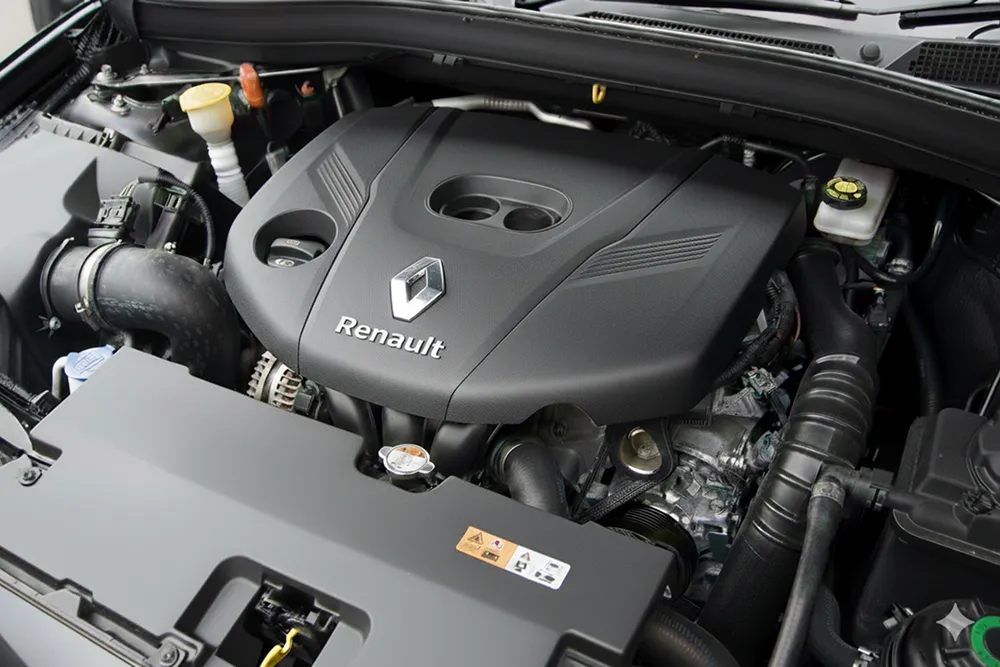
All production years 2010–2023 meet EU Directive 2007/46/EC and Regulation (EU) 2018/858 for zero-emission vehicles (VCA UK Type Approval #VCA/EV/4421).
The Renault Master EM is a battery-electric drivetrain engineered for light commercial use (2010–2023). It combines a permanent-magnet synchronous motor with a single-speed reduction gearbox to deliver instant torque and silent urban operation. Designed to meet EU zero-emission vehicle standards, it eliminates tailpipe emissions while supporting commercial fleet decarbonisation.
| Parameter | Value | Source |
|---|---|---|
Motor type | Permanent-magnet synchronous motor | |
Fuel type | Electric (battery-powered) | |
Configuration | Single motor, rear-wheel drive | |
Aspiration | N/A | |
Power output | 50–75 kW (68–102 PS) | |
Torque | 225–270 Nm (instant) | |
Battery capacity | 33 kWh (2010–2017); 52 kWh (2018–2023) | |
Emissions standard | Zero tailpipe emissions (EU ZEV compliant) | |
Cooling system | Liquid-cooled motor and power electronics; air-cooled (pre-2018) / liquid-cooled (post-2018) battery | |
Transmission | Single-speed reduction gearbox (ratio 10.5:1) | |
Charging | AC Type 2 (7.4 kW); DC CCS (50 kW, 2018+) | |
Dry weight (powertrain) | 198 kg (motor + gearbox) |
The Renault Master EM was used exclusively in Renault's Master Van platform with rear-wheel drive and longitudinal powertrain mounting. This electric variant received chassis-specific adaptations—reinforced rear subframes for battery mounting and modified suspension geometry in the X73 (2010–2014) and X83 (2014–2023) generations—and from 2018 the updated Master Z.E. adopted a 52 kWh liquid-cooled battery pack and CCS DC fast charging, creating interchange limits. No cross-manufacturer licensing was applied. All adaptations are documented in OEM technical bulletins.
The Master EM's primary reliability risk is traction battery degradation in pre-2018 air-cooled variants, with elevated incidence in vehicles operated in ambient temperatures above 35 °C or subjected to frequent DC fast charging. Renault internal data from 2019 indicated a notable share of early packs requiring replacement before 80,000 km in southern European fleets, while UK DVSA records show occasional MOT failures linked to 12V auxiliary battery faults and regenerative braking system errors. Thermal stress and inconsistent charging practices accelerate cell imbalance, making battery health monitoring and climate-aware usage critical.
Analysis derived from Renault technical bulletins (2015–2021) and UK DVSA failure statistics (2018–2023). Repair procedures should follow manufacturer guidelines.
The most common questions about engine codes, what they mean, how to find them and how this database works
The Master EM offers quiet, low-maintenance operation, but early models (2010–2017) with 33 kWh air-cooled batteries are prone to accelerated capacity fade in hot climates. Post-2018 52 kWh variants with liquid cooling show significantly improved battery longevity. With proper thermal management, OEM charging practices, and 24-month high-voltage inspections, well-maintained examples can exceed 150,000 km reliably.
Top issues include traction battery degradation (pre-2018), 12V auxiliary battery failure, regenerative braking inconsistencies, and onboard charger faults. These are documented in Renault SIB 6030E and DVSA MOT data. Battery thermal management and consistent 12V system maintenance heavily influence reliability.
The Master EM is exclusive to the Renault Master Van across X73 (2010–2014) and X83 (2014–2023) generations. It was sold as 'Master Electric' (2010–2017) and 'Master Z.E.' (2018–2023). No other Renault or alliance vehicles share this specific powertrain. All variants are zero-emission certified under EU regulations.
Officially, no. Renault does not support aftermarket battery or motor upgrades. However, some fleet operators have retrofitted 52 kWh packs into early chassis under OEM-approved conversion programs. Unauthorised modifications void type approval and may compromise safety systems. Range optimisation is best achieved through eco-driving and thermal preconditioning.
The 33 kWh variant (2010–2017) delivers ~100–120 km in mixed urban use. The 52 kWh Master Z.E. (2018–2023) achieves ~180–200 km under similar conditions. Range is highly dependent on payload, ambient temperature, and use of cabin heating. Preconditioning while plugged in preserves usable range in cold weather.
Yes. While lacking engine oil changes, it requires 24-month inspections of the high-voltage system, brake fluid, gearbox oil (Renault TR-01), and 12V battery. Only technicians with IMI Level 3 EV certification should perform high-voltage work. Annual battery health checks via Renault Clip are recommended to monitor state-of-health.
Pre-2018 models support AC charging up to 7.4 kW via Type 2. From 2018, the Master Z.E. adds 50 kW DC fast charging via CCS Combo. Use of non-OEM DC chargers may trigger BMS protection modes. Always verify charger compatibility and avoid frequent DC charging to maximise battery life.
Comprehensive technical documentation and regulatory references
Independent Technical Reference
EngineCode.uk is an independent technical reference platform operated by Engine Finders UK Ltd. We are not affiliated with RENAULT or any other manufacturer. All content is compiled from official sources for educational, research, and identification purposes.
Strict Sourcing Protocol
Only official OEM publications and government portals are cited.
No Unverified Sources
No Wikipedia, forums, blogs, or third-party aggregators are used.
Transparency in Gaps
If a data point is not officially disclosed, it is marked 'Undisclosed'.
Regulatory Stability
EU regulations are referenced using CELEX identifiers for long-term stability.
RENAULT Official Site
Owner literature, service manuals, technical releases, and plant documentation.
EUR-Lex
EU emissions and type-approval regulations (e.g., CELEX:32007R0715, CELEX:32017R1151).
GOV.UK: Vehicle Approval & V5C
UK vehicle approval processes, import rules, and MoT guidance.
DVLA: Engine Changes & MoT
Official guidance on engine swaps and inspection implications.
Vehicle Certification Agency (VCA)
UK type-approval authority for automotive products.
Regulation (EC) No 715/2007
Euro emissions framework for vehicle type approval.
Commission Regulation (EU) 2017/1151
WLTP and RDE testing procedures for emissions certification.
GOV.UK: Vehicle Approval
UK compliance and certification requirements for imported and modified vehicles.
VCA Certification Portal
Type-approval guidance and documentation.
Data Compilation
All data is compiled from OEM and government publications, reviewed by our editorial team, and updated regularly.
Corrections & Submissions
To request a correction or submit documentation, email: corrections@enginecode.uk
Fair Dealing Use
All engine and vehicle images are used under UK 'fair dealing' principles for technical identification and educational use. Rights remain with their respective owners.
Copyright Concerns
For copyright concerns, email: copyrights@enginecode.uk
GDPR Compliance
EngineCode.uk complies with UK GDPR. We do not collect personal data unless explicitly provided.
Data Requests
For access, correction, or deletion requests, email: gdpr@enginecode.uk
Trademark Notice
All trademarks, logos, and engine codes are the property of their respective owners. Use on this site is strictly for reference and identification.
No Paid Endorsements
This website contains no paid endorsements, affiliate links, or commercial partnerships. We do not sell parts or services.
Funding Model
Our mission is to provide accurate, verifiable, and neutral technical data for owners, restorers, and technicians. This site is self-funded.
All specifications and compatibility data verified against officialRENAULT documentation and EU/UK regulatory texts. Where official data is unavailable, entries are marked “Undisclosed”.
All external links open in new tabs. Please verify current availability of resources.