

The Toyota 1GD — FTV is a 2,755 cc, inline‑four, turbocharged diesel engine introduced in 2015. It features an aluminium block with cast iron liners, dual overhead camshafts (DOHC), and a variable nozzle turbocharger (VNT). This advanced architecture prioritises high torque output and improved fuel efficiency for modern SUVs and pickups.
Fitted to models such as the Hilux (AN120/AN130), Fortuner (AN150/AN160), and Land Cruiser Prado (J150), the 1GD — FTV was engineer…
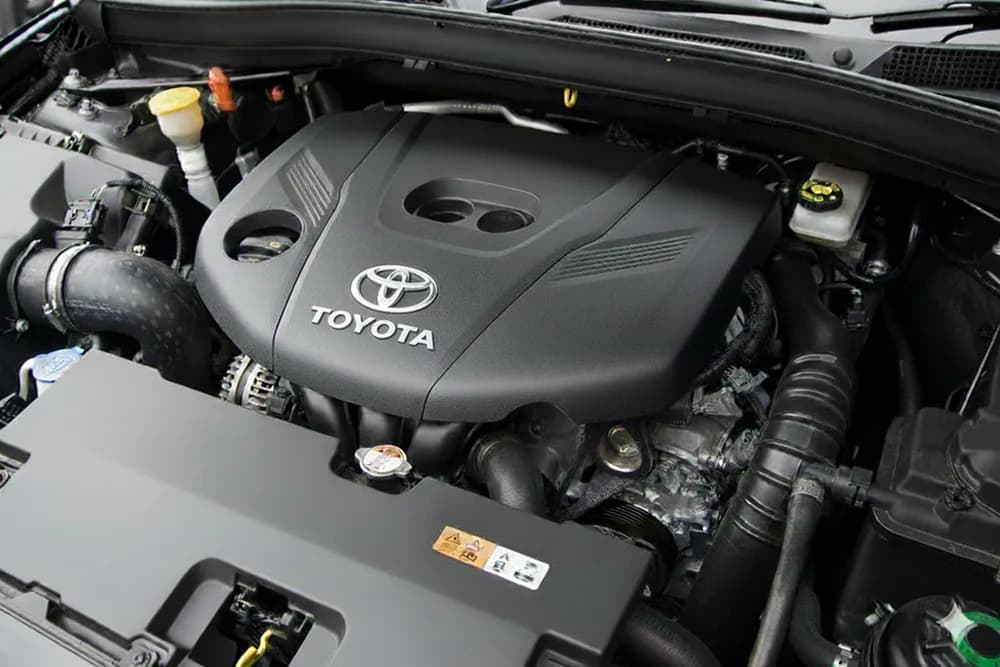
Production years 2015–Present meet Euro 6 and equivalent global emissions standards for their respective model years (Toyota Engineering Specification TES‑GD1, EU Regulation 2018/855).
The Toyota 1GD-FTV is a 2,755 cc inline‑four DOHC turbo-diesel engine engineered for full-size SUVs and pickups (2015-Present). It combines a high-pressure common-rail injection system with a variable nozzle turbocharger to deliver exceptional low-end torque and refined power. Designed to meet Euro 6 and equivalent global standards, it offers a balance of capability and modern efficiency.
| Parameter | Value | Source |
|---|---|---|
Displacement | 2,755 cc | |
Fuel type | Diesel | |
Configuration | Inline‑4, DOHC, 16‑valve | |
Aspiration | Turbocharged | |
Bore × stroke | 92.0 mm × 103.6 mm | |
Power output | 150–165 kW (204–224 PS) | |
Torque | 420–500 Nm @ 1,600–2,400 rpm | |
Fuel system | Common-rail direct injection (Denso, up to 2,000 bar) | |
Emissions standard | Euro 6 / Equivalent Global Standards | |
Compression ratio | 15.6:1 | |
Cooling system | Water‑cooled | |
Turbocharger | Variable Nozzle Turbocharger (VNT, IHI or Toyota) | |
Timing system | Chain‑driven | |
Oil type | Toyota Genuine 5W‑30 (API SN/CF, ACEA C2) | |
Dry weight | 220 kg |
The Toyota 1GD-FTV was used across Toyota's Hilux and Fortuner platforms with longitudinal mounting. This engine received platform-specific adaptations-reinforced sump for the Land Cruiser Prado and different accessory layouts for the Hilux-creating minor service part variations. All adaptations are documented in OEM technical bulletins.
The 1GD-FTV's primary reliability consideration is potential injector seal failure, with elevated incidence in vehicles subjected to extreme thermal cycles or high ambient temperatures. Toyota service data indicates a notable number of inspections and seal replacements were performed under campaign TSC-GD1-01, while owner reports frequently cite DPF issues stemming from predominantly urban driving. Extended oil change intervals can lead to soot buildup, affecting the EGR and DPF systems, making adherence to the service schedule critical.
Analysis derived from Toyota technical bulletins (2015-Present) and owner workshop manuals. Repair procedures should follow manufacturer guidelines.
The most common questions about engine codes, what they mean, how to find them and how this database works
Generally, yes. The 1GD-FTV is considered a robust and capable engine. Its main long-term consideration is potential injector seal failure, addressed by a specific service campaign. Regular maintenance, using the correct oil, and ensuring the DPF regenerates properly are key to long-term reliability. Many examples are performing well with high mileage.
The most frequently reported issues are potential injector seal failure (leading to fuel in oil), DPF regeneration problems (especially in city-driven vehicles), EGR cooler failures (causing coolant loss), and turbocharger actuator faults. These are well-documented in Toyota service information.
The 1GD-FTV is primarily used in the Toyota Hilux (AN120/AN130, 2015-Present), Fortuner (AN150/AN160, 2015-Present), Land Cruiser Prado (J150, 2015-Present), and the latest Innova HyCross (AN140, 2023-Present). It is Toyota's flagship 2.8L diesel engine.
Yes, it is very popular for tuning. ECU remaps can safely increase power and torque significantly (e.g., +40-60 kW). Common upgrades include a performance exhaust, intercooler, and sometimes a larger turbo. While robust, any tuning should be done professionally and may impact warranty and long-term reliability if pushed too far.
Fuel economy is reasonable for a large diesel. Expect around 8.5-11.0 L/100km (26-33 mpg UK) in mixed driving for a Hilux or Fortuner. Economy is heavily influenced by vehicle load, driving style, and terrain. DPF-equipped models driven only short distances will see significantly worse economy.
Yes. The Toyota 1GD-FTV is an interference engine. If the timing chain were to fail or jump significantly, the pistons can collide with the open valves, causing severe internal engine damage. This underscores the importance of addressing any engine performance issues promptly.
Toyota specifies its Genuine 5W-30 engine oil meeting API SN/CF and ACEA C2 standards. Using the correct low-ash, low-SAPS oil is critical for protecting the engine and ensuring the DPF functions correctly without becoming clogged prematurely.
Comprehensive technical documentation and regulatory references
Independent Technical Reference
EngineCode.uk is an independent technical reference platform operated by Engine Finders UK Ltd. We are not affiliated with TOYOTA or any other manufacturer. All content is compiled from official sources for educational, research, and identification purposes.
Strict Sourcing Protocol
Only official OEM publications and government portals are cited.
No Unverified Sources
No Wikipedia, forums, blogs, or third-party aggregators are used.
Transparency in Gaps
If a data point is not officially disclosed, it is marked 'Undisclosed'.
Regulatory Stability
EU regulations are referenced using CELEX identifiers for long-term stability.
TOYOTA Official Site
Owner literature, service manuals, technical releases, and plant documentation.
EUR-Lex
EU emissions and type-approval regulations (e.g., CELEX:32007R0715, CELEX:32017R1151).
GOV.UK: Vehicle Approval & V5C
UK vehicle approval processes, import rules, and MoT guidance.
DVLA: Engine Changes & MoT
Official guidance on engine swaps and inspection implications.
Vehicle Certification Agency (VCA)
UK type-approval authority for automotive products.
Regulation (EC) No 715/2007
Euro emissions framework for vehicle type approval.
Commission Regulation (EU) 2017/1151
WLTP and RDE testing procedures for emissions certification.
GOV.UK: Vehicle Approval
UK compliance and certification requirements for imported and modified vehicles.
VCA Certification Portal
Type-approval guidance and documentation.
Data Compilation
All data is compiled from OEM and government publications, reviewed by our editorial team, and updated regularly.
Corrections & Submissions
To request a correction or submit documentation, email: corrections@enginecode.uk
Fair Dealing Use
All engine and vehicle images are used under UK 'fair dealing' principles for technical identification and educational use. Rights remain with their respective owners.
Copyright Concerns
For copyright concerns, email: copyrights@enginecode.uk
GDPR Compliance
EngineCode.uk complies with UK GDPR. We do not collect personal data unless explicitly provided.
Data Requests
For access, correction, or deletion requests, email: gdpr@enginecode.uk
Trademark Notice
All trademarks, logos, and engine codes are the property of their respective owners. Use on this site is strictly for reference and identification.
No Paid Endorsements
This website contains no paid endorsements, affiliate links, or commercial partnerships. We do not sell parts or services.
Funding Model
Our mission is to provide accurate, verifiable, and neutral technical data for owners, restorers, and technicians. This site is self-funded.
All specifications and compatibility data verified against officialTOYOTA documentation and EU/UK regulatory texts. Where official data is unavailable, entries are marked “Undisclosed”.
All external links open in new tabs. Please verify current availability of resources.