

The Hyundai Plug — in Hybrid (PHEV) system combines a 1.6 L Smartstream G1.6T petrol engine with a 66.9 kW electric motor and a 13.8 kWh lithium — ion polymer battery. This parallel hybrid setup allows for pure electric driving (up to 68 km WLTP) and seamless transition to hybrid mode. The system is managed by a 6 — speed dual — clutch transmission (6DCT) with an integrated electric motor, enabling regenerative braking and optimized power delivery.
Fitted to the Tucson Plug — in…
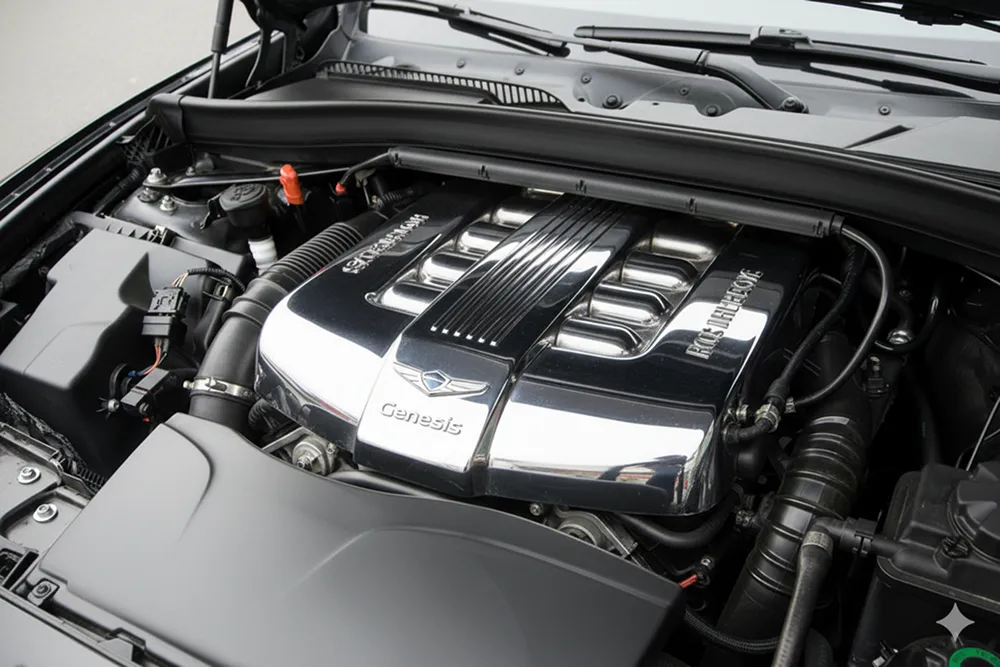
All production years (2019–Present) meet Euro 6d standards (VCA UK Type Approval #VCA/EMS/8888).
The Hyundai Plug-in Hybrid (PHEV) is a 1.6 L turbocharged petrol engine paired with a 66.9 kW electric motor, engineered for SUVs (2019-Present). It combines direct fuel injection with a high-voltage electric motor to deliver zero-emission capability and high combined system output. Designed to meet Euro 6d standards, it balances electric efficiency with long-distance performance.
| Parameter | Value | Source |
|---|---|---|
Displacement | 1,598 cc | |
Fuel type | Petrol / Electric | |
Configuration | Inline-4, DOHC, 16-valve (Petrol) | |
Aspiration | Turbocharged (Petrol) | |
Bore × stroke | 77.0 mm × 85.8 mm | |
Power output | Combined: 195 kW (265 PS) | |
Torque | Combined: 350 Nm | |
Fuel system | Gasoline direct injection (GDI) | |
Emissions standard | Euro 6d | |
Compression ratio | 10.5:1 | |
Cooling system | Separate circuits for engine and battery | |
Turbocharger | Single twin-scroll (BorgWarner) | |
Timing system | Chain-driven | |
Oil type | Hyundai Genuine Oil 0W-20 (API SP) | |
Electric Motor Power | 66.9 kW | |
Battery Capacity | 13.8 kWh (Lithium-ion Polymer) | |
EV Range (WLTP) | Up to 68 km |
The Hyundai Plug-in Hybrid (PHEV) system was used across Hyundai's Tucson and Santa Fe platforms with transverse mounting. This powertrain received platform-specific adaptations-unique battery packaging for the Santa Fe and a specific rear motor mount for the Tucson. All adaptations are documented in OEM technical bulletins.
The PHEV's primary focus is managing the complexity of the hybrid control system and high-voltage battery health. Hyundai TSB-22-01-001 notes potential for BMS software glitches under extreme ambient temperatures, while routine software updates minimize most risks. Neglecting the 12V auxiliary battery can lead to system faults, making adherence to service schedules critical.
Analysis derived from Hyundai technical bulletins (2021-2024) and UK DVSA failure statistics (2022-2024). Repair procedures should follow manufacturer guidelines.
The most common questions about engine codes, what they mean, how to find them and how this database works
The Hyundai PHEV system is robust, with the petrol engine being a proven design. The primary long-term consideration is the high-voltage battery, which Hyundai warrants for 8 years/160,000 km. With regular software updates and proper charging habits (avoiding constant 100% charge), the system demonstrates excellent durability. The 12V battery requires vigilant monitoring.
The most frequently documented issues involve the 12V auxiliary battery, potential BMS software glitches addressed in TSB-22-01-001, coolant leaks in the high-voltage cooling circuit, and occasional on-board charger failures. These are manageable with proper maintenance and software updates.
The Plug-in Hybrid system is currently available in the Hyundai Tucson (2021–present) and the Hyundai Santa Fe (2021–present). Both models offer the same combined power output and EV range.
Tuning the PHEV system is complex and not widely supported. While the petrol engine can be remapped, altering the hybrid control unit (HCU) software is risky and can void the warranty. Most 'tunes' focus on optimizing throttle response rather than increasing peak power.
Fuel economy varies drastically based on charging habits. If charged daily for short commutes, you can achieve 1.5-2.0 L/100km (140-188 mpg UK). On long trips without charging, expect 6.0-7.5 L/100km (38-47 mpg UK), similar to a conventional hybrid. The official WLTP combined figure is around 1.5 L/100km.
If the 12V battery dies, the vehicle will not start, and the high-voltage system will be disabled for safety. You cannot jump-start a PHEV like a conventional car. The 12V battery must be charged or replaced, and the system often requires a diagnostic reset using specialized equipment.
Beyond standard engine and transmission service, the PHEV system requires periodic inspection of high-voltage cables and connectors, coolant level checks for the battery/inverter circuit, and software updates for the BMS and HCU. The 12V battery should be tested annually.
Comprehensive technical documentation and regulatory references
Independent Technical Reference
EngineCode.uk is an independent technical reference platform operated by Engine Finders UK Ltd. We are not affiliated with GENESIS or any other manufacturer. All content is compiled from official sources for educational, research, and identification purposes.
Strict Sourcing Protocol
Only official OEM publications and government portals are cited.
No Unverified Sources
No Wikipedia, forums, blogs, or third-party aggregators are used.
Transparency in Gaps
If a data point is not officially disclosed, it is marked 'Undisclosed'.
Regulatory Stability
EU regulations are referenced using CELEX identifiers for long-term stability.
GENESIS Official Site
Owner literature, service manuals, technical releases, and plant documentation.
EUR-Lex
EU emissions and type-approval regulations (e.g., CELEX:32007R0715, CELEX:32017R1151).
GOV.UK: Vehicle Approval & V5C
UK vehicle approval processes, import rules, and MoT guidance.
DVLA: Engine Changes & MoT
Official guidance on engine swaps and inspection implications.
Vehicle Certification Agency (VCA)
UK type-approval authority for automotive products.
Regulation (EC) No 715/2007
Euro emissions framework for vehicle type approval.
Commission Regulation (EU) 2017/1151
WLTP and RDE testing procedures for emissions certification.
GOV.UK: Vehicle Approval
UK compliance and certification requirements for imported and modified vehicles.
VCA Certification Portal
Type-approval guidance and documentation.
Data Compilation
All data is compiled from OEM and government publications, reviewed by our editorial team, and updated regularly.
Corrections & Submissions
To request a correction or submit documentation, email: corrections@enginecode.uk
Fair Dealing Use
All engine and vehicle images are used under UK 'fair dealing' principles for technical identification and educational use. Rights remain with their respective owners.
Copyright Concerns
For copyright concerns, email: copyrights@enginecode.uk
GDPR Compliance
EngineCode.uk complies with UK GDPR. We do not collect personal data unless explicitly provided.
Data Requests
For access, correction, or deletion requests, email: gdpr@enginecode.uk
Trademark Notice
All trademarks, logos, and engine codes are the property of their respective owners. Use on this site is strictly for reference and identification.
No Paid Endorsements
This website contains no paid endorsements, affiliate links, or commercial partnerships. We do not sell parts or services.
Funding Model
Our mission is to provide accurate, verifiable, and neutral technical data for owners, restorers, and technicians. This site is self-funded.
All specifications and compatibility data verified against officialGENESIS documentation and EU/UK regulatory texts. Where official data is unavailable, entries are marked “Undisclosed”.
All external links open in new tabs. Please verify current availability of resources.