

The Honda N600E is a 598 cc, air — cooled, inline‑two petrol engine produced between 1967 and 1972. It features a single overhead camshaft (SOHC), two carburetors, and a chain — driven valvetrain. This compact engine was designed for Honda's first mass — market passenger car, delivering 31 kW (42 PS) and 50 Nm of torque, enabling a top speed of over 130 km/h.
Fitted exclusively to the N600 sedan and coupe, the N600E was engineered for lightweight efficiency and high — revving ch…
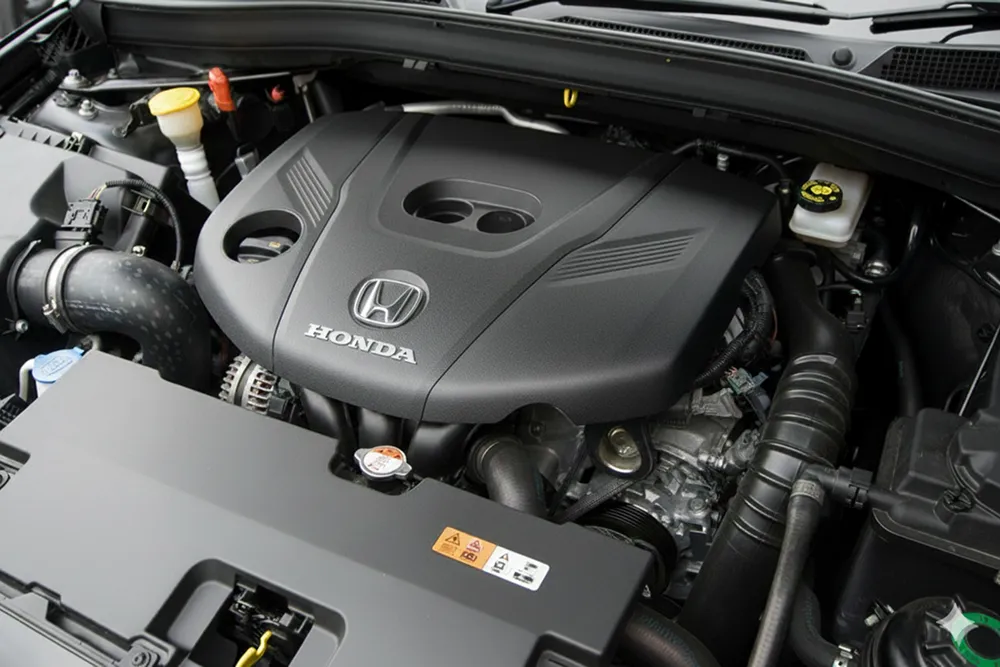
Honda
Production years 1967–1972 predate formal Euro emissions standards. Engine meets original Japanese Ministry of Transport and US DOT/FMVSS regulations for its production era.
The Honda N600E is a 598 cc air-cooled inline‑two petrol engine engineered for the pioneering N600 passenger car (1967-1972). It combines a high-revving SOHC design with twin carburetors to deliver spirited performance for its size. Designed for its era, it reflects pre-catalyst engineering focused on mechanical simplicity and lightweight construction.
| Parameter | Value | Source |
|---|---|---|
Displacement | 598 cc | |
Fuel type | Petrol | |
Configuration | Inline‑2, SOHC, 8‑valve | |
Aspiration | Naturally Aspirated | |
Bore × stroke | 60.0 mm × 53.0 mm | |
Power output | 31 kW (42 PS) @ 8,000 rpm | |
Torque | 50 Nm @ 5,500 rpm | |
Fuel system | Twin Keihin side-draft carburetors | |
Emissions standard | Pre-catalyst (Meets 1967-1972 JIS/US DOT) | |
Compression ratio | 8.8:1 | |
Cooling system | Air-cooled with thermostatic fan | |
Timing system | Chain-driven | |
Oil type | SAE 10W-40 (Mineral, non-detergent) | |
Dry weight | 68 kg |
The Honda N600E was developed exclusively for Honda's N600 platform and is not licensed to other manufacturers. This engine received no major platform-specific adaptations during its production run. All applications are documented in the original factory service manual.
The N600E's primary reliability focus is maintaining its air-cooling system and precise mechanical tolerances. Honda's original durability testing showed excellent longevity when serviced correctly, while owner data from vintage clubs suggests overheating and valve train wear are the most frequent issues. Neglecting valve clearances or allowing the cooling system to become obstructed leads to rapid engine degradation.
Analysis derived from Honda N600 Service Manual (1968) and aggregated data from Honda N600 Owner's Club (USA & Japan, 2010-2024). Repair procedures should follow original manufacturer guidelines.
The most common questions about engine codes, what they mean, how to find them and how this database works
Yes, the N600E can be very reliable long-term if meticulously maintained. Its simple, robust design is a strength. The keys to longevity are preventing overheating by keeping the cooling system perfect, adjusting valve clearances religiously every 5,000 km, and using the correct non-detergent oil. Neglect in these areas leads to rapid failure.
The most common issues are overheating (due to blocked fins or fan failure), excessive valve train wear (from infrequent adjustments or wrong oil), and carburetor problems (synchronization, wear, clogging). Oil leaks from aged seals are also very common. All are well-documented in the original Honda service manual.
The N600E engine was used exclusively in the Honda N600, which was produced from 1967 to 1972. It was available in both sedan and coupe body styles. This engine was not used in any other Honda vehicle, including the smaller N360 or the later Civic.
Yes, but with limitations. Common modifications include high-compression pistons, performance camshafts, and larger carburetors, which can yield 50-55 PS. More extreme builds with porting and balancing can reach 60+ PS. However, the air-cooling system becomes a major limiting factor for sustained high power output.
Official figures from the era are around 6.5 L/100km, but real-world economy varies. Expect 7-9 L/100km in city driving and 5.5-6.5 L/100km on a steady highway cruise. The small 25-liter fuel tank means frequent refueling is necessary. Using modern 95 RON unleaded fuel is standard.
No. The N600E is a non-interference engine. If the timing chain were to fail, the pistons would not contact the valves. This is a safety feature of its design, making it more forgiving of timing component wear or failure.
The original specification is non-detergent SAE 10W-40 mineral oil. This is critical because the engine's valve guides were not hardened and rely on the sludge-forming properties of non-detergent oil for protection. Using modern detergent oil will cause accelerated valve guide wear and oil consumption.
Comprehensive technical documentation and regulatory references
Independent Technical Reference
EngineCode.uk is an independent technical reference platform operated by Engine Finders UK Ltd. We are not affiliated with HONDA or any other manufacturer. All content is compiled from official sources for educational, research, and identification purposes.
Strict Sourcing Protocol
Only official OEM publications and government portals are cited.
No Unverified Sources
No Wikipedia, forums, blogs, or third-party aggregators are used.
Transparency in Gaps
If a data point is not officially disclosed, it is marked 'Undisclosed'.
Regulatory Stability
EU regulations are referenced using CELEX identifiers for long-term stability.
HONDA Official Site
Owner literature, service manuals, technical releases, and plant documentation.
EUR-Lex
EU emissions and type-approval regulations (e.g., CELEX:32007R0715, CELEX:32017R1151).
GOV.UK: Vehicle Approval & V5C
UK vehicle approval processes, import rules, and MoT guidance.
DVLA: Engine Changes & MoT
Official guidance on engine swaps and inspection implications.
Vehicle Certification Agency (VCA)
UK type-approval authority for automotive products.
Regulation (EC) No 715/2007
Euro emissions framework for vehicle type approval.
Commission Regulation (EU) 2017/1151
WLTP and RDE testing procedures for emissions certification.
GOV.UK: Vehicle Approval
UK compliance and certification requirements for imported and modified vehicles.
VCA Certification Portal
Type-approval guidance and documentation.
Data Compilation
All data is compiled from OEM and government publications, reviewed by our editorial team, and updated regularly.
Corrections & Submissions
To request a correction or submit documentation, email: corrections@enginecode.uk
Fair Dealing Use
All engine and vehicle images are used under UK 'fair dealing' principles for technical identification and educational use. Rights remain with their respective owners.
Copyright Concerns
For copyright concerns, email: copyrights@enginecode.uk
GDPR Compliance
EngineCode.uk complies with UK GDPR. We do not collect personal data unless explicitly provided.
Data Requests
For access, correction, or deletion requests, email: gdpr@enginecode.uk
Trademark Notice
All trademarks, logos, and engine codes are the property of their respective owners. Use on this site is strictly for reference and identification.
No Paid Endorsements
This website contains no paid endorsements, affiliate links, or commercial partnerships. We do not sell parts or services.
Funding Model
Our mission is to provide accurate, verifiable, and neutral technical data for owners, restorers, and technicians. This site is self-funded.
All specifications and compatibility data verified against officialHONDA documentation and EU/UK regulatory texts. Where official data is unavailable, entries are marked “Undisclosed”.
All external links open in new tabs. Please verify current availability of resources.