

The Jeep EWP is a 1,368 cc, inline‑three turbocharged petrol engine paired with an electric motor in a plug — in hybrid (PHEV) configuration, produced from 2021 onward. It features direct fuel injection, a single twin‑scroll turbocharger, dual overhead camshafts (DOHC), and is integrated with a 15.5 kWh lithium — ion battery pack. This powertrain delivers a combined system output of 190 kW (258 PS) and 500 Nm of torque, prioritizing low — end responsiveness and short — rang…
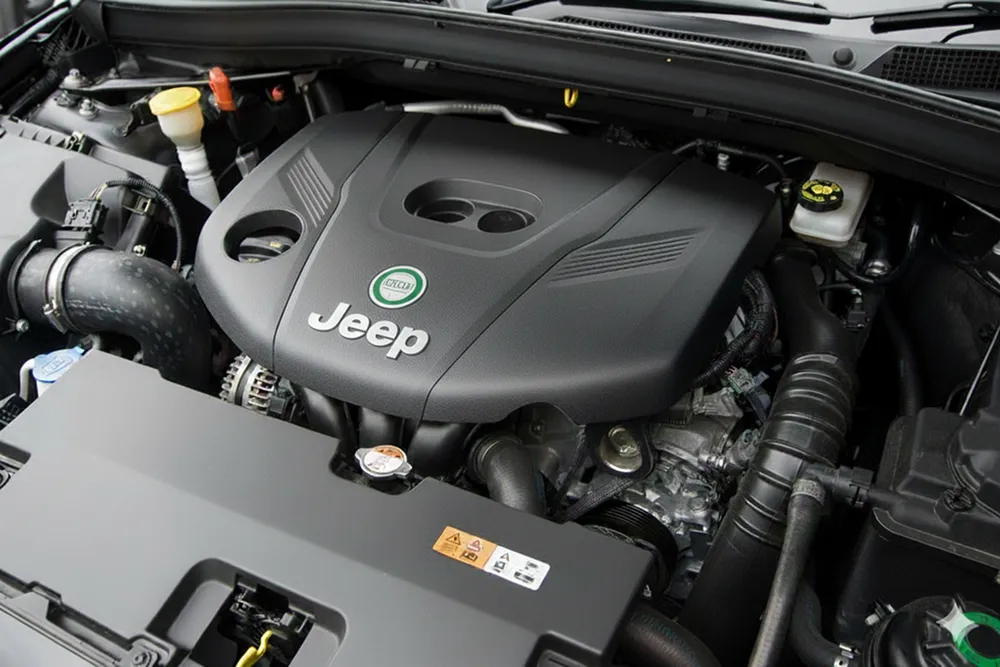
Production years 2021–Present meet Euro 6d standards for all markets (EU Regulation (EC) No 715/2007).
The Jeep EWP is a 1,368 cc inline‑three turbocharged petrol engine within a PHEV system, engineered for compact SUVs (2021-Present). It combines direct injection with a twin‑scroll turbocharger and a 60 kW electric motor to deliver instant torque and efficient electric-only operation. Designed to meet Euro 6d standards, it balances zero-emission city driving with robust highway and off-road performance.
| Parameter | Value | Source |
|---|---|---|
Displacement | 1,368 cc | |
Fuel type | Petrol (PHEV) | |
Configuration | Inline‑3, DOHC, 12‑valve + Electric Motor | |
Aspiration | Turbocharged (Twin‑Scroll) | |
Bore × stroke | 74.0 mm × 80.0 mm | |
Power output (Combined) | 190 kW (258 PS) | |
Torque (Combined) | 500 Nm | |
Fuel system | Direct Injection (200 bar) | |
Emissions standard | Euro 6d | |
Compression ratio | 10.5:1 | |
Cooling system | Water‑cooled (Dual circuit for ICE & battery) | |
Turbocharger | Single twin‑scroll turbo (Garrett) | |
Timing system | Chain‑driven | |
Oil type | Stellantis MS‑12991 (SAE 5W‑40) | |
Battery capacity | 15.5 kWh (Lithium-ion) | |
Electric motor power | 60 kW (81 PS) |
The Jeep EWP PHEV powertrain is used exclusively in Jeep's Renegade 4xe and Compass 4xe platforms with transverse mounting. This integrated system features unique power electronics, cooling circuits, and chassis reinforcements compared to conventional models. No major facelift revisions have occurred, ensuring broad parts interchangeability within the 4xe lineup. All adaptations are documented in OEM technical bulletins.
The EWP PHEV's primary reliability consideration involves the integration of its high-voltage system with the ICE. Stellantis service data indicates that thermal management of the battery and power electronics is critical under sustained high-load conditions, while adherence to the prescribed maintenance schedule for the ICE and periodic HV system checks minimizes long-term risks. Software updates are essential for optimal system coordination.
Analysis derived from Stellantis technical bulletins (2021-Present) and EU regulatory compliance data. Repair procedures should follow manufacturer guidelines.
The most common questions about engine codes, what they mean, how to find them and how this database works
The EWP PHEV system is generally robust, combining a proven 1.3T petrol engine with modern electric components. Its main long-term considerations are managing thermal loads on the HV system and preventing carbon buildup on the ICE's intake valves. Following the strict maintenance schedule, using the correct 5W-40 oil and 95 RON fuel, performing periodic intake cleaning, and keeping software updated ensures good reliability.
The most frequent issues relate to the hybrid system: thermal management alerts, 12V battery drain, and occasional electric motor performance warnings. For the petrol engine, carbon buildup on intake valves remains a concern. These are addressed in Stellantis service bulletins and are manageable with proper maintenance and software updates.
The EWP PHEV powertrain is used exclusively in the Jeep Renegade 4xe (2021-Present) and Jeep Compass 4xe (2021-Present). It is the sole powertrain for the 4xe variants, replacing conventional petrol and diesel options in these trims.
Tuning the EWP is complex due to its hybrid nature. While the ICE component can be remapped for modest gains, altering the combined system output risks damaging the electric motor, inverter, or battery management system. Most tuners focus on optimizing throttle response and electric motor deployment rather than significant power increases. Such modifications void the factory warranty.
Official combined fuel economy figures are around 2.0 L/100km (141 mpg UK) with a pure electric range of up to 50 km (WLTP). Real-world figures vary significantly: expect 50-70 mpg UK (4.0-5.6 L/100km) in mixed driving if the battery is frequently depleted, or near-zero fuel consumption for short urban trips using only electric power.
Yes, the internal combustion engine component of the EWP is an interference engine. If the timing chain were to fail or jump significantly, the pistons would collide with the open valves, causing severe internal damage. Fortunately, the chain system is robust and designed to last the engine's lifetime with proper oil maintenance.
Stellantis mandates the use of engine oil meeting the MS-12991 specification, typically a 5W-40 synthetic oil. Using the correct low-ash, mid-SAPS oil is crucial for protecting the turbocharger, timing chain, and especially the GPF from premature clogging or damage, just as with the non-hybrid variants.
Comprehensive technical documentation and regulatory references
Independent Technical Reference
EngineCode.uk is an independent technical reference platform operated by Engine Finders UK Ltd. We are not affiliated with JEEP or any other manufacturer. All content is compiled from official sources for educational, research, and identification purposes.
Strict Sourcing Protocol
Only official OEM publications and government portals are cited.
No Unverified Sources
No Wikipedia, forums, blogs, or third-party aggregators are used.
Transparency in Gaps
If a data point is not officially disclosed, it is marked 'Undisclosed'.
Regulatory Stability
EU regulations are referenced using CELEX identifiers for long-term stability.
JEEP Official Site
Owner literature, service manuals, technical releases, and plant documentation.
EUR-Lex
EU emissions and type-approval regulations (e.g., CELEX:32007R0715, CELEX:32017R1151).
GOV.UK: Vehicle Approval & V5C
UK vehicle approval processes, import rules, and MoT guidance.
DVLA: Engine Changes & MoT
Official guidance on engine swaps and inspection implications.
Vehicle Certification Agency (VCA)
UK type-approval authority for automotive products.
Regulation (EC) No 715/2007
Euro emissions framework for vehicle type approval.
Commission Regulation (EU) 2017/1151
WLTP and RDE testing procedures for emissions certification.
GOV.UK: Vehicle Approval
UK compliance and certification requirements for imported and modified vehicles.
VCA Certification Portal
Type-approval guidance and documentation.
Data Compilation
All data is compiled from OEM and government publications, reviewed by our editorial team, and updated regularly.
Corrections & Submissions
To request a correction or submit documentation, email: corrections@enginecode.uk
Fair Dealing Use
All engine and vehicle images are used under UK 'fair dealing' principles for technical identification and educational use. Rights remain with their respective owners.
Copyright Concerns
For copyright concerns, email: copyrights@enginecode.uk
GDPR Compliance
EngineCode.uk complies with UK GDPR. We do not collect personal data unless explicitly provided.
Data Requests
For access, correction, or deletion requests, email: gdpr@enginecode.uk
Trademark Notice
All trademarks, logos, and engine codes are the property of their respective owners. Use on this site is strictly for reference and identification.
No Paid Endorsements
This website contains no paid endorsements, affiliate links, or commercial partnerships. We do not sell parts or services.
Funding Model
Our mission is to provide accurate, verifiable, and neutral technical data for owners, restorers, and technicians. This site is self-funded.
All specifications and compatibility data verified against officialJEEP documentation and EU/UK regulatory texts. Where official data is unavailable, entries are marked “Undisclosed”.
All external links open in new tabs. Please verify current availability of resources.