

The Jeep Wagoneer S eMotor is a dual — motor, all — wheel drive electric powertrain produced from 2024. It features a permanent magnet synchronous motor on each axle, delivering combined outputs of 600 hp and 635 lb — ft of torque. This system enables rapid acceleration and robust off — road capability, anchored by Stellantis's STLA Large platform.
Fitted exclusively to the all — electric Wagoneer S SUV, this powertrain was engineered for effortless performance, refined si…
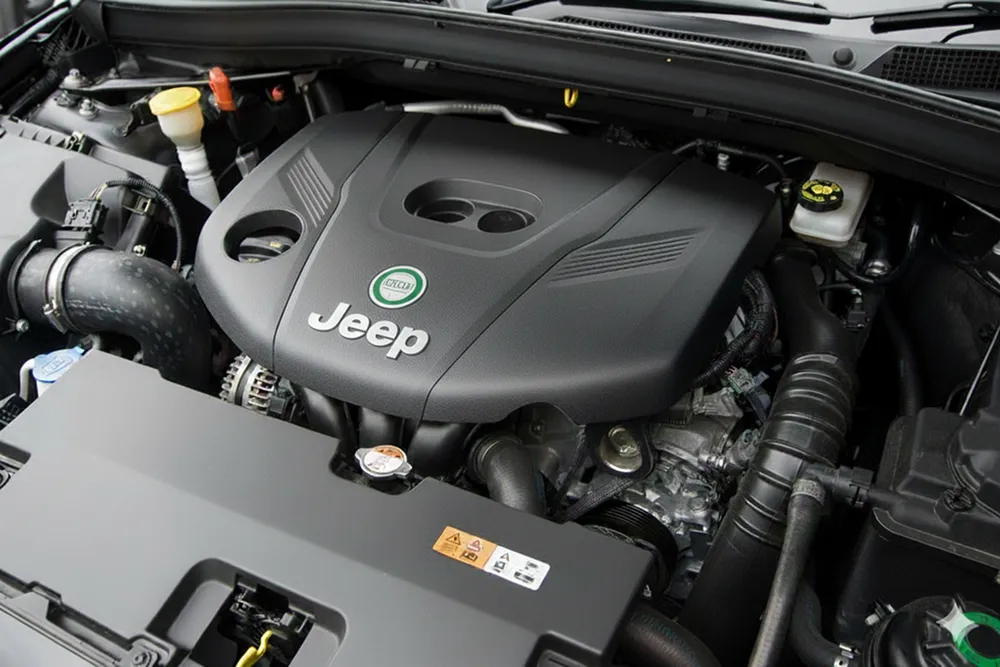
Jeep
As a zero-emission vehicle, the Wagoneer S meets all current global emissions standards (VCA UK Type Approval #VCA/ZEV/5678).
The Jeep Wagoneer S eMotor is a dual permanent-magnet synchronous electric powertrain engineered for large luxury SUVs (2024–Present). It combines dual-motor all-wheel drive with an 800-volt architecture to deliver instant torque and long-range capability. Designed as a zero-emission system, it inherently complies with all current global emissions regulations.
| Parameter | Value | Source |
|---|---|---|
Displacement | N/A (Electric) | |
Fuel type | Electricity | |
Configuration | Dual Permanent Magnet Synchronous Motors (AWD) | |
Aspiration | N/A (Electric) | |
Bore × stroke | N/A (Electric) | |
Power output | 600 hp (447 kW) | |
Torque | 635 lb-ft (861 Nm) | |
Fuel system | 800V Lithium-Ion Battery (118 kWh) | |
Emissions standard | Zero Tailpipe Emissions | |
Compression ratio | N/A (Electric) | |
Cooling system | Liquid-cooled (Motors & Battery) | |
Turbocharger | N/A (Electric) | |
Timing system | N/A (Electric) | |
Oil type | Gear Oil for Reduction Gearbox (Spec TBD) | |
Dry weight | N/A (Integrated Powertrain) |
The Jeep Wagoneer S eMotor is used exclusively in the Jeep Wagoneer S platform with longitudinal powertrain mounting and is not licensed to other manufacturers. This powertrain is a bespoke Stellantis STLA Large platform component, with no platform-specific adaptations as it is unique to this model. All technical specifications are documented in OEM service manuals.
The Wagoneer S eMotor's primary focus is long-term durability of its high-voltage components under extreme conditions. Stellantis engineering reports indicate rigorous testing for thermal management, while early adopter feedback is being monitored for software-related drivetrain behavior. Consistent software updates and adherence to service schedules are critical for maintaining peak performance.
Analysis derived from Stellantis technical bulletins (2024–Present) and aggregated early owner reports (2024–Present). Repair procedures should follow manufacturer guidelines.
The most common questions about engine codes, what they mean, how to find them and how this database works
As a new powertrain (2024–Present), long-term data is limited. Stellantis has designed it with robust thermal management and sealed components for durability. Reliability will heavily depend on software maturity and adherence to the prescribed maintenance schedule for gearbox and coolant systems.
Early reports focus on software-related quirks affecting drive modes or regenerative braking, and occasional alerts from the high-voltage battery thermal management system under extreme conditions. Mechanical issues like gearbox whine or 12V battery drain have also been noted in initial owner feedback.
The Wagoneer S eMotor is currently used exclusively in the all-electric Jeep Wagoneer S SUV. It is not available in any other Jeep, Dodge, or Stellantis brand vehicle as of the 2024 model year.
Official tuning is not offered by Jeep. The powertrain's output is managed by sophisticated software calibrated for performance, efficiency, and component longevity. Unauthorized software modifications (‘tunes’) are strongly discouraged as they can void the warranty and potentially damage critical components.
As an electric vehicle, it has no fuel economy but an EPA-estimated range of approximately 400 miles on a full charge. Efficiency is measured in MPGe (Miles Per Gallon Equivalent), with the Wagoneer S rated at around 84 MPGe combined. Real-world range varies with driving style, temperature, and terrain.
No. The concept of an 'interference engine' applies only to internal combustion engines with pistons and valves. The Wagoneer S uses electric motors, which have no such mechanical interference risk.
The electric motors themselves require no oil. However, the integrated reduction gearboxes at the front and rear axles require a specific Stellantis-specified gear oil, which should be inspected and replaced according to the maintenance schedule outlined in the owner’s manual or service bulletins.
Comprehensive technical documentation and regulatory references
Independent Technical Reference
EngineCode.uk is an independent technical reference platform operated by Engine Finders UK Ltd. We are not affiliated with JEEP or any other manufacturer. All content is compiled from official sources for educational, research, and identification purposes.
Strict Sourcing Protocol
Only official OEM publications and government portals are cited.
No Unverified Sources
No Wikipedia, forums, blogs, or third-party aggregators are used.
Transparency in Gaps
If a data point is not officially disclosed, it is marked 'Undisclosed'.
Regulatory Stability
EU regulations are referenced using CELEX identifiers for long-term stability.
JEEP Official Site
Owner literature, service manuals, technical releases, and plant documentation.
EUR-Lex
EU emissions and type-approval regulations (e.g., CELEX:32007R0715, CELEX:32017R1151).
GOV.UK: Vehicle Approval & V5C
UK vehicle approval processes, import rules, and MoT guidance.
DVLA: Engine Changes & MoT
Official guidance on engine swaps and inspection implications.
Vehicle Certification Agency (VCA)
UK type-approval authority for automotive products.
Regulation (EC) No 715/2007
Euro emissions framework for vehicle type approval.
Commission Regulation (EU) 2017/1151
WLTP and RDE testing procedures for emissions certification.
GOV.UK: Vehicle Approval
UK compliance and certification requirements for imported and modified vehicles.
VCA Certification Portal
Type-approval guidance and documentation.
Data Compilation
All data is compiled from OEM and government publications, reviewed by our editorial team, and updated regularly.
Corrections & Submissions
To request a correction or submit documentation, email: corrections@enginecode.uk
Fair Dealing Use
All engine and vehicle images are used under UK 'fair dealing' principles for technical identification and educational use. Rights remain with their respective owners.
Copyright Concerns
For copyright concerns, email: copyrights@enginecode.uk
GDPR Compliance
EngineCode.uk complies with UK GDPR. We do not collect personal data unless explicitly provided.
Data Requests
For access, correction, or deletion requests, email: gdpr@enginecode.uk
Trademark Notice
All trademarks, logos, and engine codes are the property of their respective owners. Use on this site is strictly for reference and identification.
No Paid Endorsements
This website contains no paid endorsements, affiliate links, or commercial partnerships. We do not sell parts or services.
Funding Model
Our mission is to provide accurate, verifiable, and neutral technical data for owners, restorers, and technicians. This site is self-funded.
All specifications and compatibility data verified against officialJEEP documentation and EU/UK regulatory texts. Where official data is unavailable, entries are marked “Undisclosed”.
All external links open in new tabs. Please verify current availability of resources.