The Vauxhall Corsa — e is a battery electric vehicle (BEV) introduced in 2019, featuring a permanent‑magnet synchronous electric motor rated at 100 kW (136 PS) and 260 Nm of torque. It is built on the PSA e‑CMP platform shared with the Peugeot e‑208 and Opel Corsa‑e, and uses a 50 kWh lithium‑ion NMC (nickel‑manganese‑cobalt) battery pack. The powertrain delivers instant torque and smooth acceleration, with a WLTP‑certified range of up to 337 km (209 mi).
Fitted exclusivel…
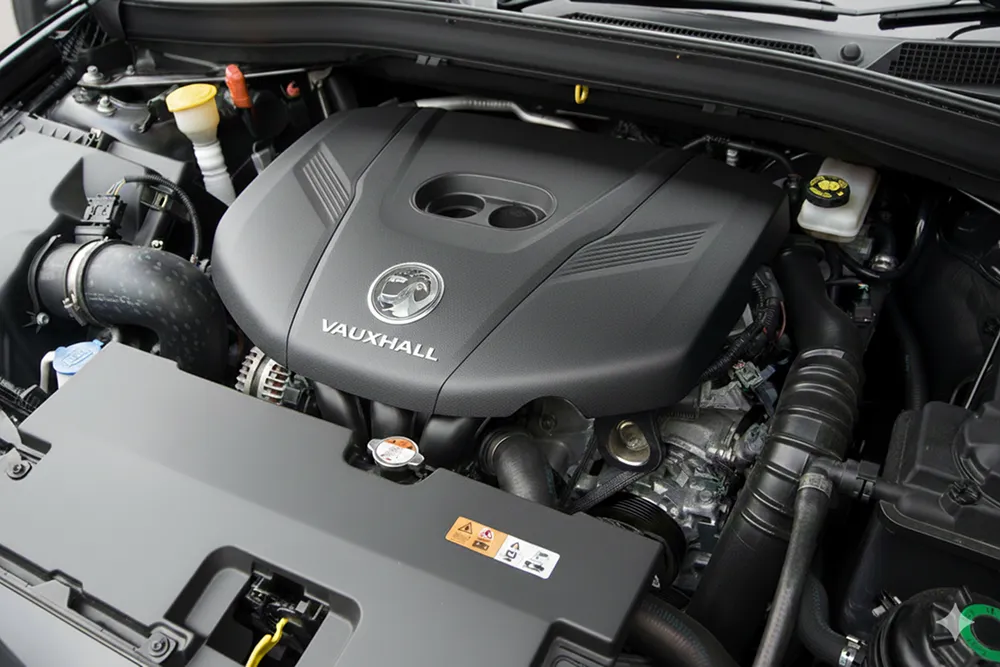
All production years (2019–present) qualify as Zero Emission Vehicles (ZEV) under UK VCA regulations and comply with EU Regulation (EU) 2019/631 CO₂ targets.
The Vauxhall Corsa-e features a 100 kW permanent-magnet synchronous motor and 50 kWh lithium-ion NMC battery pack engineered for compact urban mobility (2019–present). It delivers instant torque, single-speed reduction gearing, and supports up to 100 kW DC fast charging. Designed as a zero-emission vehicle, it meets all EU and UK ZEV regulatory requirements.
| Parameter | Value | Source |
|---|---|---|
Motor type | Permanent‑magnet synchronous AC | |
Peak power | 100 kW (136 PS) | |
Peak torque | 260 Nm (available from 0 rpm) | |
Battery capacity | 50 kWh (usable: 46.4 kWh) | |
Battery chemistry | Lithium‑ion NMC (Nickel‑Manganese‑Cobalt) | |
Drivetrain | Front‑wheel drive | |
Transmission | Single‑speed reduction gear (ratio: 9.3:1) | |
WLTP range | Up to 337 km (209 mi) | |
Charging (AC) | Up to 11 kW (0–100% in ~5 hrs) | |
Charging (DC) | Up to 100 kW (0–80% in ~30 mins) | |
Cooling system | Liquid‑cooled battery and power electronics | |
Regenerative braking | Multi-level (up to 0.25g deceleration) | |
Weight (powertrain only) | Approx. 160 kg (motor + inverter) | |
Emissions | 0 g/km CO₂ (tailpipe) | |
Warranty (battery) | 8 years / 160,000 km (70% capacity retention) |
The Vauxhall Corsa-e powertrain is exclusive to the Corsa F (2019–present) BEV variant and is not used in any other Vauxhall model. It shares its e‑CMP platform and core components with the Opel Corsa-e and Peugeot e‑208, but Vauxhall-specific calibration and software differentiate the driving experience. All adaptations are documented in OEM technical bulletins.
Engine Finders UK Ltd, which operates EngineCode.uk, can pass your enquiry to engine suppliers in the UK. The service is for vehicles in the United Kingdom, with UK delivery or fitting. This is a commercially connected service, and sending an enquiry does not confirm diagnosis or compatibility.
Diagnostic reminder: If a technician has recommended replacing the engine, you can send an enquiry to engine suppliers in the UK. Confirm the diagnosis first: an engine-code record does not diagnose a fault.
Field reports and technical service bulletins highlight component wear patterns under high-load operation. Adherence to manufacturer service intervals and approved fluid specifications is critical for long-term reliability.
Analysis derived from manufacturer technical service bulletins and industry workshop records. Repair procedures should follow manufacturer guidelines.
The most common questions about engine codes, what they mean, how to find them and how this database works
The Corsa-e has proven reliable with minimal mechanical complexity. The main considerations are battery longevity and 12V system management. With proper charging habits (20–80%) and software updates, most owners report trouble-free operation beyond 100,000 km. The 8-year battery warranty provides strong coverage.
Top issues include reduced regenerative braking in cold weather, occasional AC charging communication faults, heat pump condensation, and 12V battery drain during extended parking. These are documented in Vauxhall service bulletins and typically resolved via software updates or minor service actions.
The Corsa-e powertrain is used exclusively in the Vauxhall Corsa F (2019–present) BEV variant. It is not fitted to any other Vauxhall model, though it shares its platform with the Opel Corsa-e and Peugeot e‑208.
No meaningful tuning is available. The motor and inverter are tightly integrated with the BMS, and Vauxhall does not support performance remaps. Third-party tuning is not recommended due to safety and warranty implications. Power output is fixed at 100 kW (136 PS).
In mixed driving, expect 280–310 km in summer and 230–260 km in winter. Highway driving at 110 km/h reduces range to ~220 km year-round. Using eco mode and preconditioning the cabin while plugged in helps maximize usable range.
Vauxhall warrants the battery for 8 years or 160,000 km, retaining at least 70% capacity. Real-world data shows most vehicles retain 85–90% after 5 years with moderate use. Avoiding frequent 100% charges and extreme temperatures extends lifespan.
Minimal maintenance: annual cabin filter and brake fluid change, biennial high-voltage system inspection, and periodic 12V battery check. No oil, spark plugs, or timing components. Brake pads last longer due to regenerative braking. Always use Vauxhall-approved service centres for high-voltage work.
Comprehensive technical documentation and regulatory references
EngineCode.uk is operated by Engine Finders UK Ltd. It provides engine-reference information and an optional commercial enquiry service. It is not an official manufacturer website. Check the record's sources and confirm vehicle-specific details before relying on it for parts, repairs or replacement.
Our editorial standard prioritises relevant manufacturer documentation and official regulatory sources. The sources and verification status for a record should be checked alongside the data.
A statement is not verified merely because a source is listed. Where supporting evidence is missing or conflicting, the record should identify that limitation. Please report unsupported or inconsistent information.
Transparency in gaps
A missing or unverified value does not mean the manufacturer has withheld it. We distinguish information not yet verified, information not available to us, and information explicitly not disclosed by the source.
Regulatory Stability
EU regulations are referenced using CELEX identifiers for long-term stability.
EUR-Lex
EU emissions and type-approval regulations (e.g., CELEX:32007R0715, CELEX:32017R1151).
GOV.UK: Vehicle Approval & V5C
UK vehicle approval processes, import rules, and MoT guidance.
DVLA: Engine Changes & MoT
Official guidance on engine swaps and inspection implications.
Vehicle Certification Agency (VCA)
UK type-approval authority for automotive products.
Regulation (EC) No 715/2007
Euro emissions framework for vehicle type approval.
Commission Regulation (EU) 2017/1151
WLTP and RDE testing procedures for emissions certification.
GOV.UK: Vehicle Approval
UK compliance and certification requirements for imported and modified vehicles.
VCA Certification Portal
Type-approval guidance and documentation.
Records are subject to review and correction. Source links, dates and verification notes should be read with the technical information. Our Editorial and Sourcing Policy explains our standards and review process.
Found an error or missing source? Report a problem with this page. Include the field or statement concerned and a supporting source if available. You can also email corrections@enginecode.uk.
Copyright and permissions
Images and other material may be protected by copyright. Attribution does not by itself grant permission to reuse material. If you believe material on this site infringes your rights, contact copyrights@enginecode.uk with the page URL and details of your claim. We will review the material and take appropriate action.
Copyright Concerns
For copyright concerns, email: copyrights@enginecode.uk
Our Privacy Policy explains how Engine Finders UK Ltd uses information from visits, vehicle lookups, enquiries and messages. Our Cookie Policy explains cookies and similar technologies and how to change your choices.
For access, correction, or deletion requests, email: gdpr@enginecode.uk
Trademark Notice
All trademarks, logos, and engine codes are the property of their respective owners. Use on this site is strictly for reference and identification.
Ownership and commercial services
EngineCode.uk is owned and operated by Engine Finders UK Ltd. Alongside our reference content, we offer an optional replacement-engine enquiry service through Engine Finders and may identify relevant services provided by businesses connected with us. These commercial connections are disclosed. Using an enquiry service is not required to read our reference content.
Engine Finders UK Ltd operates this website. Our optional enquiry service has a commercial purpose. Our Ownership and Commercial Disclosure explains the relationship between the reference website and that service. Participating suppliers pay a fee or subscription to participate on the network and receive quote requests.
Use this record as a starting point for identification. Specifications and vehicle applications may contain errors or omissions. Confirm the exact engine variant and compatibility using vehicle-specific documentation and a qualified supplier or technician.
All external links open in new tabs. Please verify current availability of resources.