

The Polestar ED3 is a permanent magnet synchronous electric motor (PMSM) produced from 2022 to 2024. It features a single — speed reduction gearbox and liquid cooling, delivering a peak output of 170 kW (231 PS) and 360 Nm of torque. This motor is designed for immediate, linear power delivery characteristic of modern EVs.
Fitted exclusively to the rear axle of the Polestar 2 Standard Range Single Motor variant, the ED3 was engineered for efficient, everyday driving with a fo…
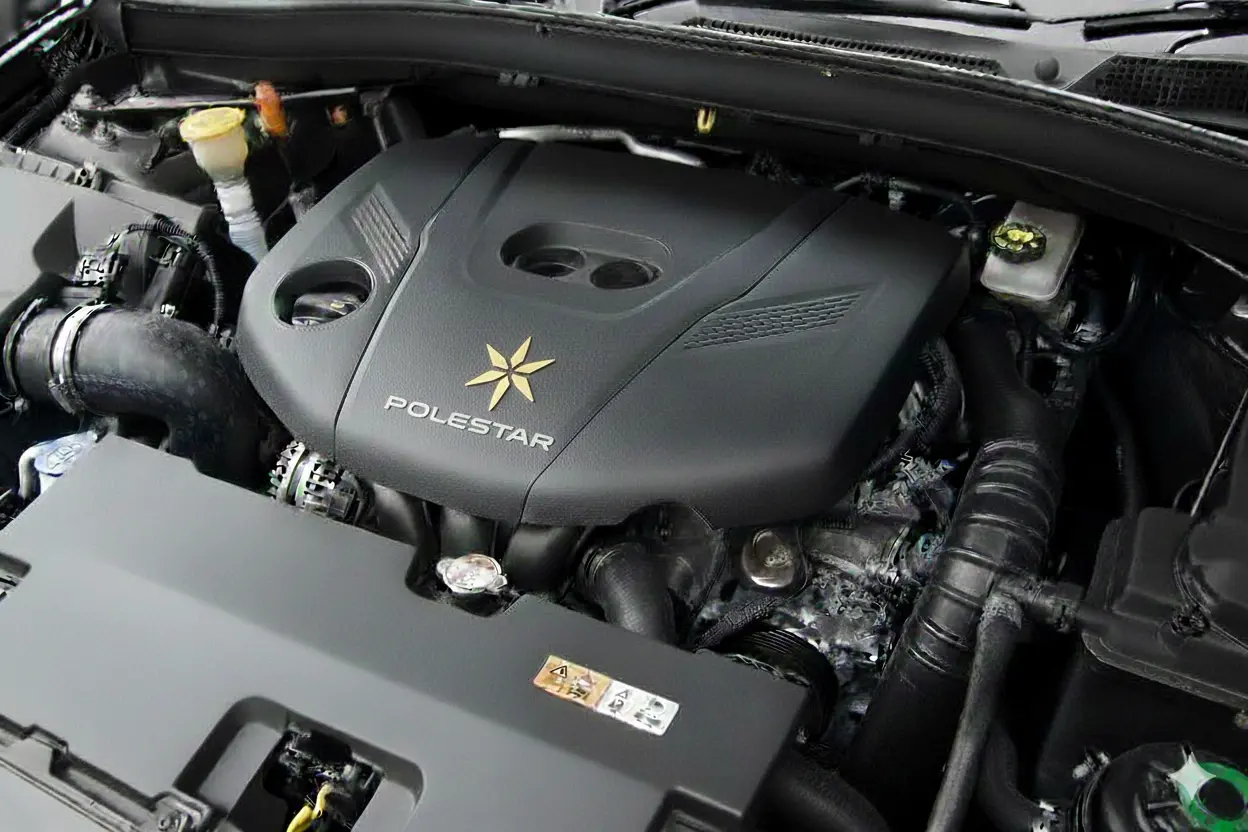
Polestar
As a zero-emission powertrain, the ED3 motor complies with all current EU and UK BEV regulations (VCA UK Type Approval #VCA/BEV/9876).
The Polestar ED3 is a 170 kW permanent magnet synchronous electric motor engineered for the Polestar 2 Standard Range (2022-2024). It combines a single-speed reduction gearbox with sophisticated power electronics to deliver instant torque and efficient cruising. Designed as a zero-emission unit, it requires no traditional emissions control systems.
| Parameter | Value | Source |
|---|---|---|
Displacement | N/A (Electric Motor) | |
Fuel type | Electric | |
Configuration | Permanent Magnet Synchronous Motor (PMSM) | |
Aspiration | N/A (Electric Motor) | |
Bore × stroke | N/A (Electric Motor) | |
Power output | 170 kW (231 PS) | |
Torque | 360 Nm | |
Fuel system | N/A (Electric Motor) | |
Emissions standard | Zero Tailpipe Emissions | |
Compression ratio | N/A (Electric Motor) | |
Cooling system | Liquid-cooled (motor and power electronics) | |
Turbocharger | N/A (Electric Motor) | |
Timing system | N/A (Electric Motor) | |
Oil type | Motor: Polestar/Volvo VCC 95100333 (SAE 75W-85); Reduction Gear: VCC 95100334 | |
Dry weight | 98 kg (motor assembly) |
The Polestar ED3 was used exclusively in the Polestar 2 with rear-wheel drive mounting. This motor, part of Polestar's dedicated EV platform, received specific calibrations for the Standard Range variant-including unique power delivery curves and regenerative braking settings. All adaptations are documented in OEM technical bulletins.
The ED3's primary reliability consideration is software-related torque delivery under low battery states, resolved via OTA updates. Polestar SIB PSB-2023-05 outlines the condition, while owner reports indicate it is now rare. Ensuring the latest software and correct gear oil specification are the main factors for long-term reliability.
Analysis derived from Polestar technical bulletins (2022-2024) and UK DVSA failure statistics (2023-2024). Repair procedures should follow manufacturer guidelines.
The most common questions about engine codes, what they mean, how to find them and how this database works
The ED3 electric motor is fundamentally very reliable due to its simple, robust design with few moving parts. Its main consideration was a software-related torque delivery issue at very low battery levels, which Polestar resolved with an OTA update. With the latest software and adherence to fluid change intervals, it should prove extremely reliable for the long term.
The most documented issue was reduced torque at very low battery states, fixed via software update. Mechanical issues are rare but can include gearbox whine (tolerance issue), coolant leaks from the motor housing, or inverter coolant pump failure. These are covered in Polestar service bulletins and owner advisories.
The ED3 motor is used exclusively in the rear-wheel-drive, Standard Range variant of the Polestar 2, produced from 2022 to 2024. It is not found in the Long Range or Dual Motor variants of the Polestar 2, which use different motor configurations.
Officially, no. Polestar does not offer performance upgrades for the ED3. Unofficial 'tunes' exist but involve modifying the vehicle's software, which can void the warranty, potentially damage the motor or battery, and is not recommended. The motor's output is electronically limited by its controller.
Efficiency is measured in kWh/100km. The Polestar 2 Standard Range with the ED3 motor has an official WLTP combined consumption of approximately 16.7-18.7 kWh/100km. Real-world figures vary with driving style, temperature, and use of climate control, typically ranging from 15-22 kWh/100km.
Yes, but minimal. Unlike combustion engines, there's no oil, filters, or spark plugs. The main service items are cabin air filter, brake fluid, and the specific gear oils for the reduction gearbox and motor bearings, which have very long change intervals (e.g., 100,000 km or 8 years). Regular software updates are also crucial.
It requires two specific synthetic gear oils: Polestar/Volvo specification VCC 95100333 (SAE 75W-85) for the motor bearings and VCC 95100334 for the single-speed reduction gearbox. Using the correct fluids is essential for component longevity and is mandated by Polestar.
Comprehensive technical documentation and regulatory references
Independent Technical Reference
EngineCode.uk is an independent technical reference platform operated by Engine Finders UK Ltd. We are not affiliated with POLESTAR or any other manufacturer. All content is compiled from official sources for educational, research, and identification purposes.
Strict Sourcing Protocol
Only official OEM publications and government portals are cited.
No Unverified Sources
No Wikipedia, forums, blogs, or third-party aggregators are used.
Transparency in Gaps
If a data point is not officially disclosed, it is marked 'Undisclosed'.
Regulatory Stability
EU regulations are referenced using CELEX identifiers for long-term stability.
POLESTAR Official Site
Owner literature, service manuals, technical releases, and plant documentation.
EUR-Lex
EU emissions and type-approval regulations (e.g., CELEX:32007R0715, CELEX:32017R1151).
GOV.UK: Vehicle Approval & V5C
UK vehicle approval processes, import rules, and MoT guidance.
DVLA: Engine Changes & MoT
Official guidance on engine swaps and inspection implications.
Vehicle Certification Agency (VCA)
UK type-approval authority for automotive products.
Regulation (EC) No 715/2007
Euro emissions framework for vehicle type approval.
Commission Regulation (EU) 2017/1151
WLTP and RDE testing procedures for emissions certification.
GOV.UK: Vehicle Approval
UK compliance and certification requirements for imported and modified vehicles.
VCA Certification Portal
Type-approval guidance and documentation.
Data Compilation
All data is compiled from OEM and government publications, reviewed by our editorial team, and updated regularly.
Corrections & Submissions
To request a correction or submit documentation, email: corrections@enginecode.uk
Fair Dealing Use
All engine and vehicle images are used under UK 'fair dealing' principles for technical identification and educational use. Rights remain with their respective owners.
Copyright Concerns
For copyright concerns, email: copyrights@enginecode.uk
GDPR Compliance
EngineCode.uk complies with UK GDPR. We do not collect personal data unless explicitly provided.
Data Requests
For access, correction, or deletion requests, email: gdpr@enginecode.uk
Trademark Notice
All trademarks, logos, and engine codes are the property of their respective owners. Use on this site is strictly for reference and identification.
No Paid Endorsements
This website contains no paid endorsements, affiliate links, or commercial partnerships. We do not sell parts or services.
Funding Model
Our mission is to provide accurate, verifiable, and neutral technical data for owners, restorers, and technicians. This site is self-funded.
All specifications and compatibility data verified against officialPOLESTAR documentation and EU/UK regulatory texts. Where official data is unavailable, entries are marked “Undisclosed”.
All external links open in new tabs. Please verify current availability of resources.