


Covers Jaguar petrol, diesel, and hybrid engines used across UK and European models - from the legendary XK6 and V12 to modern Ingenium turbocharged units. Each engine code includes specifications, compatible vehicles, and emissions data, sourced from official Jaguar Land Rover and EU records.
Data sourced from Jaguar Land Rover Technical Information System, EU Regulation (EC) No 715/2007, and Jaguar Service Information Bulletins.
Find Jaguar engine codes by family, model, or generation

| Engine Code | Fuel Type | Series | Specifications |
|---|---|---|---|
| Diesel | 204d3 | View Specs | |
| Diesel | 204dta | View Specs | |
| Diesel | 204dtd | View Specs | |
| Petrol | 204pt | View Specs | |
| Diesel | 224dt | View Specs | |
| Diesel | 306dt | View Specs | |
| Petrol | 306ps | View Specs | |
| Petrol | 508pn | View Specs | |
| Petrol | 508ps | View Specs | |
| Petrol | 7p | View Specs | |
| Petrol | 8c | View Specs | |
| Diesel | 8d | View Specs | |
| Petrol | 8s | View Specs | |
| Petrol | AJ-Series | View Specs | |
| Petrol | AJ-Series | View Specs | |
| Petrol | AJ-Series | View Specs | |
| Petrol | AJ-Series | View Specs | |
| Petrol | AJ-Series | View Specs | |
| Petrol | AJ-Series | View Specs | |
| Petrol | AJ-Series | View Specs | |
| Petrol | AJ-Series | View Specs | |
| Petrol | AJ-Series | View Specs | |
| Petrol | AJ-Series | View Specs | |
| Petrol | AJ-Series | View Specs | |
| Petrol | AJ-Series | View Specs | |
| Diesel | AJD-Series | View Specs | |
| Diesel | AJD-Series | View Specs | |
| Diesel | AJD-Series | View Specs | |
| Diesel | AJV-Series | View Specs | |
| Petrol | AJV-Series | View Specs | |
| Petrol | CC-Series | View Specs | |
| Petrol | CE-Series | View Specs | |
| Diesel | DC-Series | View Specs | |
| Petrol | EC-Series | View Specs | |
| Petrol | FB-Series | View Specs | |
| Petrol | FMBA-Series | View Specs | |
| Petrol | FMBB-Series | View Specs | |
| Petrol | HE-Series | View Specs | |
| Petrol | P-Series | View Specs | |
| Petrol | P-Series | View Specs | |
| Petrol | PT-Series | View Specs | |
| Petrol | QJBA-Series | View Specs | |
| Petrol | SV-Series | View Specs | |
| Petrol | SV-Series | View Specs | |
| Petrol | XK-Series | View Specs |

See where Jaguar power drives Land Rover vehicles.
Explore Jaguar's electrified powertrain technologies.
Engine specifications and technical data sourced from Jaguar Land Rover Technical Documentation and EU Vehicle Type Approval Database. All specifications are verified against official Jaguar service documentation.
The engine code is essential for ordering parts, diagnosing issues, and verifying compatibility. It is not the same as the VIN or chassis number. This guide shows exactly where to find it - by model and engine type - using official Jaguar and DVLA sources

A unique identifier stamped on the engine block or cover used for parts and service.
The vehicle identification number that holds encoded vehicle and engine information.

The chassis or frame number used for registration and legal identification.
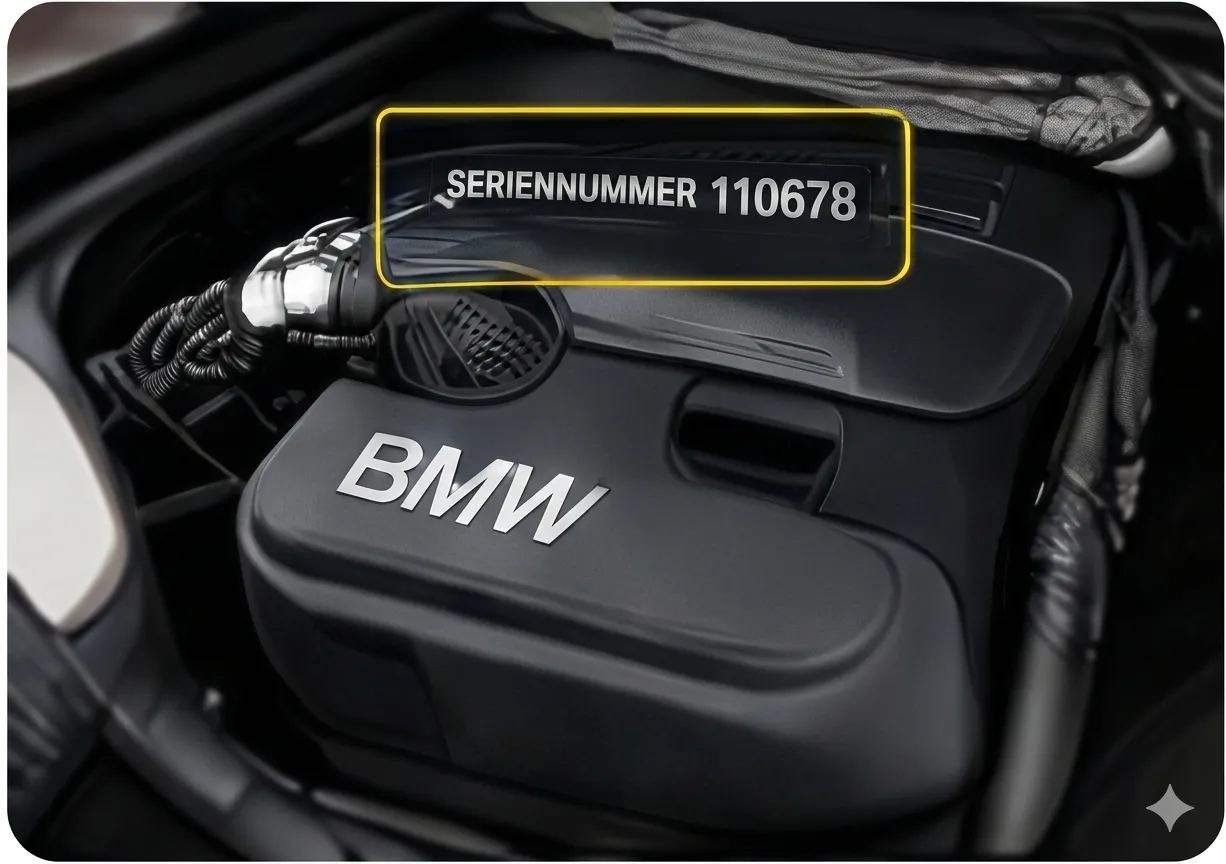
Locate the engine code on a barcode label attached to the front camshaft cover. For diesel models, look for codes like 204DTD or 204DTH. The code is also stamped on the cylinder block near the oil filter housing.
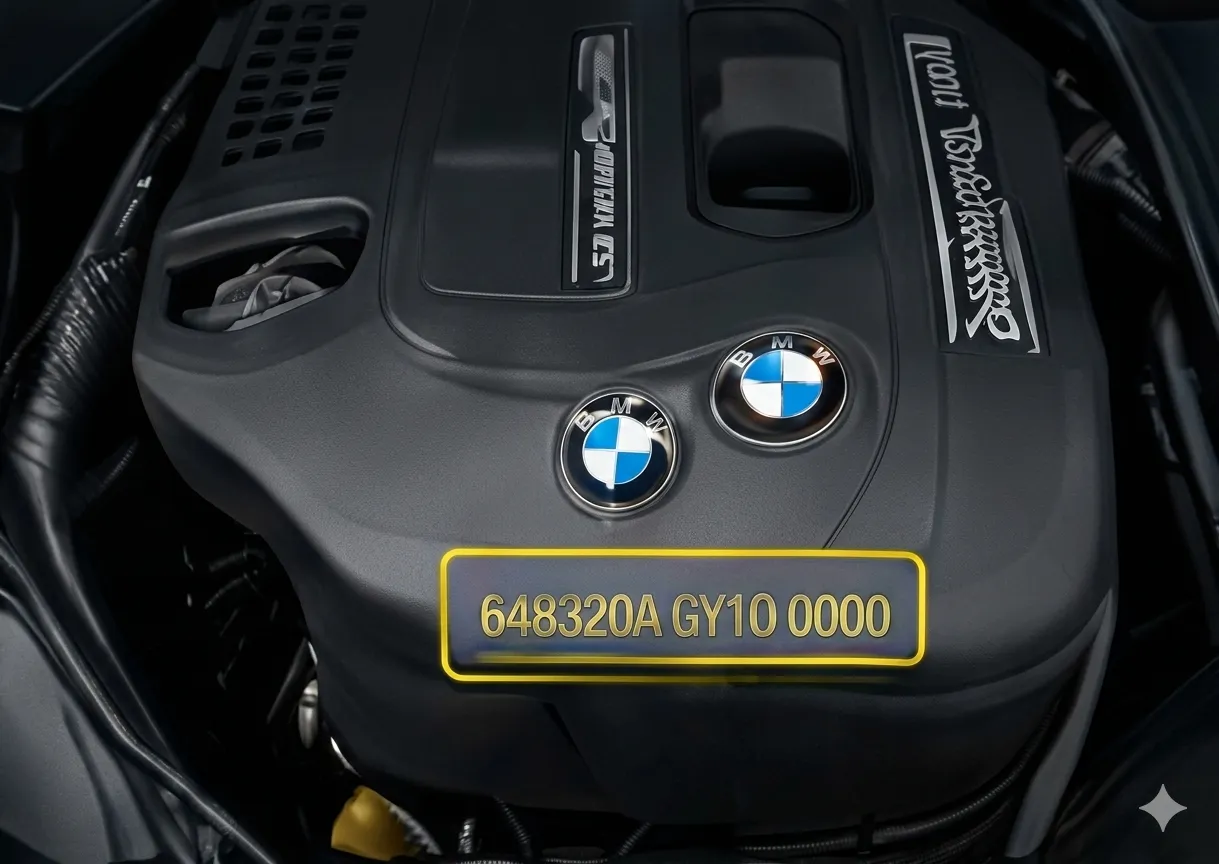
The engine code is located on a label on the front cover of the engine. For petrol models, look for codes like 204PT or 204PTA. The code may also be stamped on the left-hand side of the block.
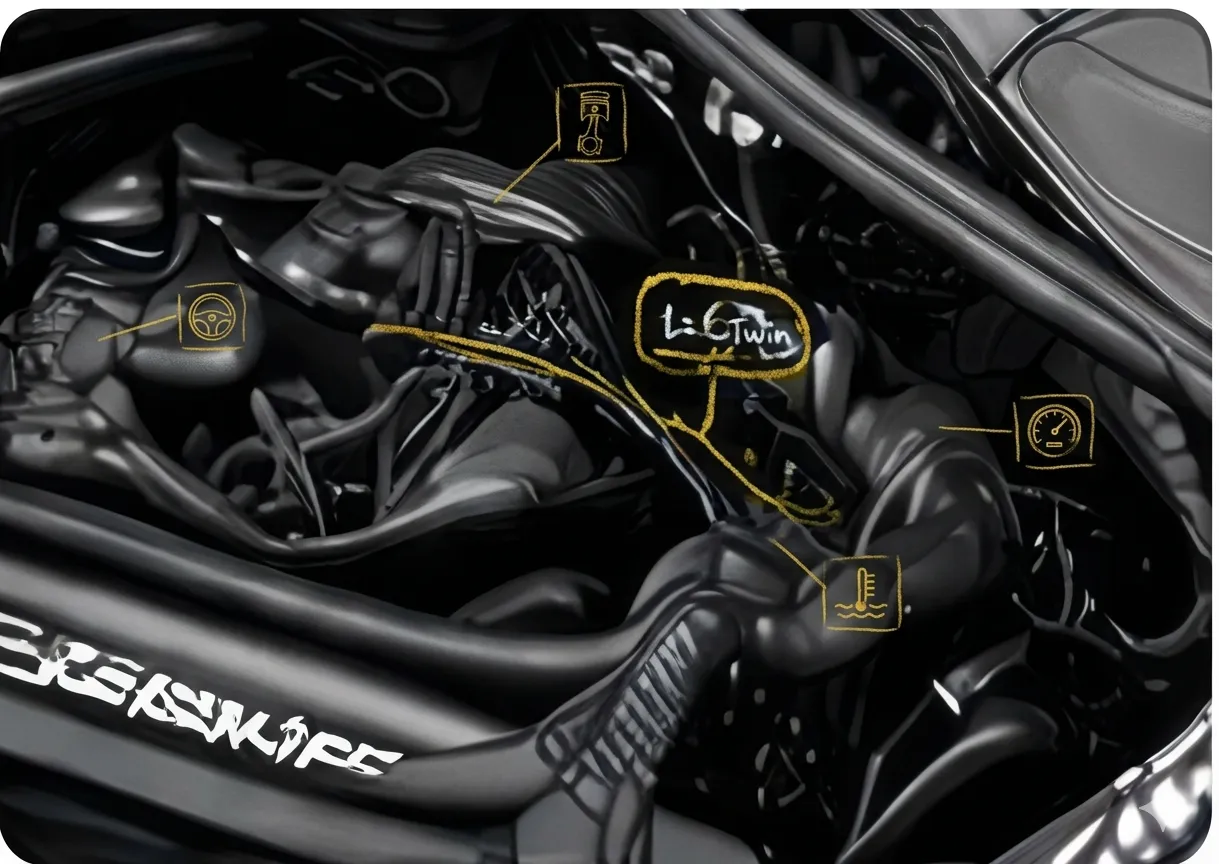
Open the bonnet and look at the camshaft cover. The engine code is on a metal label attached to the top of the camshaft cover. For V8 engines, codes include AJ133 (5.0L) or earlier AJ-V8 variants.
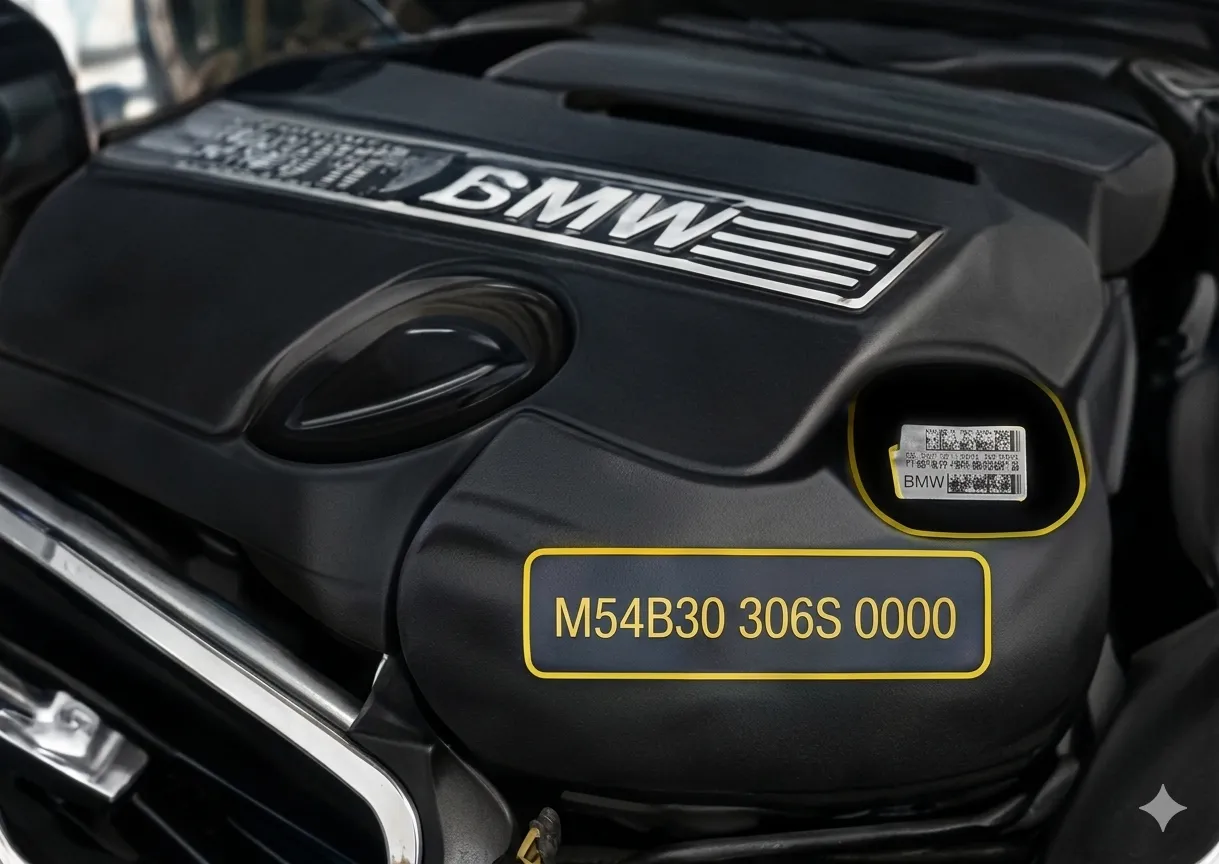
The engine code is stamped on the rear of the engine block and also visible on a barcode label on the front cover. Supercharged versions show 'AJ133S' while naturally aspirated show 'AJ133'.
Engine code locations per Jaguar Technical Information System. V5C field definitions from DVLA Guide to Vehicle Registration. VIN structure compliant with EU Regulation (EC) No 715/2007, Article 7.
A technical breakdown of Jaguar's core engine systems including Ingenium architecture, variable valve timing, turbocharging and emissions control with documented reliability impacts. All data sourced from Jaguar Land Rover Technical Information System, service bulletins and EU Regulation (EC) No 715/2007
Introduced in 2014, the Ingenium family represents Jaguar Land Rover's most advanced engine technology. These modular 2.0-litre four-cylinder engines (petrol and diesel) feature aluminium construction, twin-scroll turbocharging, and variable valve timing.
Ingenium engines use a modular design with 91mm cylinder spacing, allowing future expansion to 3- and 6-cylinder variants. Diesel versions feature twin-scroll turbos and piezo injectors operating at 2,000 bar pressure. Petrol variants use direct injection with integrated exhaust manifold for faster warm-up.

204DTD (2015)
178 HP, 430 Nm
204PT (2017)
247 HP, 365 Nm
204DTH/204PTA (2020)
Mild hybrid integration
Timing chain premature wear
especially 2015–2020 diesel models, 60k–80k miles
Oil dilution from DPF regeneration
overfilled oil level, reduced lubrication
EGR cooler failures
leaks and clogging on high-mileage units
Introduced in 2014, the Ingenium family represents Jaguar Land Rover's most advanced engine technology. These modular 2.0-litre four-cylinder engines (petrol and diesel) feature aluminium construction, twin-scroll turbocharging, and variable valve timing.
Ingenium engines use a modular design with 91mm cylinder spacing, allowing future expansion to 3- and 6-cylinder variants. Diesel versions feature twin-scroll turbos and piezo injectors operating at 2,000 bar pressure. Petrol variants use direct injection with integrated exhaust manifold for faster warm-up.
204DTD (2015)
178 HP, 430 Nm
204PT (2017)
247 HP, 365 Nm
204DTH/204PTA (2020)
Mild hybrid integration
Timing chain premature wear
especially 2015–2020 diesel models, 60k–80k miles
Oil dilution from DPF regeneration
overfilled oil level, reduced lubrication
EGR cooler failures
leaks and clogging on high-mileage units
All technical descriptions and failure data sourced from Jaguar Land Rover Product Technical Reports, Jaguar TIS Service Information, and EU Regulation (EC) No 715/2007 on vehicle type-approval.
Track BMW engineering across decades
Introduction of the smooth and sophisticated V12 engine.

Jaguar's second all-new engine design. 5.3L SOHC V12, smooth and refined. First mass-produced V12 in a production car. Powered flagship models for 25 years.
Engine production years verified via Jaguar Land Rover Production Reports and EU type-approval records
Authoritative data on Jaguar's global engine production, plant operations, and strategic partnerships. All figures sourced from Jaguar Land Rover Annual Reports, Sustainability Reports, and EU industrial compliance records.
Jaguar Land Rover manufactures engines at primary facilities in the UK and China, each specialising in Ingenium family production.


Jaguar Land Rover produces approximately 250,000–300,000 engines per year. Note the steady decline in diesel production due to Euro 6d and WLTP regulations, while hybrid integration rises significantly.
Note: Diesel production has declined steadily due to Euro 6d and WLTP regulations (Regulation (EC) No 715/2007). Mild hybrid and plug-in hybrid integration rising rapidly.
Since the 2008 acquisition by Tata Motors, Jaguar and Land Rover have shared engine development and production. The Ingenium family powers both brands, with common architectures and manufacturing processes.
Ingenium 2.0L engines used across both brands with brand-specific tuning
All Ingenium engines built at Wolverhampton EMC for both Jaguar and Land Rover
Jaguar Land Rover Corporate Strategy Report 2023
Shift in production reflects EU emissions policy and Jaguar's transition to all-electric from 2025.
This aligns with Commission Regulation (EU) 2017/1151 (WLTP/RDE) and Jaguar's all-electric strategy from 2025.
Engine production data verified via Jaguar Land Rover Annual and Sustainability Reports (2020–2023). Plant information from JLR Corporate Communications.
The most common questions about engine codes, what they mean, how to find them and how this database works
A Jaguar engine code (e.g., 204DTD, AJ133, 306DT) identifies the engine family, fuel type, displacement, and variant. Ingenium codes: 204 = 2.0L 4-cylinder, DT = Diesel Turbo, PT = Petrol Turbo. Legacy codes: AJ133 = 5.0L V8, AJ30 = 3.0L V6. The code determines specifications, compatible parts, and emissions standards. Source: Jaguar Technical Information System
Jaguar Ingenium engines have mixed reliability records. The 2.0D diesel (204DTD) has experienced timing chain failures at 60,000–80,000 miles, particularly in 2015–2020 models. Oil dilution from DPF regeneration is common. Petrol variants (204PT) are generally more reliable but can suffer from VVT solenoid issues. Regular oil changes with correct WSS-M2C948-B specification are critical. Source: JLR Service Bulletin SJB15-001
Yes, particularly the Ingenium 2.0D diesel (204DTD, 204DTH). The timing chain is rear-mounted (gearbox end) and can stretch prematurely at 60k–80k miles. Symptoms include cold-start rattling and check engine lights. Replacement requires engine removal or transmission separation, costing £2,000–£4,000. AJ-V8 engines have more reliable front-mounted chains. Source: Multiple JLR service bulletins
Jaguar continues to produce Ingenium diesel engines (204DTD, 204DTH) but production is declining rapidly. Diesel now represents only 15–22% of JLR engine production (down from 40% in 2020). Jaguar plans to phase out diesel entirely as part of its all-electric strategy from 2025. Land Rover continues diesel production for certain markets. Source: JLR Sustainability Report 2023
The AJ133 5.0L V8 (naturally aspirated) is widely regarded as Jaguar's most reliable modern engine, with proper maintenance exceeding 150,000 miles. The legendary XK6 (1949–1992) is also highly durable. Among modern engines, the Ingenium 2.0T petrol (204PT) is more reliable than the diesel variant. Avoid early Ingenium diesel (2015–2018) due to timing chain issues.
On Jaguar XE with Ingenium engines, the code is on a barcode label attached to the front camshaft cover. For diesel models (204DTD), it's also stamped on the cylinder block near the oil filter. For petrol models (204PT), check the left-hand side of the block. The code is also visible on the V5C registration document under 'Engine Number'. Source: Jaguar Owner's Manual
The AJ-V8 (particularly AJ133 5.0L) can exceed 150,000–200,000 miles with proper maintenance. Common service items include supercharger coupler wear (supercharged models), oil consumption from piston ring wear, and timing chain tensioner replacement (Gen 1/Gen 2). Regular oil changes with WSS-M2C913-D specification are essential. Water pump and thermostat housing are common failure points around 80k miles.
Jaguar specifies WSS-M2C948-B 0W-20 fully synthetic oil for Ingenium petrol engines (204PT) and WSS-M2C950-A 0W-20 for diesel (204DTD). Oil change intervals: 16,000 miles or 24 months (whichever comes first). However, for vehicles with known oil dilution issues (Ingenium diesel), many specialists recommend 10,000-mile intervals. Always use Jaguar-approved oil to maintain warranty. Source: Jaguar Maintenance Schedule 2023
All modern Jaguar engines use timing chains, including Ingenium (petrol and diesel) and AJ-V8. The XK6 (1949–1992) also used a chain. However, the Ingenium diesel's rear-mounted chain has proven problematic. Older Jaguar engines like the AJ6 (1980s) used timing belts requiring 100,000-mile replacement. Always verify your specific engine code. Source: Jaguar Service Manual
Engine swaps are possible but complex. Swapping within the same family (e.g., 204DTD to 204DTH) is simpler. Cross-family swaps (diesel to petrol) require ECU reprogramming, wiring harness changes, and potential transmission modifications. You must notify DVLA of engine changes. Emissions compliance must be maintained for MoT. Not recommended without specialist knowledge. Source: DVLA Vehicle Registration Guidelines
Common Ingenium 2.0D (204DTD) issues include: 1) Timing chain premature wear (60k–80k miles), 2) Oil dilution from incomplete DPF regeneration causing overfilled oil, 3) EGR cooler leaks and clogging, 4) Turbocharger failures, 5) Injector faults, 6) DPF clogging on urban-driven vehicles. These issues are most prevalent in 2015–2020 models. Later models (2020+) with MHEV have improved reliability. Source: JLR Technical Service Bulletins
Yes. High-performance engines like the supercharged AJ133S (5.0L V8, 575 HP in SVR) significantly increase premiums. Engines with known reliability issues (Ingenium 2.0D early models) may also affect rates. Insurers use engine code to assess risk, performance, and repair costs. Always declare the correct engine code when obtaining insurance quotes. Source: UK Insurance Industry Standards
Jaguar engines from 2015 onwards typically meet Euro 6 standards. Ingenium engines (2015–present) are Euro 6 compliant with SCR/AdBlue on diesel models. Pre-2015 engines: Duratorq TDCi (Euro 5), AJ-V8 (Euro 5 or Euro 4 depending on year). Check your V5C or VIN decoder for exact compliance. Euro 6d-TEMP required from September 2019, Euro 6d from January 2021. Source: EU Regulation (EC) No 715/2007
Jaguar PHEV systems (F-PACE PHEV, E-PACE PHEV) combine a 1.5L or 2.0L Ingenium petrol engine with electric motors. Early reliability data is generally positive. The combustion engine benefits from electric assist, reducing stress. Common concerns include 48V battery degradation over time and DC-DC converter faults. The system is complex, so specialist servicing is essential. Overall reliability appears better than Ingenium diesel. Source: JLR PHEV Technical Overview 2021
In a Jaguar VIN, the 8th character indicates engine type. Examples: '1' = 4.0L Supercharged, '2' = 4.0L California Edition, '7' = 3.2L, '8' = 5.3L V12 (legacy), 'P' = 2.0L Ingenium Petrol, 'D' = 2.0L Ingenium Diesel. Use a Jaguar-specific VIN decoder for accurate results. Generic decoders may not capture all Jaguar engine variants. Source: Jaguar VIN Decoding Guide
The EngineCode.uk is an independent technical resource dedicated to providing accurate, non-commercial engine data for BMW and related powertrains. This section outlines our sources, disclaimers, and compliance policies in accordance with Google's E-E-A-T (Experience, Expertise, Authoritativeness, Trustworthiness) guidelines.
EngineCode.uk is operated by Engine Finders UK Ltd as a standalone reference platform. We are not affiliated with Jaguar Land Rover, Tata Motors, or any other manufacturer or trademark holder. All content is created independently for educational and diagnostic purposes only. The Jaguar name, logo, and engine codes are trademarks of Jaguar Land Rover Limited.
All engine and vehicle images used on this site are for technical identification and educational purposes under fair use principles. If you believe any image infringes your copyright, please contact us at copyrights@enginecode.uk. We will review the claim promptly and remove or license the content as required.
EngineCode.uk complies with the UK General Data Protection Regulation (UK GDPR) and the EU GDPR. We do not collect personal data through this platform unless explicitly provided (e.g., contact forms).
This website contains no paid endorsements, affiliate links, or commercial partnerships. We do not sell parts, services, or recommendations. Our mission is to provide accurate, verifiable, and neutral technical data to support vehicle owners, restorers, and technicians across the UK and Europe.
Information accurate as of 2025