


Covers Ferrari naturally aspirated, turbocharged, and hybrid engines used across UK and European models - from classic V12s to modern twin-turbo V8s and hybrid powertrains. Each engine code includes specifications, compatible vehicles, and emissions data, sourced from official Ferrari and EU records.
Data sourced from Ferrari S.p.A. Technical Documentation, EU Regulation (EC) No 715/2007, and Ferrari Workshop Manuals.
Find Ferrari engine codes by family, model, or generation

| Engine Code | Fuel Type | Series | Specifications |
|---|---|---|---|
| Petrol | 125f1 | View Specs | |
| Petrol | 156f1 | View Specs | |
| Petrol | 156f2 | View Specs | |
| Petrol | 158f1 | View Specs | |
| Petrol | 205b 207 255 | View Specs | |
| Petrol | 275f1 | View Specs | |
| Petrol | 375f1 | View Specs | |
| Petrol | 500f2 | View Specs | |
| Petrol | 553squalo | View Specs | |
| Petrol | 555supersqualo | View Specs | |
| Petrol | 637 | View Specs | |
| Petrol | COLOMBO-Series | View Specs | |
| Petrol | D-Series | View Specs | |
| Petrol | DINO-Series | View Specs | |
| Petrol | F-Series | View Specs | |
| Petrol | F-Series | View Specs | |
| Petrol | F-Series | View Specs | |
| Petrol | F-Series | View Specs | |
| Petrol | F-Series | View Specs | |
| Petrol | F-Series | View Specs | |
| Petrol | F-Series | View Specs | |
| Petrol | F-Series | View Specs | |
| Petrol | F-Series | View Specs | |
| Petrol | F-Series | View Specs | |
| Petrol | F-Series | View Specs | |
| Petrol | F-Series | View Specs | |
| Petrol | F-Series | View Specs | |
| Petrol | F-Series | View Specs | |
| Petrol | F-Series | View Specs | |
| Petrol | F-Series | View Specs | |
| Petrol | F-Series | View Specs | |
| Petrol | F-Series | View Specs | |
| Petrol | F-Series | View Specs | |
| Petrol | F-Series | View Specs | |
| Petrol | LAMPREDI-Series | View Specs | |
| Petrol | TIP-Series | View Specs | |
| Petrol | TIPO-Series | View Specs | |
| Petrol | TIPO-Series | View Specs | |
| Petrol | TIPO-Series | View Specs | |
| Petrol | TIPO-Series | View Specs | |
| Petrol | TIPO-Series | View Specs | |
| Petrol | TIPO-Series | View Specs | |
| Petrol | TIPO-Series | View Specs | |
| Petrol | TIPO-Series | View Specs | |
| Petrol | TIPO-Series | View Specs | |
| Petrol | TIPO-Series | View Specs | |
| Petrol | TIPO-Series | View Specs | |
| Petrol | TIPO-Series | View Specs | |
| Petrol | TIPO-Series | View Specs | |
| Petrol | TIPO-Series | View Specs | |
| Petrol | TIPO-Series | View Specs | |
| Petrol | TIPO-Series | View Specs | |
| Petrol | TIPO-Series | View Specs | |
| Petrol | TIPO-Series | View Specs | |
| Petrol | TIPO-Series | View Specs | |
| Petrol | TIPO-Series | View Specs | |
| Petrol | TIPO-Series | View Specs | |
| Petrol | TIPO-Series | View Specs | |
| Petrol | TIPO-Series | View Specs | |
| Petrol | TIPO-Series | View Specs | |
| Petrol | TIPO-Series | View Specs | |
| Petrol | TIPO-Series | View Specs |

Explore Ferrari's hybrid powertrain technologies.
Engine specifications and technical data sourced from Ferrari S.p.A. Technical Documentation and EU Vehicle Type Approval Database. All specifications are verified against official Ferrari service documentation.
The engine code is essential for ordering parts, diagnosing issues, and verifying compatibility. It is not the same as the VIN or chassis number. This guide shows exactly where to find it - by model and engine type - using official Ferrari and DVLA sources

A unique identifier stamped on the engine block used for parts and service.
The vehicle identification number that holds encoded vehicle and engine information.
The chassis or frame number used for registration and legal identification.
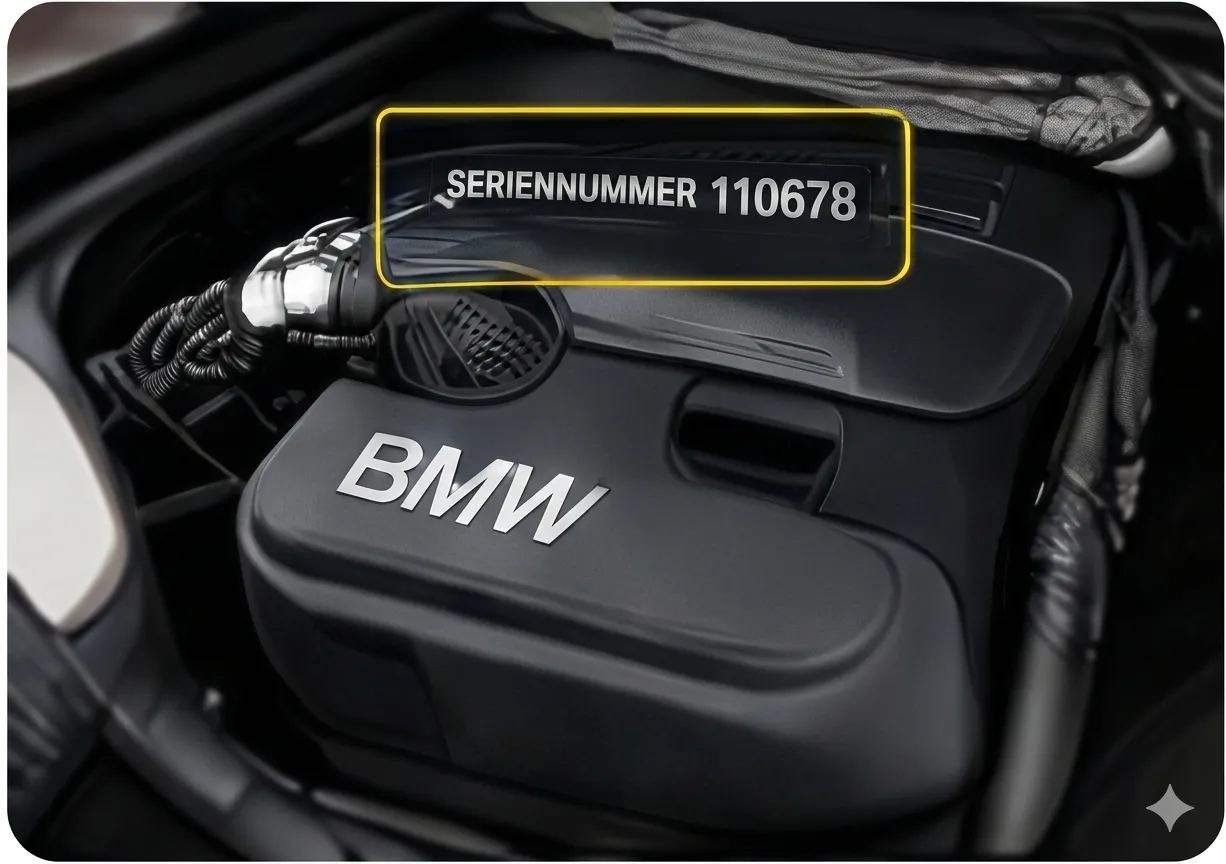
Locate the engine code stamped in the valley between the cylinder banks, visible when removing the engine cover. The code reads 'F154CB' and is stamped into the aluminium block.
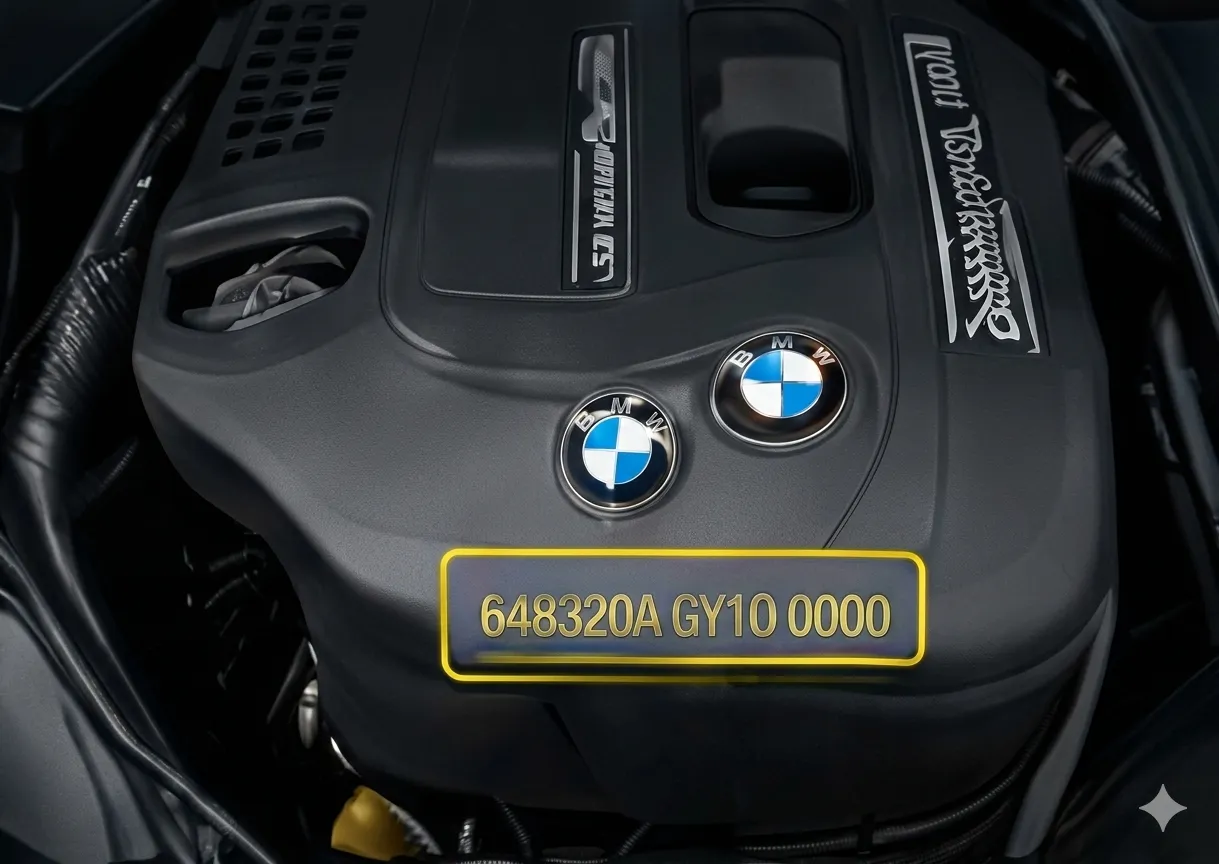
The engine code is stamped on the front of the engine block near the timing cover. Remove the front engine cover to access. The code reads 'F140GA' for the 6.3L V12.
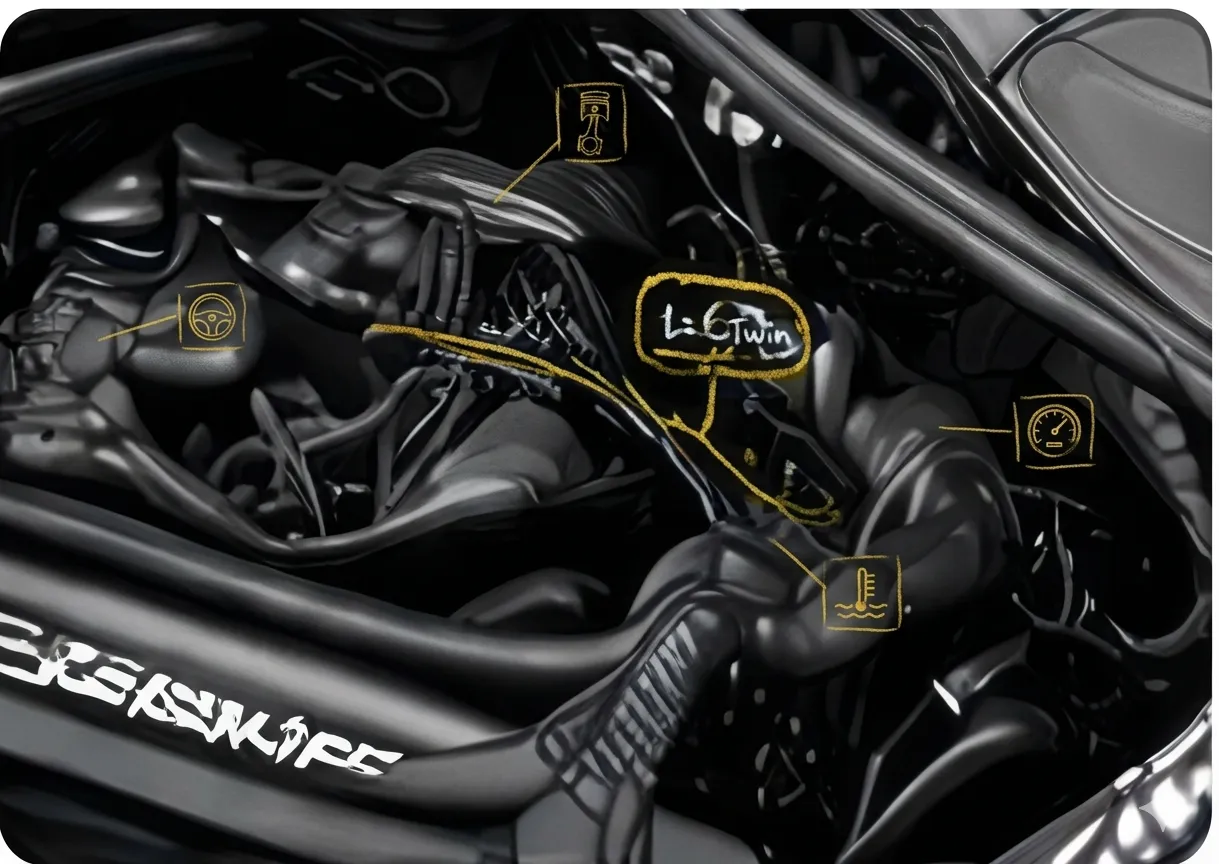
Open the hood and look at the intake manifold area. The engine code is on a metal plate or stamped near the intake plenum. Confirm 'F136' for the 4.3L or 4.5L V8.
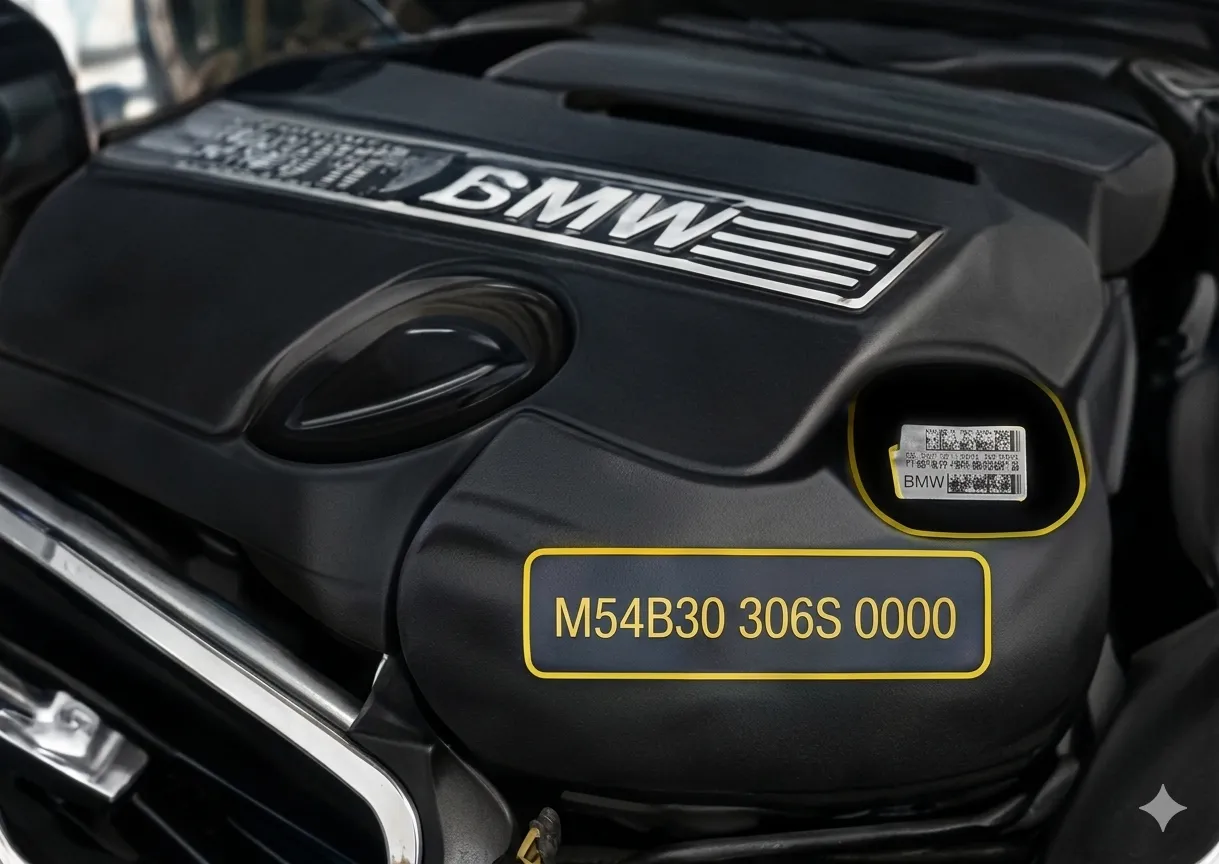
The engine code is cast into the engine block near the cylinder head junction. Look for 'F136F' stamped on the block surface, visible from above with engine cover removed.
Engine code locations per Ferrari Workshop Manuals. V5C field definitions from DVLA Guide to Vehicle Registration. VIN structure compliant with EU Regulation (EC) No 715/2007, Article 7.
A technical breakdown of Ferrari's core engine systems including twin-turbocharging, naturally aspirated V12, variable valve timing and hybrid KERS with documented reliability impacts. All data sourced from Ferrari S.p.A. Technical Documentation and EU Regulation (EC) No 715/2007
Ferrari's F154 twin-turbocharged V8 represents a shift from naturally aspirated to forced induction, delivering exceptional power and torque while meeting Euro 6 emissions standards.
Twin IHI turbochargers with variable geometry are mounted in the hot-vee between cylinder banks. Direct injection, flat-plane crankshaft, and dry sump lubrication enable 8,000 RPM redline and instant throttle response.

F154BB (2015)
California T debut
F154CB (2015)
488 GTB – 661 HP
F154BH (2020)
Roma – refined torque curve
F154 (2020)
SF90 Stradale – 1,000 HP with electric motors
Turbocharger wear
High-mileage units (80,000+ miles) may develop boost leaks
Carbon buildup
Direct injection can cause intake valve deposits
Oil consumption
High-performance operation requires frequent oil checks
Ferrari's F154 twin-turbocharged V8 represents a shift from naturally aspirated to forced induction, delivering exceptional power and torque while meeting Euro 6 emissions standards.
Twin IHI turbochargers with variable geometry are mounted in the hot-vee between cylinder banks. Direct injection, flat-plane crankshaft, and dry sump lubrication enable 8,000 RPM redline and instant throttle response.
F154BB (2015)
California T debut
F154CB (2015)
488 GTB – 661 HP
F154BH (2020)
Roma – refined torque curve
F154 (2020)
SF90 Stradale – 1,000 HP with electric motors
Turbocharger wear
High-mileage units (80,000+ miles) may develop boost leaks
Carbon buildup
Direct injection can cause intake valve deposits
Oil consumption
High-performance operation requires frequent oil checks
All technical descriptions and reliability data sourced from Ferrari S.p.A. Technical Documentation, Ferrari Workshop Manuals, and EU Regulation (EC) No 715/2007 on vehicle type-approval.
Track BMW engineering across decades
Mid-engine revolution with flat-12 architecture and emissions compliance challenges.

Horizontally-opposed 12-cylinder engine bringing mid-engine layout and racing technology to road-going Ferraris.
Engine production years verified via Ferrari S.p.A. Historical Archives and EU type-approval records
Authoritative data on Ferrari's global engine production, Maranello plant operations. All figures sourced from Ferrari N.V. Annual Reports and EU industrial compliance records.
Ferrari manufactures all engines at its historic Maranello facility in Italy.

Ferrari produces approximately 13,000 engines per year. Note the steady increase in hybrid production as Ferrari transitions toward electrification while maintaining naturally aspirated V12 production.
Note: Hybrid production has increased steadily due to Ferrari's electrification strategy and EU emissions regulations (Regulation (EC) No 715/2007).
Shift in production reflects EU emissions policy and changing consumer demand.
Engine production data verified via Ferrari N.V. Annual Reports and EU type-approval records
The most common questions about engine codes, what they mean, how to find them and how this database works
A Ferrari engine code (e.g., F154CB, F140GA) identifies the engine family and variant. F = Ferrari, followed by displacement (154 = 3.9L, 140 = 6.3L). Letters indicate variant and application (CB = 488 GTB, GA = F12berlinetta). Source: Ferrari Workshop Manual
Modern Ferrari engines (F154, F140) are generally reliable with proper maintenance. The F154 twin-turbo V8 has proven robust. Naturally aspirated V12s (F140) are exceptionally durable. Regular servicing every 12,500 miles or annually is critical. Source: Ferrari S.p.A. Technical Documentation
The F140 naturally aspirated V12 (6.3L) is widely regarded as Ferrari's most reliable modern engine due to its simple NA design. The F154 twin-turbo V8 is also highly reliable with proper maintenance. Older naturally aspirated V8s (F136) are durable but require more frequent service.
All modern Ferrari engines use timing chains. The F154 V8 and F140 V12 have chain-driven camshafts designed for the life of the engine with proper oil maintenance. No timing belt replacement intervals.
On the F154CB engine, the code is stamped on the engine block in the valley between the cylinder banks, visible when removing the engine cover. Also check the registration document under 'Engine Number'.
On the UK V5C registration document, look for the 'Engine Number' field (not VIN). This matches the engine code (e.g., F154CB). If the engine was replaced, this may not reflect the current unit.
F154: Twin-turbocharged V8 (3.9L) – used in 488 GTB, F8 Tributo, Roma. F136: Naturally aspirated V8 (4.3L/4.5L) – used in F430, 458 Italia. F154 offers more torque and efficiency; F136 provides linear NA power delivery.
Yes. The engine code (e.g., F154CB, F140GA) is required for ordering correct parts (ECU, turbo, injectors). Using VIN alone can lead to errors. Always verify with the physical engine code stamped on the block.
Yes. High-performance engines (F140 V12, F154 twin-turbo) significantly increase premiums. Insurers use engine type and power output to assess risk. Always declare correct engine code and specifications.
The F154 twin-turbo V8 (2015–present) is designed for 150,000+ miles with proper maintenance. Known for robust construction and modern materials. Turbochargers and direct injection components are common service items at high mileage.
Yes. All modern Ferrari engines (F154, F140, F136) are interference engines. If the timing chain fails, catastrophic internal damage is likely. Immediate towing and professional assessment required.
F154 twin-turbo V8: Generally reliable but turbochargers can develop boost leaks or wastegate issues at high mileage (80,000+ miles). Regular oil changes critical. Ferrari extended warranty coverage on early F154 turbos.
Technically possible but extremely complex and not recommended. Must be declared to DVLA. Changing engine code affects emissions compliance, insurance, and vehicle value. Ferrari engines are highly application-specific.
Yes. The SF90 Stradale uses a modified F154 V8 (3.9L twin-turbo) paired with three electric motors. The 296 GTB uses a new F163 V6 (3.0L twin-turbo) with electric motor. Hybrid systems add complexity but maintain Ferrari performance standards.
Ferrari VINs contain encoded information about model and engine type. Positions 4-8 indicate model family. Example: ZFF79ALA... indicates 488 GTB with F154CB engine. Use Ferrari-specific VIN decoder for accuracy.
Subjective preference. NA engines (F140 V12, F136 V8) offer linear power delivery and simpler mechanics. Turbo engines (F154 V8) provide more torque, efficiency, and emissions compliance. Both are highly engineered and reliable.
Use Ferrari Workshop Manuals or Ferrari S.p.A. Technical Documentation. Public data also available in EU type-approval documents and Ferrari N.V. Annual Reports.
The EngineCode.uk is an independent technical resource dedicated to providing accurate, non-commercial engine data for BMW and related powertrains. This section outlines our sources, disclaimers, and compliance policies in accordance with Google's E-E-A-T (Experience, Expertise, Authoritativeness, Trustworthiness) guidelines.
EngineCode.uk is operated by Engine Finders UK Ltd as a standalone reference platform. We are not affiliated with Ferrari S.p.A., or any other manufacturer or trademark holder. All content is created independently for educational and diagnostic purposes only. The Ferrari name, logo, and engine codes are trademarks of Ferrari S.p.A., Maranello, Italy.
All engine and vehicle images used on this site are for technical identification and educational purposes under fair use principles. If you believe any image infringes your copyright, please contact us at copyrights@enginecode.uk. We will review the claim promptly and remove or license the content as required.
EngineCode.uk complies with the UK General Data Protection Regulation (UK GDPR) and the EU GDPR. We do not collect personal data through this platform unless explicitly provided (e.g., contact forms).
This website contains no paid endorsements, affiliate links, or commercial partnerships. We do not sell parts, services, or recommendations. Our mission is to provide accurate, verifiable, and neutral technical data to support vehicle owners, restorers, and technicians across the UK and Europe.
Information accurate as of 2025