


Covers Mitsubishi petrol, diesel, and hybrid engines used across UK and European models - from legendary 4G63 to modern 4B/4N series and PHEV systems. Each engine code includes specifications, compatible vehicles, and emissions data, sourced from official Mitsubishi and EU records.
Data sourced from Mitsubishi Motors Service Manual, EU Regulation (EC) No 715/2007, and Mitsubishi Technical Information System documents.
Find Mitsubishi engine codes by family, model, or generation

| Engine Code | Fuel Type | Series | Specifications |
|---|---|---|---|
| Petrol | 3a90 | View Specs | |
| Petrol | 3a91 | View Specs | |
| Petrol | 3a92 | View Specs | |
| Petrol | 3a93 | View Specs | |
| Petrol | 3b20 | View Specs | |
| Petrol | 3b21 | View Specs | |
| Petrol | 3b23 | View Specs | |
| Petrol | 4a90 | View Specs | |
| Petrol | 4a91 | View Specs | |
| Petrol | 4a92 | View Specs | |
| Petrol | 4a93 | View Specs | |
| Petrol | 4b10 | View Specs | |
| Petrol | 4b11 | View Specs | |
| Petrol | 4b11 T C | View Specs | |
| Petrol | 4b12 | View Specs | |
| Petrol | 4b12 Mivec | View Specs | |
| Petrol | 4b40 | View Specs | |
| Diesel | 4d55 | View Specs | |
| Diesel | 4d55 T | View Specs | |
| Diesel | 4d56 8v | View Specs | |
| Diesel | 4d56 Td | View Specs | |
| Diesel | 4d56t T | View Specs | |
| Diesel | 4d65 | View Specs | |
| Diesel | 4d65 T | View Specs | |
| Diesel | 4d68 | View Specs | |
| Diesel | 4d68 T | View Specs | |
| Petrol | 4g11 | View Specs | |
| Petrol | 4g12 | View Specs | |
| Petrol | 4g12 T | View Specs | |
| Petrol | 4g13 12v | View Specs | |
| Petrol | 4g13 16v | View Specs | |
| Petrol | 4g13 8v | View Specs | |
| Petrol | 4g15 12v | View Specs | |
| Petrol | 4g15 8v | View Specs | |
| Petrol | 4g15t | View Specs | |
| Petrol | 4g16 | View Specs | |
| Petrol | 4g18 | View Specs | |
| Petrol | 4g32 | View Specs | |
| Petrol | 4g32 Gs | View Specs | |
| Petrol | 4g32 T | View Specs | |
| Petrol | 4g32 T C | View Specs | |
| Petrol | 4g33 | View Specs | |
| Petrol | 4g36 | View Specs | |
| Petrol | 4g37 | View Specs | |
| Petrol | 4g52 | View Specs | |
| Petrol | 4g54 | View Specs | |
| Petrol | 4g61 | View Specs | |
| Petrol | 4g62 | View Specs | |
| Petrol | 4g62 T | View Specs | |
| Petrol | 4g63 Dohc 16v | View Specs | |
| Petrol | 4g63 Sohc 16v | View Specs | |
| Petrol | 4g63 Sohc 8v | View Specs | |
| Petrol | 4g63 T C | View Specs | |
| Petrol | 4g63 T Dohc 16v | View Specs | |
| Petrol | 4g63 T Eci | View Specs | |
| Petrol | 4g63 T Sohc | View Specs | |
| Petrol | 4g63 Turbo | View Specs | |
| Petrol | 4g63t_evolution | View Specs | |
| Petrol | 4g64 12v | View Specs | |
| Petrol | 4g64 16v | View Specs | |
| Petrol | 4g64 8v | View Specs | |
| Petrol | 4g64 Gdi | View Specs | |
| Petrol | 4g67 | View Specs | |
| Petrol | 4g69 | View Specs | |
| Petrol | 4g92 Sohc 16v | View Specs | |
| Petrol | 4g93 Dohc 16v | View Specs | |
| Petrol | 4g93 Gdi | View Specs | |
| Petrol | 4g93 Sohc 16v | View Specs | |
| Petrol | 4g94 Gdi | View Specs | |
| Diesel | 4hk | View Specs | |
| Diesel | 4hn | View Specs | |
| Petrol | 4j11 | View Specs | |
| Petrol | 4j12 | View Specs | |
| Petrol | 4j13 | View Specs | |
| Petrol | 4j15 | View Specs | |
| Diesel | 4m40 T | View Specs | |
| Diesel | 4m41 | View Specs | |
| Diesel | 4n13 | View Specs | |
| Diesel | 4n14 | View Specs | |
| Diesel | 4n15 | View Specs | |
| Diesel | 4n16 | View Specs | |
| Diesel | 4n18 | View Specs | |
| Petrol | 6a12 | View Specs | |
| Petrol | 6a13 | View Specs | |
| Petrol | 6a13tt | View Specs | |
| Petrol | 6b31 | View Specs | |
| Petrol | 6b32 | View Specs | |
| Petrol | 6b33 | View Specs | |
| Petrol | 6b34 | View Specs | |
| Petrol | 6g72 Dohc 24v | View Specs | |
| Petrol | 6g72 Sohc 12v | View Specs | |
| Petrol | 6g72 Sohc 24v | View Specs | |
| Petrol | 6g72 Tt | View Specs | |
| Petrol | 6g73 | View Specs | |
| Petrol | 6g74 Dohc 24v | View Specs | |
| Petrol | 6g74 Tt | View Specs | |
| Petrol | 6g75 | View Specs | |
| Petrol | 6g75 Tt | View Specs | |
| Diesel | 9hd | View Specs | |
| Petrol | E-Series | View Specs | |
| — | E-Series | View Specs | |
| Petrol | G-Series | View Specs | |
| Petrol | G-Series | View Specs | |
| Petrol | G-Series | View Specs | |
| Petrol | G-Series | View Specs | |
| Petrol | G-Series | View Specs | |
| Electric | I-Series | View Specs | |
| Electricity | MIEV-Series | View Specs | |
| Petrol | OUTLANDER-Series | View Specs | |
| Petrol | M-Series | View Specs |

See where Mitsubishi power drives other leading brands.
Explore Mitsubishi's electrified powertrain technologies.
Engine specifications and technical data sourced from Mitsubishi Motors Technical Documentation and EU Vehicle Type Approval Database. All specifications are verified against official Mitsubishi service documentation.
The engine code is essential for ordering parts, diagnosing issues, and verifying compatibility. It is not the same as the VIN or chassis number. This guide shows exactly where to find it - by model and engine type - using official Mitsubishi and DVLA sources

A unique identifier stamped on the engine block or cover used for parts and service.
The vehicle identification number that holds encoded vehicle and engine information.

The chassis or frame number used for registration and legal identification.
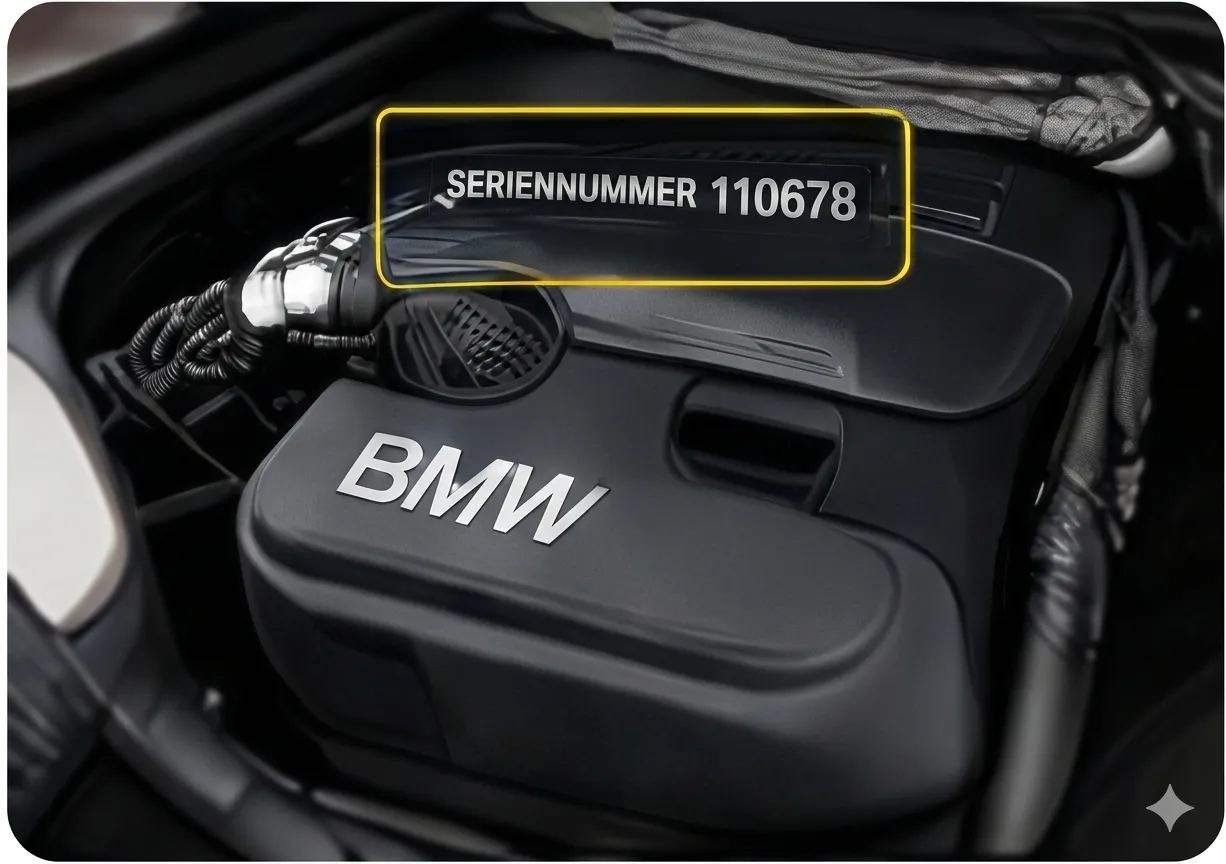
Locate the engine code on the valve cover at the top of the engine. It is stamped or on a label reading '4B11' or '4B11T' for turbo variants.
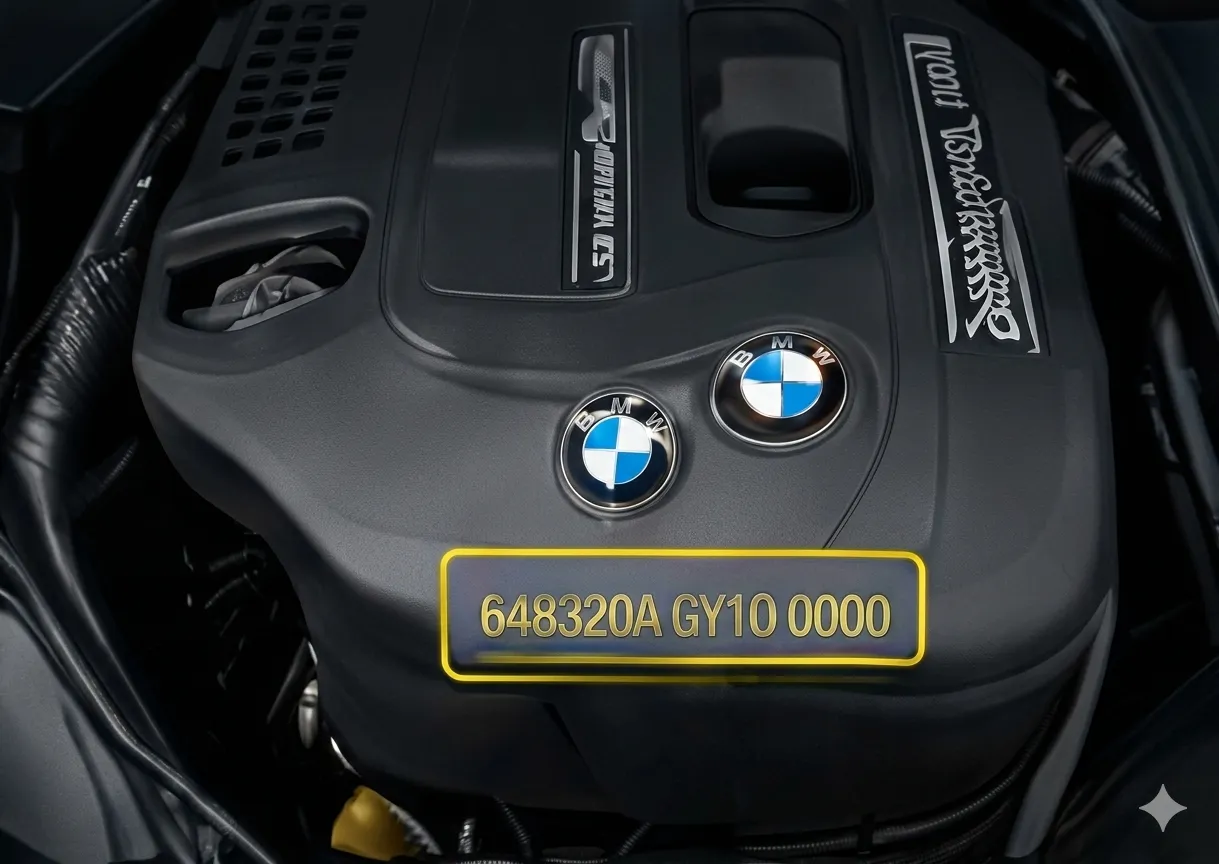
The engine code is located on a label attached to the front timing cover, near the camshaft housing. Look for '4J12' marking.
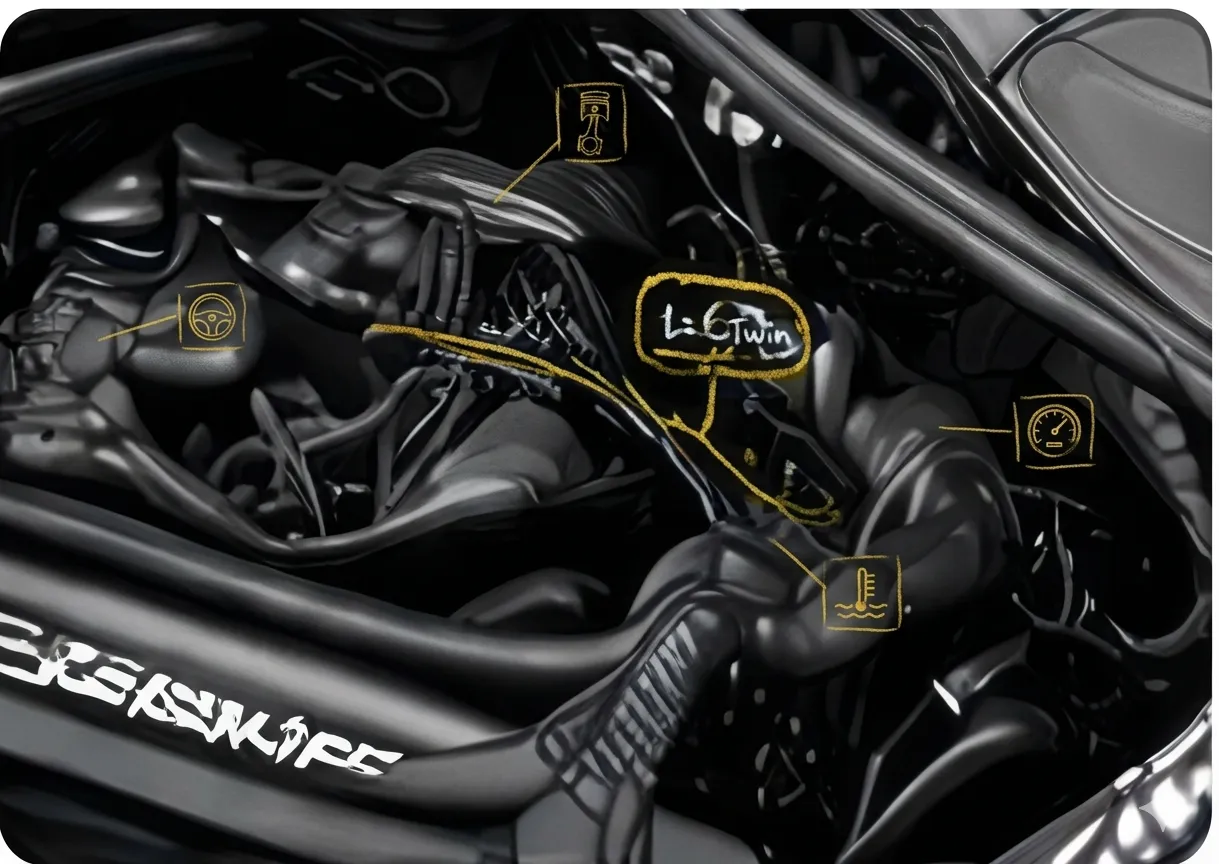
Open the hood and look at the front of the engine block near the timing cover. The code '4N14' is stamped into the metal or on a white label.
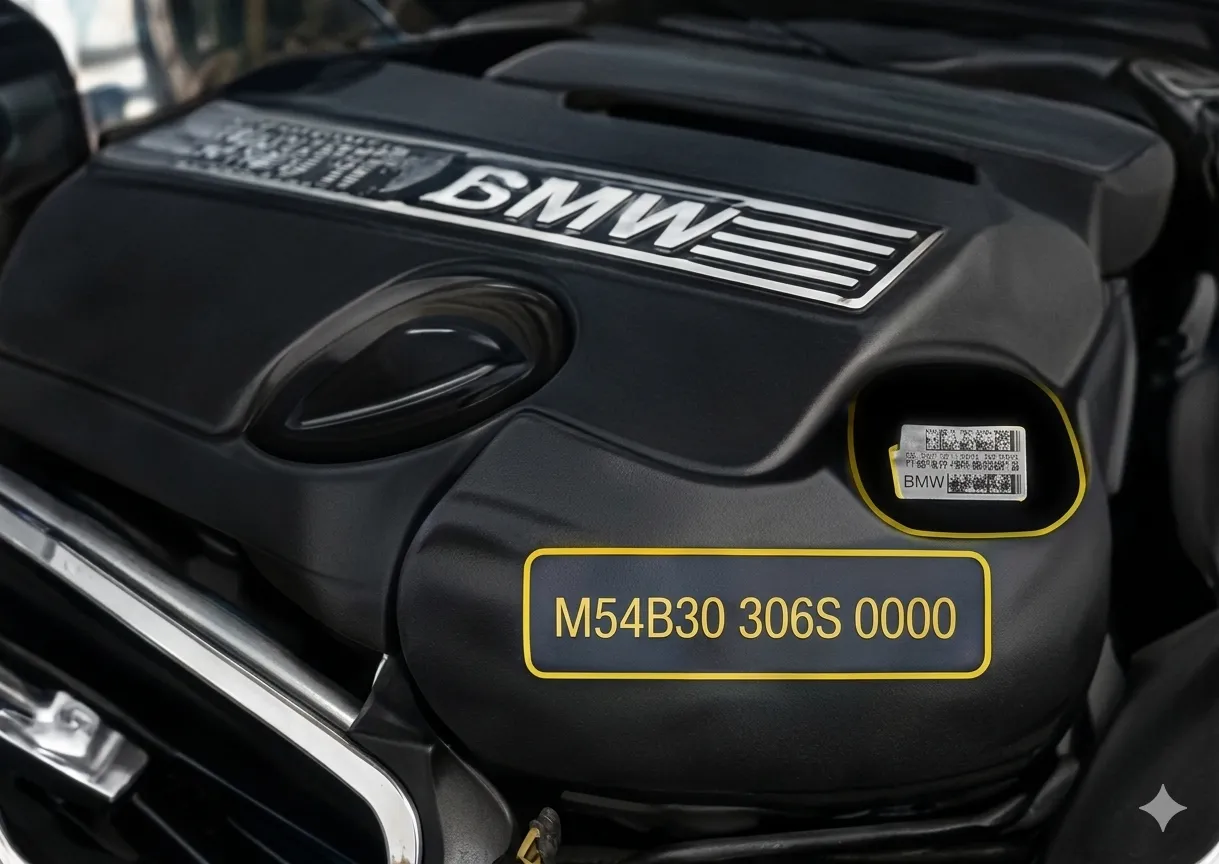
The engine code is cast into the cylinder head, visible from the side of the engine. Look for '4G63' or '4G63T' for turbo models.
Engine code locations per Mitsubishi Motors Service Manual. V5C field definitions from DVLA Guide to Vehicle Registration. VIN structure compliant with EU Regulation (EC) No 715/2007, Article 7.
A technical breakdown of Mitsubishi's core engine systems including MIVEC, GDI turbocharging, timing architectures and modular design with documented reliability impacts. All data sourced from Mitsubishi Motors Service Manual and EU Regulation (EC) No 715/2007
Mitsubishi's MIVEC (Mitsubishi Innovative Valve timing Electronic Control) system varies valve timing and lift to optimize performance, efficiency, and emissions across the rev range.
Uses hydraulic pressure and electronic control to switch between two cam profiles - low-lift for efficiency at low RPM, high-lift for power at high RPM.

4G92 (1992)
High-RPM power mode
4G63 (1995)
Dual cam profile switching
4B11 (2007)
Continuous variable timing
4J12 (2012)
Integrated with Atkinson cycle
Oil pressure sensitivity
Requires regular oil changes
VTC actuator wear
Rattling noise on cold start
Cam phaser failure
Reduced performance, check engine light
Mitsubishi's MIVEC (Mitsubishi Innovative Valve timing Electronic Control) system varies valve timing and lift to optimize performance, efficiency, and emissions across the rev range.
Uses hydraulic pressure and electronic control to switch between two cam profiles - low-lift for efficiency at low RPM, high-lift for power at high RPM.
4G92 (1992)
High-RPM power mode
4G63 (1995)
Dual cam profile switching
4B11 (2007)
Continuous variable timing
4J12 (2012)
Integrated with Atkinson cycle
Oil pressure sensitivity
Requires regular oil changes
VTC actuator wear
Rattling noise on cold start
Cam phaser failure
Reduced performance, check engine light
All technical descriptions and failure data sourced from Mitsubishi Motors Product Technical Reports, Mitsubishi Service Information, and EU Regulation (EC) No 715/2007 on vehicle type-approval.
Track BMW engineering across decades
Foundation engines with simple SOHC designs for reliability and ease of service.

Early SOHC four-cylinder that established Mitsubishi's reputation for simple, reliable engines in compact cars.
Larger displacement engine for mid-size sedans with durable construction and straightforward maintenance.
Engine production years verified via Mitsubishi Motors Product Reports and EU type-approval records
Authoritative data on Mitsubishi's global engine production, plant operations, and strategic partnerships. All figures sourced from Mitsubishi Motors Annual Reports, Sustainability Reports, and EU industrial compliance records.
Mitsubishi manufactures engines at primary facilities in Japan and Thailand.


Mitsubishi produces approximately 160,000–180,000 engines per year. Note the steady decline in Diesel production as Mitsubishi phases out diesel for PHEV focus.
Note: Diesel production has declined as Mitsubishi focuses on PHEV technology. Outlander PHEV remains best-selling PHEV SUV in Europe.
Mitsubishi is part of the Renault-Nissan-Mitsubishi Alliance, sharing technology and platforms. Historical engine licensing agreements with Hyundai and Proton.
Licensed to Hyundai for Sonata and Santa Fe (1990s–2000s)
Used by Proton in Malaysian market vehicles
Mitsubishi Motors Strategic Partnerships
Shift in production reflects Mitsubishi's PHEV focus and diesel phase-out.
This aligns with Commission Regulation (EU) 2017/1151 (WLTP/RDE) and EU 2035 ICE phase-out roadmap.
Engine production years verified via Mitsubishi Motors Product Reports and EU type-approval records
The most common questions about engine codes, what they mean, how to find them and how this database works
A Mitsubishi engine code (e.g., 4G63, 4B11, 4N14) identifies the engine family, configuration, and generation. First digit: Number of cylinders (4 = 4-cylinder). Letter: Engine series (G = SOHC/DOHC petrol, B = modern DOHC petrol, N = diesel). Last two digits: Displacement code. Source: Mitsubishi Service Manual
Mitsubishi has largely phased out diesel engines for passenger vehicles. The 4N14 (2.2L DI-D) was the last diesel used in Outlander and L200, but production ended in 2020 for European markets. Mitsubishi now focuses on petrol and PHEV powertrains.
The 4G63 (non-turbo) is widely regarded as one of Mitsubishi's most reliable engines, known for durability and simplicity. The modern 4B11 and 4J12 are also reliable with proper maintenance. Avoid early 4G9 GDI engines due to carbon buildup issues.
Most modern Mitsubishi engines (4B, 4N, 4J series) use timing chains. Older 4G series engines typically use timing belts requiring replacement every 60,000–100,000 miles. The 4G63 uses a belt, while 4B11 uses a chain.
The non-turbo 4G63 is very reliable and can exceed 200,000 miles with proper maintenance. The turbocharged 4G63T (used in Lancer Evolution) is robust but requires careful maintenance. Common issues include oil consumption and timing belt wear.
On the 4B11 or 4J12 engine, the code is stamped on the valve cover or on a label near the front timing cover. Also check the V5C logbook under 'Engine Number'.
On the UK V5C registration document, look for the 'Engine Number' field (not VIN). This matches the engine code (e.g., 4B11, 4N14). If the engine was replaced, this may not reflect the current unit.
4B11: 2.0L DOHC petrol with MIVEC – used in Lancer, ASX. 4J12: 2.4L DOHC petrol with MIVEC – used in Outlander. Both are modern engines, but 4J12 has larger displacement and more torque.
Yes. The engine code (e.g., 4B11T, 4N14) is required for ordering correct parts (ECU, turbo, injectors). Using VIN alone can lead to errors. Always verify with the physical engine code.
Yes. High-performance engines (4G63T in Evolution) or engines with known issues can increase premiums. Insurers use engine type to assess risk. Always declare correct engine code.
The 4B11 (2007–present) is designed for 150,000–200,000 miles with proper maintenance. Known for reliability and efficient MIVEC system. Regular oil changes and timing chain inspection are critical.
The 4N14 (2.2L DI-D) is generally reliable but can suffer from DPF clogging in urban use and EGR issues. Common in Outlander (pre-2020). Service interval: 12,000 miles in UK conditions.
Mitsubishi 4G6 series engines were licensed to Hyundai in the 1990s–2000s. The 4G63 and 4G64 powered early Hyundai Sonata, Santa Fe, and Trajet models before Hyundai developed their own engines.
Yes. The Outlander PHEV uses a modified 4B11 (2.0L petrol) paired with electric motors. The engine is optimized for hybrid operation with Atkinson cycle efficiency.
Yes, but must be declared to DVLA. Changing engine code (e.g., petrol to diesel) may affect MoT, insurance, and emissions compliance. Source: DVLA guidelines
Positions 4–7 of the VIN indicate engine type and model. Example: JA4... → specific codes for engine family. Use a Mitsubishi-specific VIN decoder for accuracy.
Some are. The 4G63 (non-turbo) and 6G72 are simpler and very durable. Modern 4B and 4J engines offer better efficiency and emissions but are more complex. Choose based on intended use.
Use Mitsubishi Motors Service Manual or Technical Information System. Public data also in EU type-approval documents.
The EngineCode.uk is an independent technical resource dedicated to providing accurate, non-commercial engine data for BMW and related powertrains. This section outlines our sources, disclaimers, and compliance policies in accordance with Google's E-E-A-T (Experience, Expertise, Authoritativeness, Trustworthiness) guidelines.
EngineCode.uk is operated by Engine Finders UK Ltd as a standalone reference platform. We are not affiliated with Mitsubishi Motors Corporation or any other manufacturer or trademark holder. All content is created independently for educational and diagnostic purposes only. The Mitsubishi name, logo, and engine codes are trademarks of Mitsubishi Motors Corporation, Tokyo, Japan.
All engine and vehicle images used on this site are for technical identification and educational purposes under fair use principles. If you believe any image infringes your copyright, please contact us at copyrights@enginecode.uk. We will review the claim promptly and remove or license the content as required.
EngineCode.uk complies with the UK General Data Protection Regulation (UK GDPR) and the EU GDPR. We do not collect personal data through this platform unless explicitly provided (e.g., contact forms).
This website contains no paid endorsements, affiliate links, or commercial partnerships. We do not sell parts, services, or recommendations. Our mission is to provide accurate, verifiable, and neutral technical data to support vehicle owners, restorers, and technicians across the UK and Europe.
Information accurate as of 2025