


Covers Jeep petrol, diesel, and hybrid engines used across UK and European models - from legendary inline-six engines to modern Pentastar V6, EcoDiesel, and 4xe plug-in hybrid powertrains. Each engine code includes specifications, compatible vehicles, and emissions data, sourced from official Stellantis and EU records.
Data sourced from Stellantis Technical Service Information, EU Regulation (EC) No 715/2007, and Jeep Service Documentation.
Find Jeep engine codes by family, model, or generation

| Engine Code | Fuel Type | Series | Specifications |
|---|---|---|---|
| Diesel | 552_63_088 | View Specs | |
| Diesel | 552 60 384 | View Specs | |
| Diesel | 552 63 087 | View Specs | |
| Diesel | 552 63 113 | View Specs | |
| Petrol | 552 63 623 | View Specs | |
| Petrol | 552 63 624 | View Specs | |
| Petrol | 552 63 842 | View Specs | |
| Diesel | 552 80 444 | View Specs | |
| Diesel | 552 83 099 | View Specs | |
| Diesel | 552 84 064 | View Specs | |
| Petrol | EAM-Series | View Specs | |
| Petrol | EAQ-Series | View Specs | |
| Petrol | EBS-Series | View Specs | |
| Petrol | EBT-Series | View Specs | |
| Petrol | EBU-Series | View Specs | |
| Petrol | EBV-Series | View Specs | |
| Petrol | ECN-Series | View Specs | |
| Petrol | ED-Series | View Specs | |
| Petrol | ED-Series | View Specs | |
| Petrol | ED-Series | View Specs | |
| Petrol | EDD-Series | View Specs | |
| Petrol | EDR-Series | View Specs | |
| Petrol | EDV-Series | View Specs | |
| Diesel | EFL-Series | View Specs | |
| Petrol | EFLITE-Series | View Specs | |
| Petrol | EGT-Series | View Specs | |
| Petrol | EHB-Series | View Specs | |
| Petrol | EHK-Series | View Specs | |
| Petrol | EJH-Series | View Specs | |
| Petrol | EJJ-Series | View Specs | |
| Petrol | EJK-Series | View Specs | |
| Petrol | EJL-Series | View Specs | |
| Petrol | EKG-Series | View Specs | |
| Petrol | ELF-Series | View Specs | |
| Petrol | EML-Series | View Specs | |
| Unavailable | ENC-Series | View Specs | |
| Petrol | ENE-Series | View Specs | |
| Petrol | ENF-Series | View Specs | |
| Petrol | ENR-Series | View Specs | |
| Petrol | ENS-Series | View Specs | |
| Unavailable | EPE-Series | View Specs | |
| Petrol | ERB-Series | View Specs | |
| Petrol | ERH-Series | View Specs | |
| Petrol | ERM-Series | View Specs | |
| Petrol | ESF-Series | View Specs | |
| Petrol | ESG-Series | View Specs | |
| Petrol | ETORQUE-Series | View Specs | |
| Unavailable | EVA-Series | View Specs | |
| Petrol | EVC-Series | View Specs | |
| Petrol | EVP-Series | View Specs | |
| Petrol | EWP-Series | View Specs | |
| Petrol | EWR-Series | View Specs | |
| Petrol | EXA-Series | View Specs | |
| Petrol | EXF-Series | View Specs | |
| Petrol | EXL-Series | View Specs | |
| Unavailable | EZB-Series | View Specs | |
| Petrol | EZD-Series | View Specs | |
| Petrol | EZH-Series | View Specs | |
| Petrol | FCA-Series | View Specs | |
| Petrol | FCA-Series | View Specs | |
| Unavailable | HFE-Series | View Specs | |
| Petrol | HX-Series | View Specs | |
| Diesel | J-Series | View Specs | |
| Unavailable | LAU-Series | View Specs | |
| Petrol | LAU-Series | View Specs | |
| Electricity | MAGNETO-Series | View Specs | |
| Petrol | MX-Series | View Specs | |
| Petrol | P-Series | View Specs | |
| Petrol | R-Series | View Specs | |
| Electricity | RECON-Series | View Specs | |
| Unavailable | M-Series | View Specs | |
| Electricity | WAGONEER-Series | View Specs | |
| Petrol | Y-Series | View Specs | |
| Petrol | Y-Series | View Specs | |
| Unavailable | ZF-Series | View Specs |

Explore Jeep's 4xe electrified powertrain technologies.
Engine specifications and technical data sourced from Stellantis Technical Documentation and EU Vehicle Type Approval Database. All specifications are verified against official Jeep service documentation.
The engine code is essential for ordering parts, diagnosing issues, and verifying compatibility. It is not the same as the VIN or chassis number. This guide shows exactly where to find it - by model and engine type - using official Jeep and DVLA sources

A unique identifier (e.g., VM6, 30E, 57H) used for parts and service.
The vehicle identification number that holds encoded vehicle and engine information.

The chassis or frame number used for registration and legal identification.
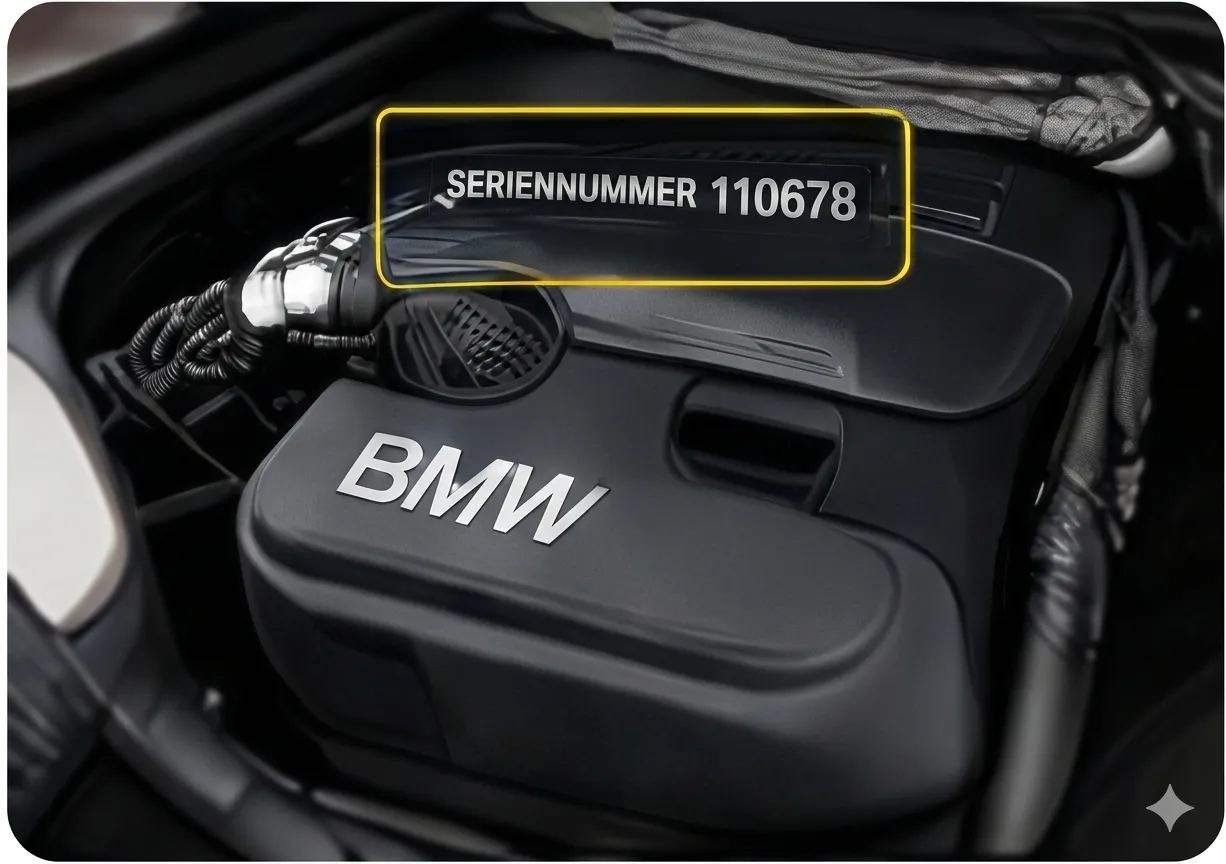
Locate the engine code on the driver's side of the engine block, near the cylinder head. The VIN 8th character will be 'F' for Pentastar engines. Also check the engine cover label.
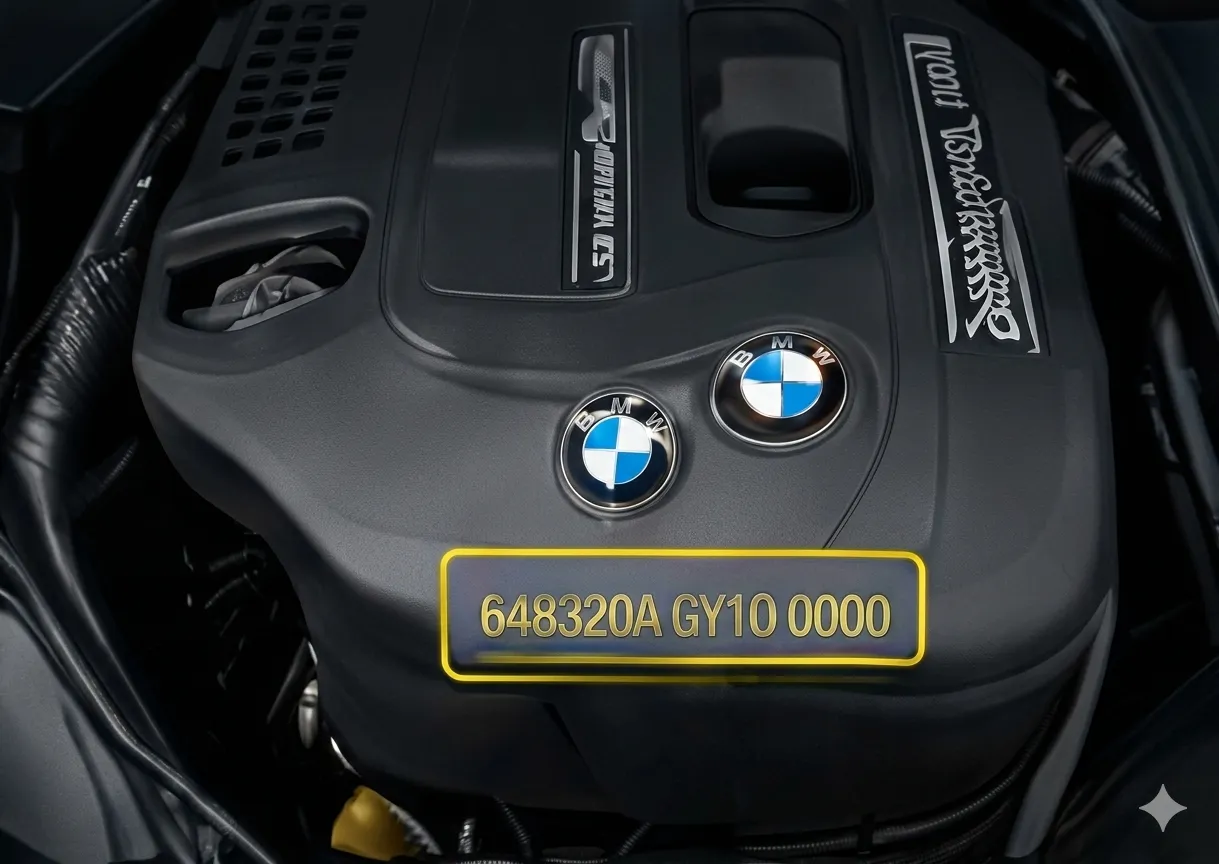
The engine code is located on a label attached to the valve cover. The VIN 8th character will be 'S' for EcoDiesel. Look for '3.0L EcoDiesel V6' marking.
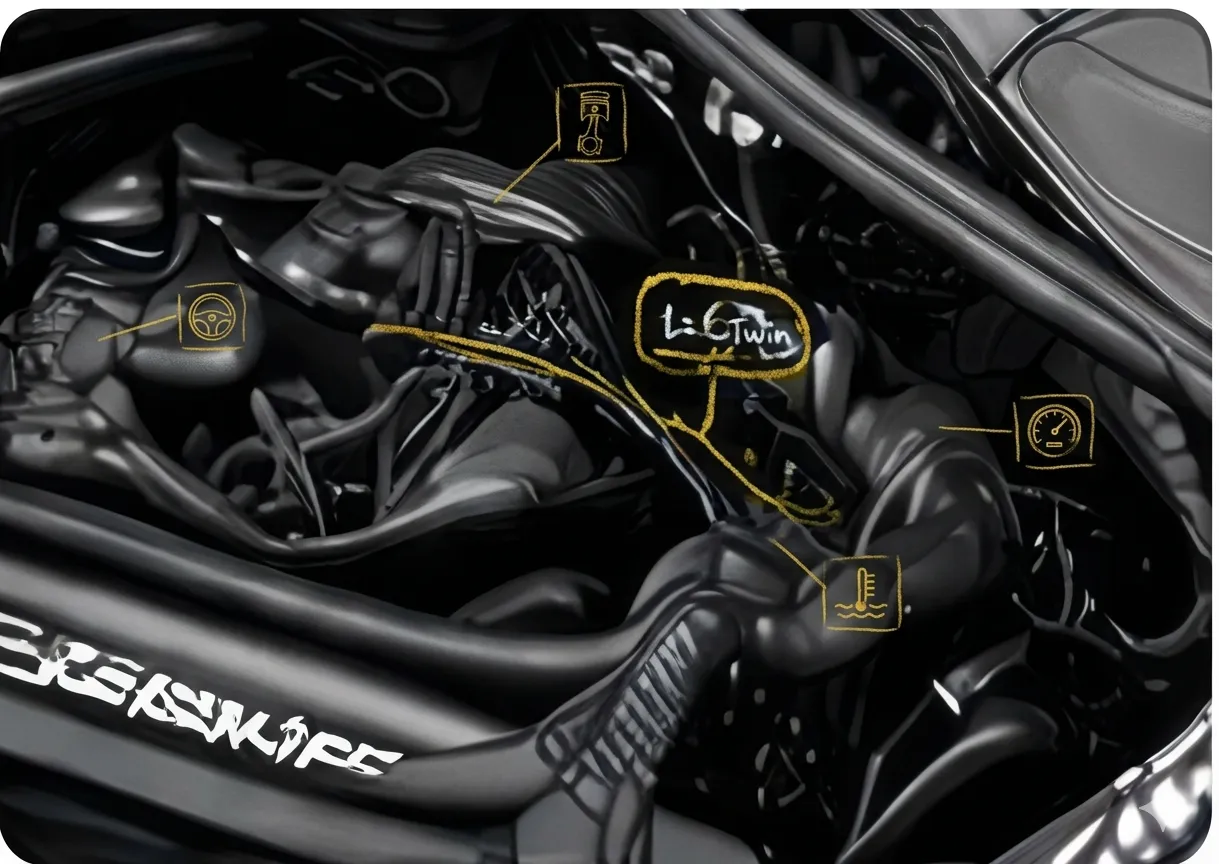
Open the hood and look at the engine cover. The code GME-T4 or 'Hurricane' will be visible. VIN 8th character is 'U' for 2.0L turbo hybrid.
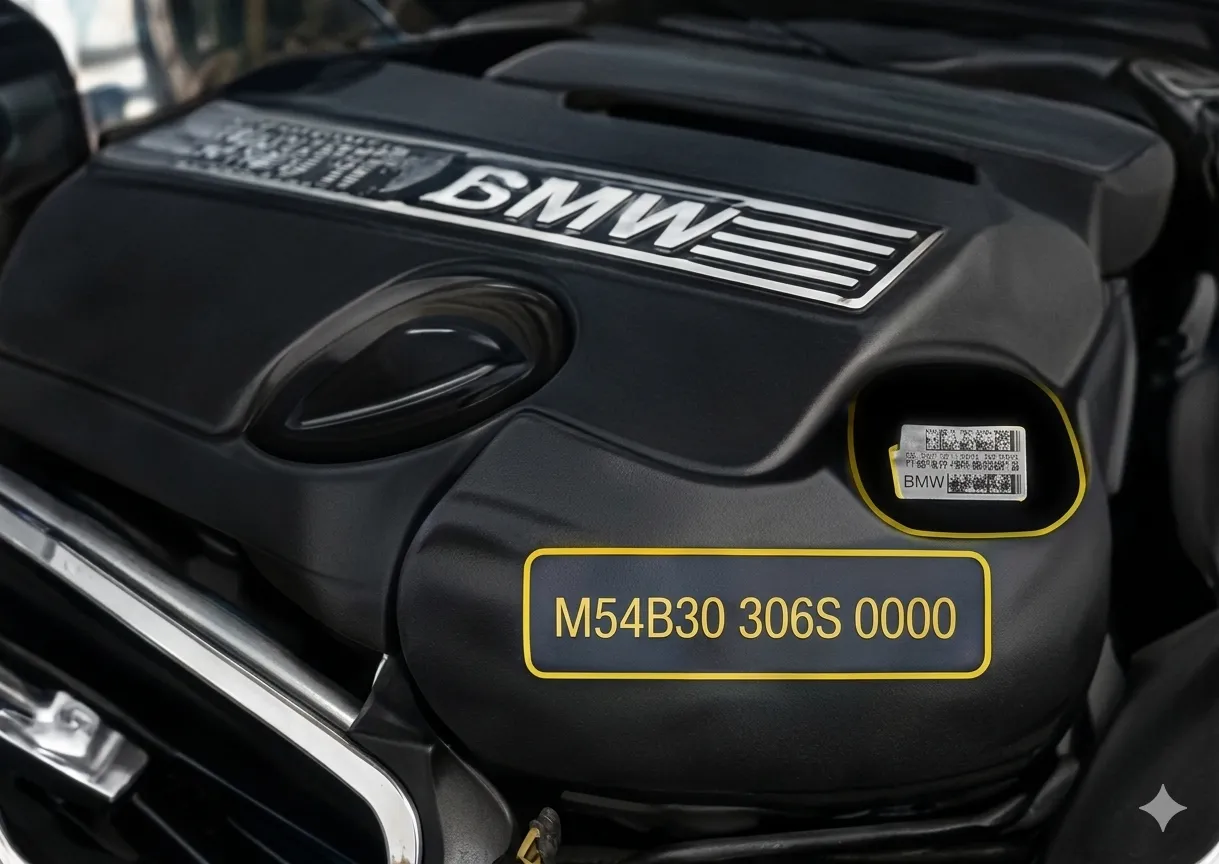
The engine code is cast into the side of the block near the distributor. Look for '4.0L' or '242 CID' markings. Classic AMC engine family.
Engine code locations per Jeep Service Manual. V5C field definitions from DVLA Guide to Vehicle Registration. VIN structure compliant with EU Regulation (EC) No 715/2007, Article 7.
A technical breakdown of Jeep's core engine systems including Pentastar V6, EcoDiesel, GME-T4 Hurricane turbo, and 4xe hybrid technology with documented reliability impacts. All data sourced from Stellantis Technical Service Information and EU Regulation (EC) No 715/2007
The 3.6L Pentastar V6 is Jeep's signature engine, introduced in 2010. It features dual overhead camshafts, variable valve timing (VVT), and produces 285-295 horsepower with excellent reliability.
The Pentastar uses aluminum construction, dual VVT on both intake and exhaust camshafts, and a maintenance-free timing chain. It features electronic fuel injection and can run on E85 flex fuel in some applications.

VM6 (2010)
285-295 HP, 260 lb-ft torque
VM6 + eTorque (2018)
Mild hybrid system added
VM6 (2021+)
Improved cooling, stop-start
Oil consumption
Some units consume oil between changes
Cylinder head issues
Early models (2011-2013) had head failures
Thermostat housing
Plastic housing can crack
The 3.6L Pentastar V6 is Jeep's signature engine, introduced in 2010. It features dual overhead camshafts, variable valve timing (VVT), and produces 285-295 horsepower with excellent reliability.
The Pentastar uses aluminum construction, dual VVT on both intake and exhaust camshafts, and a maintenance-free timing chain. It features electronic fuel injection and can run on E85 flex fuel in some applications.
VM6 (2010)
285-295 HP, 260 lb-ft torque
VM6 + eTorque (2018)
Mild hybrid system added
VM6 (2021+)
Improved cooling, stop-start
Oil consumption
Some units consume oil between changes
Cylinder head issues
Early models (2011-2013) had head failures
Thermostat housing
Plastic housing can crack
All technical descriptions and failure data sourced from Stellantis Product Technical Reports, Jeep Service Information, and EU Regulation (EC) No 715/2007 on vehicle type-approval.
Track BMW engineering across decades
The birth of Jeep with the iconic Go-Devil engine that powered the original military Jeep.

Legendary 2.2L L-head four-cylinder producing 60 HP. The engine that won WWII and started the Jeep legend with simple, rugged design.
Engine production years verified via Stellantis Product Reports and EU type-approval records
Authoritative data on Jeep's global engine production, plant operations, and strategic partnerships. All figures sourced from Stellantis Annual Reports, Sustainability Reports, and EU industrial compliance records.
Stellantis manufactures Jeep engines at multiple facilities worldwide, each specializing in specific engine families.


Jeep produces approximately 500,000 engines per year. Note the steady decline in Diesel production due to Euro 6d and WLTP regulations, while Hybrid (4xe) integration rises significantly.
Note: Diesel production has declined steadily due to Euro 6d and WLTP regulations (Regulation (EC) No 715/2007). 4xe plug-in hybrid integration rising rapidly.
Jeep collaborates with technology partners for electrification and advanced powertrains.
Samsung SDI supplies 17 kWh batteries for 4xe PHEV systems
Battery packs assembled in Michigan and Indiana facilities
Stellantis Strategic Partnerships – Samsung SDI
Shift in production reflects EU emissions policy and changing consumer demand towards electrification.
This aligns with Commission Regulation (EU) 2017/1151 (WLTP/RDE) and EU 2035 ICE phase-out roadmap.
Engine production data verified via Stellantis Annual Reports and EU type-approval records
The most common questions about engine codes, what they mean, how to find them and how this database works
A Jeep engine code (e.g., VM6, 30E, 57H) identifies the engine family and type. VM6 = 3.6L Pentastar V6, 30E = 3.0L EcoDiesel, 57H = 5.7L HEMI. The VIN 8th character indicates the engine code. Source: Jeep VIN Decoder Guide
Yes, but production is declining. The 3.0L EcoDiesel V6 (30E) is still available in Wrangler, Grand Cherokee, and Gladiator (2024 UK models). However, Stellantis plans to reduce diesel offerings in favor of 4xe hybrids and electric vehicles by 2030. Source: EU Regulation (EC) No 715/2007
The 3.6L Pentastar V6 (VM6) is widely regarded as Jeep's most reliable modern engine. The classic 4.0L AMC inline-six is also legendary for durability. Avoid early 3.0L EcoDiesel (2014-2018) due to oil cooler and bearing issues.
All modern Jeep engines (Pentastar V6, GME-T4, EcoDiesel, HEMI) use timing chains designed for the life of the engine. The legendary 4.0L AMC inline-six also used a timing chain. Older four-cylinder engines (pre-2000) may have used belts requiring replacement.
Technically possible but complex. Requires ECU reprogramming, wiring harness modifications, and potential transmission changes. Not recommended without expert tuning. Ensure compliance with UK emissions rules. Source: DVLA Vehicle Approval
On the 3.6L Pentastar, the code is on the driver's side of the engine block near the cylinder head. For the 2.0L GME-T4, check the engine cover. The VIN 8th character also indicates engine type: 'F' for Pentastar, 'U' for 2.0L turbo.
On the UK V5C registration document, look for the 'Engine Number' field (not VIN). This shows the engine displacement and type (e.g., '3.6L V6'). For specific codes (VM6, 30E), check the VIN 8th character or physical engine markings.
The 3.0L EcoDiesel (2020+) is generally reliable, but early models (2014-2018) had issues with oil coolers, EGR coolers, and rod bearing failures. The 2020+ version addressed many problems. Critical to use correct oil spec (CJ-4 or newer). High-mileage urban driving can cause DPF issues.
VM6: 3.6L Pentastar V6 petrol engine (285 HP, 260 lb-ft) – used in Wrangler, Grand Cherokee, Cherokee. 30E: 3.0L EcoDiesel V6 (260 HP, 442 lb-ft) – used in Wrangler, Grand Cherokee, Gladiator. VM6 is petrol, 30E is diesel with much higher torque.
Yes. The engine code (e.g., VM6, 30E, 57H) or VIN 8th character is required for ordering correct parts (ECU, turbo, injectors). Using VIN alone can lead to errors. Always verify with the physical engine code and VIN decoder.
Yes. High-performance engines (6.4L 392 HEMI, 5.7L HEMI) or engines with known issues (early 3.0L EcoDiesel) can increase premiums. Insurers use engine type and displacement to assess risk. Always declare correct engine code.
The 3.6L Pentastar V6 (2011–present) is designed for 200,000+ miles with proper maintenance. Known for reliability when oil changes are maintained. Common service items include thermostat housing and occasional oil consumption. Overall excellent longevity.
The 4xe PHEV system (2021–present) is generally reliable but relatively new. Some software issues and charging port problems reported. Requires regular software updates. Long-term reliability data still emerging. Battery warranty: 8 years/100,000 miles.
3.0L EcoDiesel (2014-2018): High failure rate of oil coolers causing leaks. Stellantis issued technical service bulletins. 2020+ models have improved design. Critical to monitor for coolant/oil mixing. Source: Stellantis TSB
Yes, but must be declared to DVLA. Changing engine code (e.g., petrol to diesel, or displacement change) may affect MoT, insurance, and emissions compliance. Engine swap requires V5C update and potential re-testing. Source: DVLA guidelines
Yes. The 4xe PHEV system uses a modified 2.0L GME-T4 turbo petrol engine paired with dual electric motors and a 17 kWh battery. Combined output is 375 HP and 470 lb-ft torque. Used in Wrangler 4xe, Grand Cherokee 4xe, Compass 4xe.
The 2.0L GME-T4 (2018–present) is generally reliable but some owners report overheating concerns and carbon buildup from direct injection. Turbo is reliable with maintenance. Overall solid engine but less proven than the 3.6L Pentastar. Service interval: 8,000 miles in UK conditions.
Position 8 of the 17-digit VIN indicates engine type. Examples: 'F' = 3.6L Pentastar V6, 'S' = 3.0L EcoDiesel, 'U' = 2.0L GME-T4 turbo, 'J' = 6.4L 392 HEMI. Source: Jeep VIN Decoder Guide
Some are. The 4.0L AMC inline-six (1986-2006) is legendary for simplicity and durability. However, modern engines like the 3.6L Pentastar and 2.0L GME-T4 offer better efficiency, power, and emissions compliance under Euro 6. Trade-off between simplicity and technology.
Use Stellantis Technical Service Information (TSI) or Jeep Owner's Manual. Public data also available in EU type-approval documents. For UK vehicles, check VCA type-approval database. Source: CELEX:32007R0715
The EngineCode.uk is an independent technical resource dedicated to providing accurate, non-commercial engine data for BMW and related powertrains. This section outlines our sources, disclaimers, and compliance policies in accordance with Google's E-E-A-T (Experience, Expertise, Authoritativeness, Trustworthiness) guidelines.
EngineCode.uk is operated by Engine Finders UK Ltd as a standalone reference platform. We are not affiliated with Stellantis, Jeep, Chrysler, Dodge, Ram, or any other manufacturer or trademark holder. All content is created independently for educational and diagnostic purposes only. The Jeep name, logo, and engine codes are trademarks of Stellantis N.V.
All engine and vehicle images used on this site are for technical identification and educational purposes under fair use principles. If you believe any image infringes your copyright, please contact us at copyrights@enginecode.uk. We will review the claim promptly and remove or license the content as required.
EngineCode.uk complies with the UK General Data Protection Regulation (UK GDPR) and the EU GDPR. We do not collect personal data through this platform unless explicitly provided (e.g., contact forms).
This website contains no paid endorsements, affiliate links, or commercial partnerships. We do not sell parts, services, or recommendations. Our mission is to provide accurate, verifiable, and neutral technical data to support vehicle owners, restorers, and technicians across the UK and Europe.
Information accurate as of 2025