


Covers Saab petrol and turbocharged engines used across UK and European models - from early two-stroke engines to modern turbocharged units. Each engine code includes specifications, compatible vehicles, and emissions data, sourced from official Saab and EU records.
Data sourced from Saab Technical Information, EU Regulation (EC) No 715/2007, and Saab Workshop Manuals.
Find Saab engine codes by family, model, or generation

| Engine Code | Fuel Type | Series | Specifications |
|---|---|---|---|
| Petrol | 9 3 Biopower Epower | View Specs | |
| Electricity | 9 3 Epower | View Specs | |
| Petrol | B-Series | View Specs | |
| Petrol | B-Series | View Specs | |
| Petrol | B-Series | View Specs | |
| Petrol | B-Series | View Specs | |
| Petrol | B-Series | View Specs | |
| Petrol | B-Series | View Specs | |
| Petrol | B-Series | View Specs | |
| Petrol | B-Series | View Specs | |
| Petrol | B-Series | View Specs | |
| Petrol | B-Series | View Specs | |
| Petrol | B-Series | View Specs | |
| Petrol | B-Series | View Specs | |
| Petrol | B-Series | View Specs | |
| Petrol | B-Series | View Specs | |
| Petrol | B-Series | View Specs | |
| Petrol | B-Series | View Specs | |
| Petrol | B-Series | View Specs | |
| Petrol | B-Series | View Specs | |
| Petrol | B-Series | View Specs | |
| Petrol | B-Series | View Specs | |
| Petrol | B-Series | View Specs | |
| Petrol | B-Series | View Specs | |
| Petrol | B-Series | View Specs | |
| Petrol | B-Series | View Specs | |
| Petrol | B-Series | View Specs | |
| Petrol | B-Series | View Specs | |
| Petrol | B-Series | View Specs | |
| Petrol | B-Series | View Specs | |
| Petrol | B-Series | View Specs | |
| Petrol | B-Series | View Specs | |
| Petrol | B-Series | View Specs | |
| Petrol | B-Series | View Specs | |
| Petrol | B-Series | View Specs | |
| Petrol | B-Series | View Specs | |
| Petrol | B-Series | View Specs | |
| Petrol | B-Series | View Specs | |
| Petrol | B-Series | View Specs | |
| Petrol | B-Series | View Specs | |
| Petrol | B-Series | View Specs | |
| Petrol | B-Series | View Specs | |
| Petrol | B-Series | View Specs | |
| Petrol | B-Series | View Specs | |
| Petrol | B-Series | View Specs | |
| Petrol | B-Series | View Specs | |
| Petrol | B-Series | View Specs | |
| Petrol | B-Series | View Specs | |
| Petrol | B-Series | View Specs | |
| Petrol | EPOWER-Series | View Specs | |
| Petrol | EPOWER-Series | View Specs | |
| Petrol | GRIFFON-Series | View Specs | |
| Petrol | PHOENIX-Series | View Specs |

Explore where Saab powertrains were used beyond Saab vehicles.
Engine specifications and technical data sourced from Saab Technical Documentation and EU Vehicle Type Approval Database. All specifications are verified against official Saab service documentation.
The engine code is essential for ordering parts, diagnosing issues, and verifying compatibility. It is not the same as the VIN or chassis number. This guide shows exactly where to find it - by model and engine type - using official Saab and DVLA sources

A unique identifier stamped on the engine block or cover used for parts and service.
The vehicle identification number that holds encoded vehicle and engine information.
The chassis or frame number used for registration and legal identification.
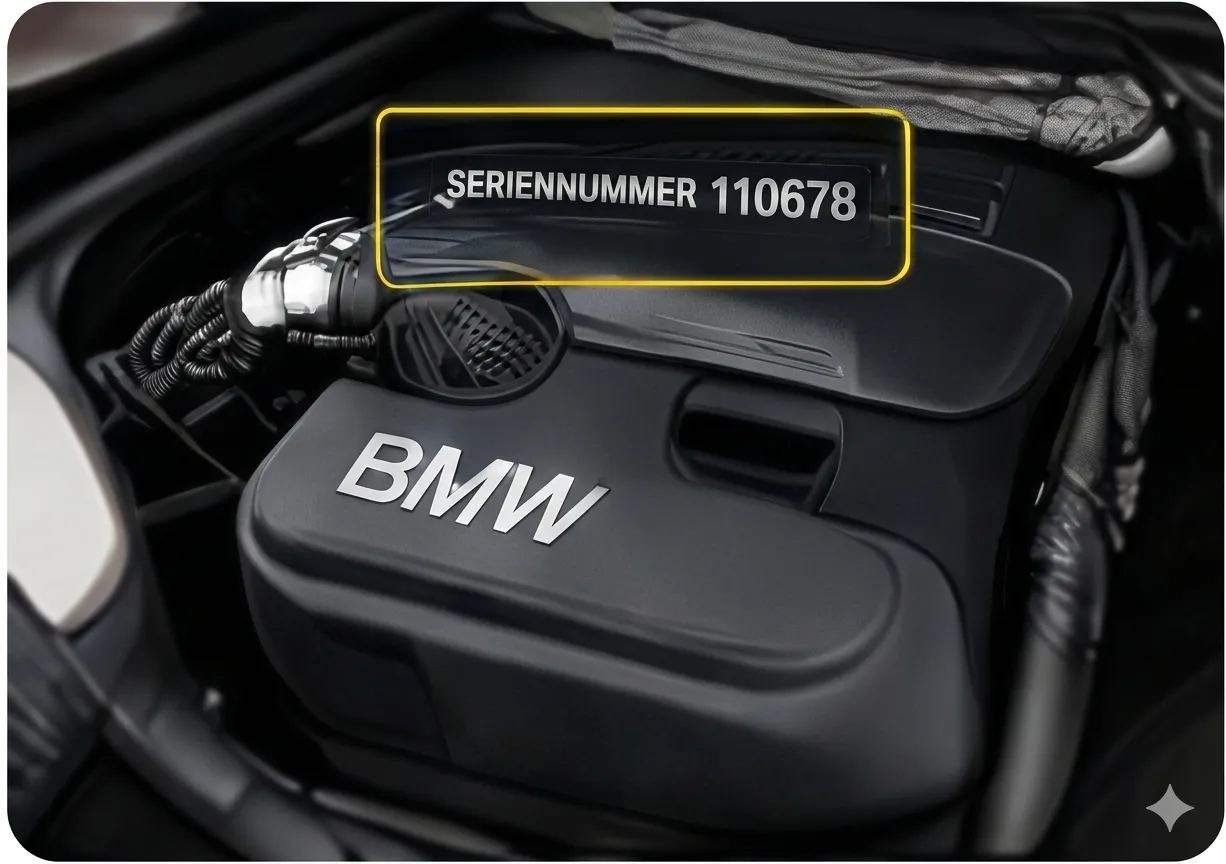
Locate the engine code on the timing cover, near the camshaft housing. It is stamped into the metal or on a label near the timing belt housing. Look for B205E, B205L, or B205R.
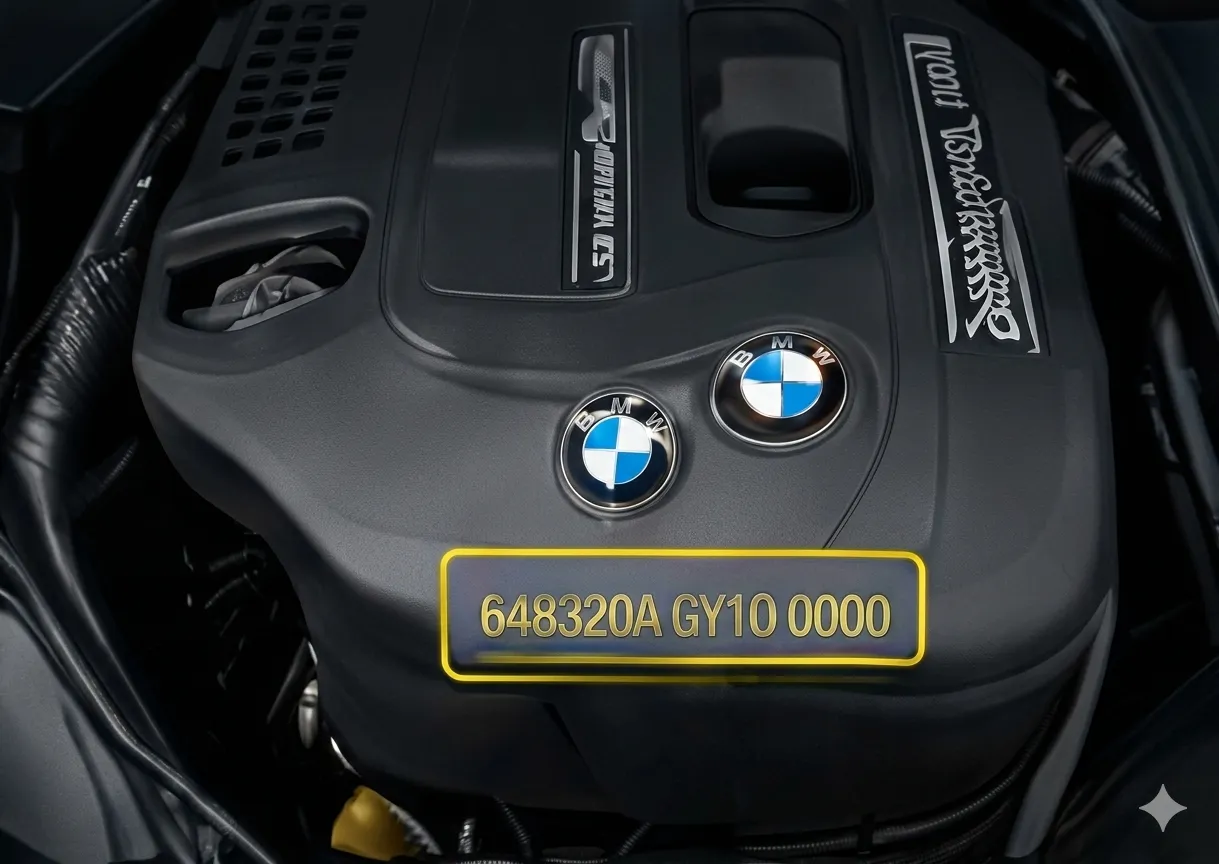
The engine code is located on a label attached to the timing cover or cylinder head. It reads B207L, B207E, or B207R depending on power variant.
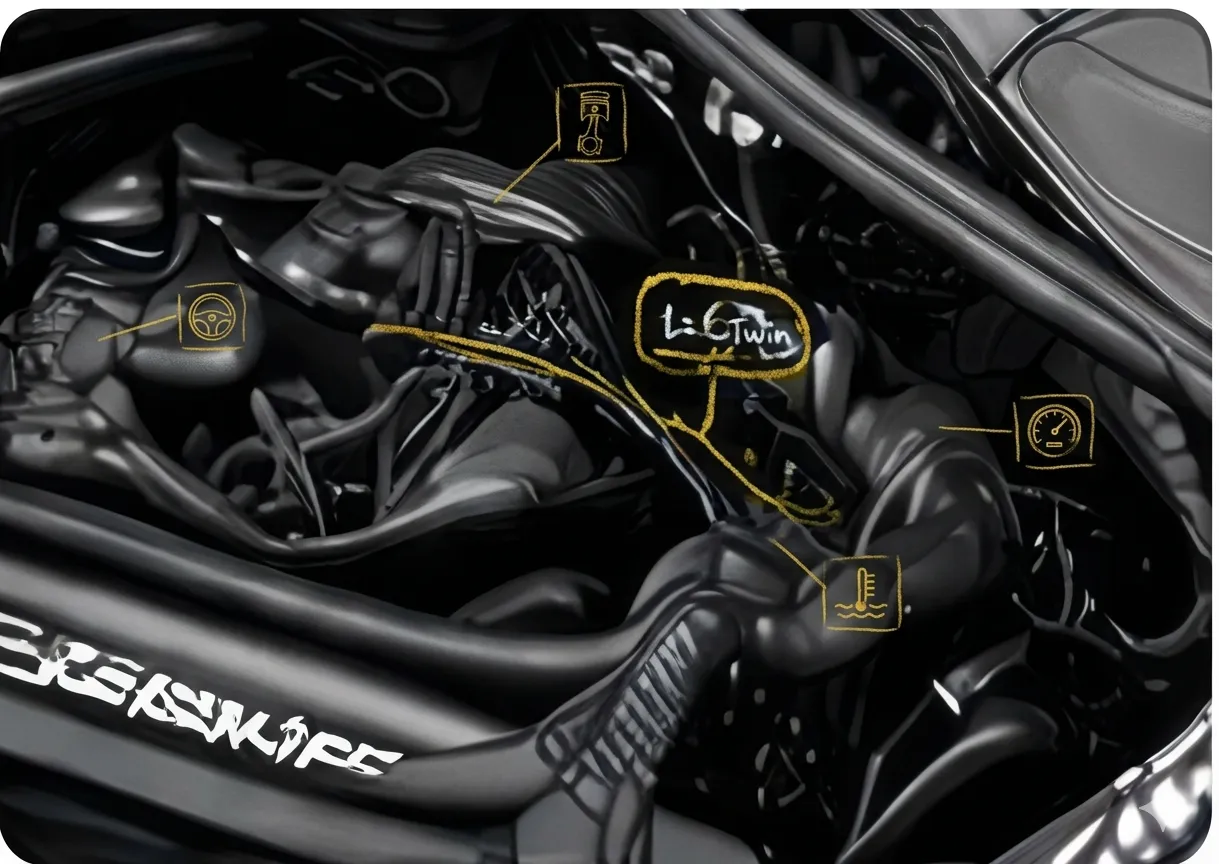
Open the hood and look at the front of the engine. The code is cast into the cylinder head or on a label near the timing belt cover. Confirm B235 for 2.3L engines.
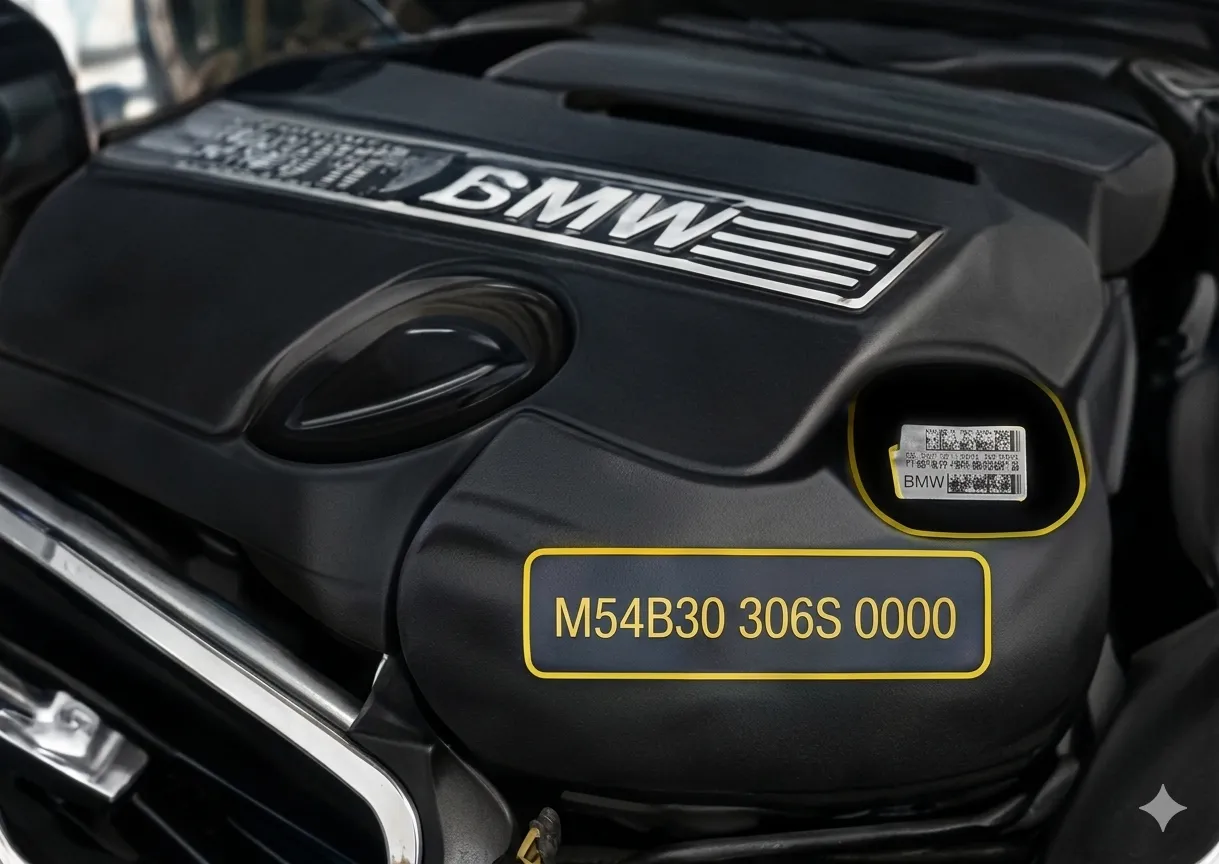
The engine code is on a white label on the timing cover, visible from the front of the engine bay. Check for B207L (low pressure turbo) or B207R (high pressure turbo).
Engine code locations per Saab Workshop Manual. V5C field definitions from DVLA Guide to Vehicle Registration.
A technical breakdown of Saab's core engine systems including Trionic engine management, turbocharging technology, timing systems and B-series architecture with documented reliability impacts. All data sourced from Saab Technical Information and EU Regulation (EC) No 715/2007
Saab's proprietary Trionic system integrates fuel injection, ignition timing, and turbocharger boost control into one sophisticated engine management platform.
Trionic uses multiple sensors to monitor engine parameters including knock, air mass, throttle position, and boost pressure. The ECU adjusts fuel delivery, ignition timing, and wastegate control in real-time for optimal performance and emissions.

B204 (1993)
Basic integrated control
B205 (1998)
Enhanced knock control
B207 (2002)
CAN bus integration
Cassette ignition failure
Common on Trionic 5 and 7
MAP sensor degradation
Causes poor boost control
Knock sensor failure
Triggers limp mode
Saab's proprietary Trionic system integrates fuel injection, ignition timing, and turbocharger boost control into one sophisticated engine management platform.
Trionic uses multiple sensors to monitor engine parameters including knock, air mass, throttle position, and boost pressure. The ECU adjusts fuel delivery, ignition timing, and wastegate control in real-time for optimal performance and emissions.
B204 (1993)
Basic integrated control
B205 (1998)
Enhanced knock control
B207 (2002)
CAN bus integration
Cassette ignition failure
Common on Trionic 5 and 7
MAP sensor degradation
Causes poor boost control
Knock sensor failure
Triggers limp mode
All technical descriptions and failure data sourced from Saab Product Technical Reports, Saab Workshop Manuals, and EU Regulation (EC) No 715/2007 on vehicle type-approval.
Track BMW engineering across decades
Saab-designed engines and pioneering turbocharging technology.

First Saab-designed four-cylinder engine. Overhead valve design with improved power and efficiency over V4.
Turbocharged variant - Saab pioneered turbocharging in production cars. APC system managed boost for reliability.
Engine production years verified via Saab production records and EU type-approval records
Authoritative data on Saab's engine production, plant operations, and technical partnerships. All figures sourced from Saab production records and historical documentation.
Saab manufactured engines primarily at its Swedish facilities.

Saab produced exclusively petrol engines throughout its history. Production declined sharply from 2008 due to financial difficulties, ending completely in 2011.
Note: Saab ceased production in 2011 following bankruptcy. NEAS (New Saab Automobile Sweden) briefly continued limited production.
Shift in production reflects EU emissions policy and changing consumer demand.
Engine production data verified via Saab production records and historical documentation.
The most common questions about engine codes, what they mean, how to find them and how this database works
A Saab engine code (e.g., B205E, B207L) identifies the engine family, displacement, and variant. B = Engine family, 20 = ~2.0L displacement, 5/7 = Generation, E/L = Power variant (E = high power, L = low power). Source: Saab Workshop Manual
Saab turbo engines (B205, B207) are generally reliable with proper maintenance. Common issues include oil sludge from infrequent changes, APC system failures, and turbo wear on high-mileage units. Regular oil changes every 10,000 miles are critical.
Saab engines use timing belts requiring replacement every 60,000–90,000 miles. B205 and B207 engines have belt-driven camshafts. Failure to replace can cause catastrophic engine damage as these are interference engines.
Trionic is Saab's engine management system combining fuel injection, ignition, and turbo control. Trionic 5, 7, and 8 were used across different generations. It monitors knock, boost pressure, and air-fuel ratio for optimal performance.
The B205 and B207 engines (1990s–2010s) are considered the most reliable when properly maintained. Earlier B202 engines are also durable. Avoid engines with unknown service history due to oil sludge risks.
BioPower is Saab's flex-fuel technology allowing engines to run on E85 ethanol, petrol, or any mixture. B205 and B207 BioPower engines automatically detect fuel type and adjust accordingly. Power increases up to 20% on E85.
On B205/B207 engines, the code is on the timing cover near the camshaft housing. Look for a white label or stamped metal showing B205E, B205L, B207E, B207L, or B207R.
Saab recommends oil changes every 10,000 miles or annually for B205/B207 engines. Use fully synthetic 5W-30 or 5W-40 meeting Saab 9-3 specification. More frequent changes (7,500 miles) recommended for high-mileage or heavily-used engines.
Oil sludge is caused by infrequent oil changes, short-trip driving, and PCV system failure. B205/B207 engines are particularly susceptible. Prevention: regular oil changes, quality synthetic oil, and PCV system maintenance.
Only BioPower models (2005–2012) can use E85. These have specific engine codes with BioPower designation. Standard petrol engines cannot use E85 and will be damaged. Check your V5C or engine bay label for BioPower designation.
LPT = Low Pressure Turbo (B205L, B207L) with lower boost for better fuel economy. HPT variants (B205E, B207R) have higher boost and more power. LPT produces ~150 HP, HPT produces 175–210 HP depending on model.
Yes, through specialist suppliers and Saab parts networks. NEAS (New Saab Automobile Sweden) continues parts supply. Many parts are shared with GM vehicles. Aftermarket support remains strong in UK and Europe.
APC (Automatic Performance Control) is Saab's boost control system. It uses a knock sensor to detect pre-ignition and reduces boost pressure to prevent engine damage. Allows safe operation on varying fuel quality.
With proper maintenance, Saab B205/B207 engines can exceed 200,000 miles. Key factors: regular oil changes, timing belt replacement at 90,000 miles, PCV system maintenance, and quality fuel. Many Saabs exceed 150,000 miles with original engines.
Saab specifies fully synthetic 5W-30 or 5W-40 meeting Saab 9-3 standard. Popular choices: Mobil 1, Castrol EDGE, or Motul. Capacity: 4.5–5.0 litres depending on engine. Always use quality oil and change every 10,000 miles maximum.
The EngineCode.uk is an independent technical resource dedicated to providing accurate, non-commercial engine data for BMW and related powertrains. This section outlines our sources, disclaimers, and compliance policies in accordance with Google's E-E-A-T (Experience, Expertise, Authoritativeness, Trustworthiness) guidelines.
EngineCode.uk is operated by Engine Finders UK Ltd as a standalone reference platform. We are not affiliated with Saab AB, Saab Automobile, NEAS, or any other manufacturer or trademark holder. All content is created independently for educational and diagnostic purposes only. The Saab name, logo, and engine codes are trademarks of Saab AB and Saab Automobile.
All engine and vehicle images used on this site are for technical identification and educational purposes under fair use principles. If you believe any image infringes your copyright, please contact us at copyrights@enginecode.uk. We will review the claim promptly and remove or license the content as required.
EngineCode.uk complies with the UK General Data Protection Regulation (UK GDPR) and the EU GDPR. We do not collect personal data through this platform unless explicitly provided (e.g., contact forms).
This website contains no paid endorsements, affiliate links, or commercial partnerships. We do not sell parts, services, or recommendations. Our mission is to provide accurate, verifiable, and neutral technical data to support vehicle owners, restorers, and technicians across the UK and Europe.
Information accurate as of 2025