


Covers SEAT petrol, diesel, and hybrid powertrains used across UK and European models - from classic Fiat-derived units to modern Volkswagen Group EA series turbocharged engines. Each engine code includes specifications, compatible vehicles, and emissions data, sourced from official SEAT and EU records.
Data sourced from SEAT Technical Service Information, Volkswagen Group Technical Documentation, EU Regulation (EC) No 715/2007, and SEAT ELSA Pro.
Find SEAT engine codes by family, model, or generation

| Engine Code | Fuel Type | Series | Specifications |
|---|

See where SEAT powertrains are shared across VW, Škoda, Audi, and Cupra.
Explore SEAT's electrified powertrain technologies.
Engine specifications and technical data sourced from SEAT Technical Documentation and EU Vehicle Type Approval Database. All specifications are verified against official SEAT service documentation.
The engine code is essential for ordering parts, diagnosing issues, and verifying compatibility. It is not the same as the VIN or chassis number. This guide shows exactly where to find it - by model and engine type - using official SEAT and DVLA sources

A unique identifier stamped on the engine block or cover used for parts and service.
The vehicle identification number that holds encoded vehicle and engine information.
The chassis or frame number used for registration and legal identification.
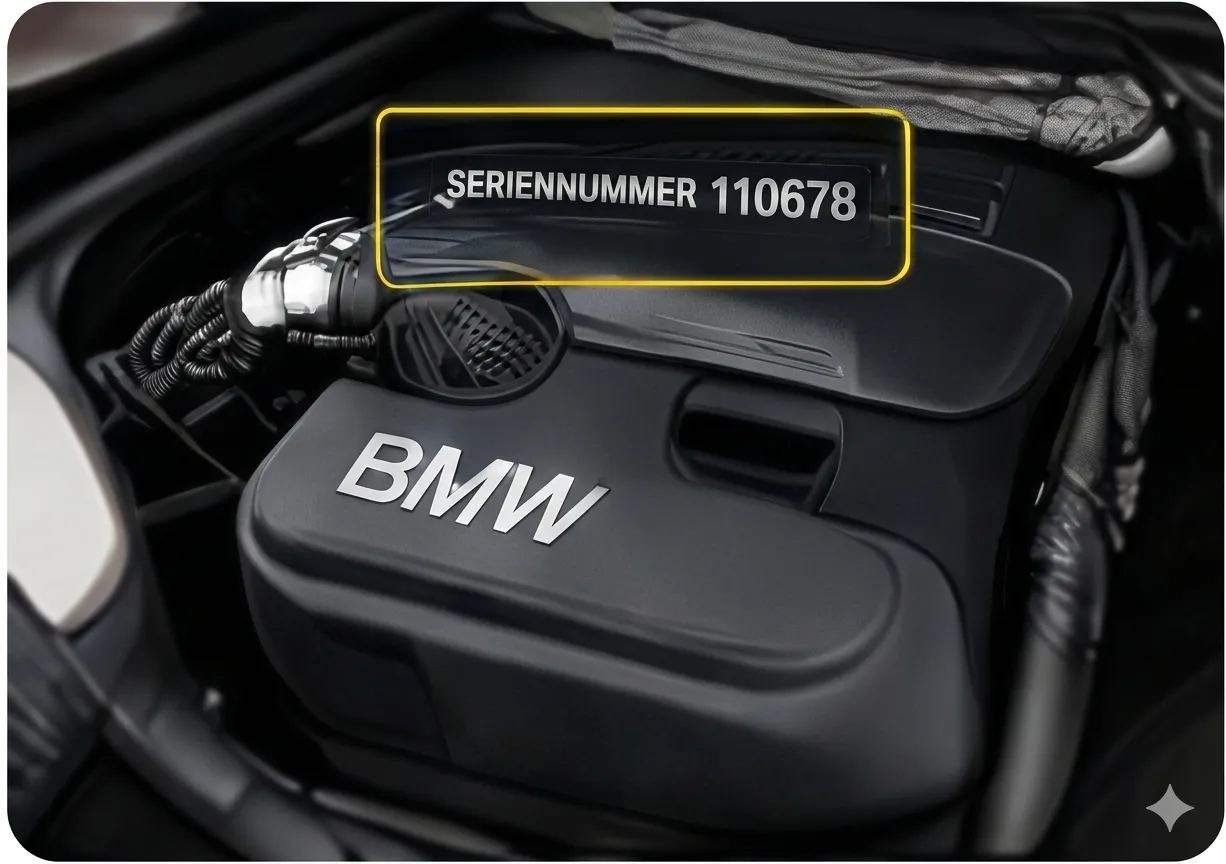
Locate the engine code on a white label attached to the valve cover, near the oil filler cap. It reads 'CHZJ', 'DFGA', or similar. The code may also be stamped into the block near the oil filter housing.
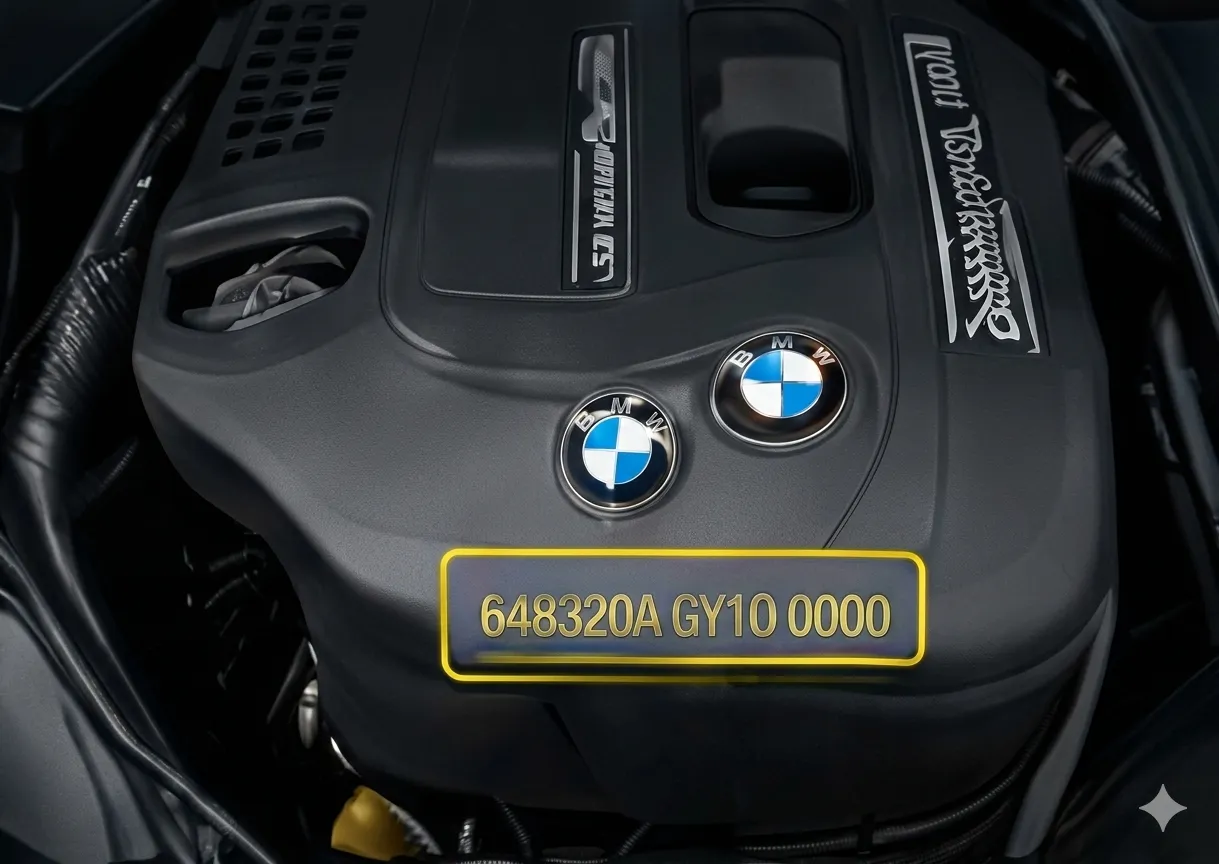
The engine code is located on a label attached to the timing belt cover, visible at the front of the engine. It reads 'CRGA', 'DSRA', or similar. Also check the data sticker in the boot or service book.
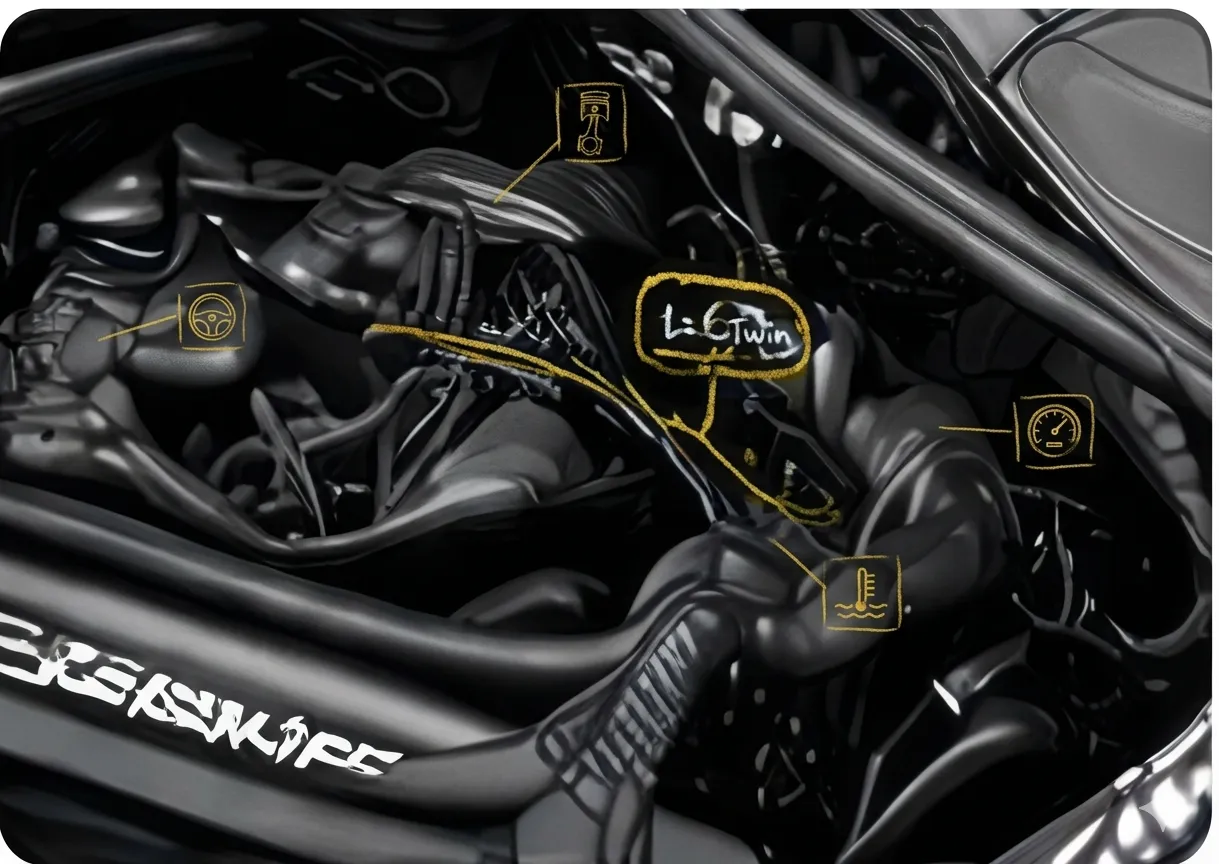
Open the bonnet and look at the front right of the engine bay. The engine code is on a white label near the turbocharger and intake manifold. It reads 'DKZA', 'DLBA', or similar. Confirm 'TSI' for petrol variants.
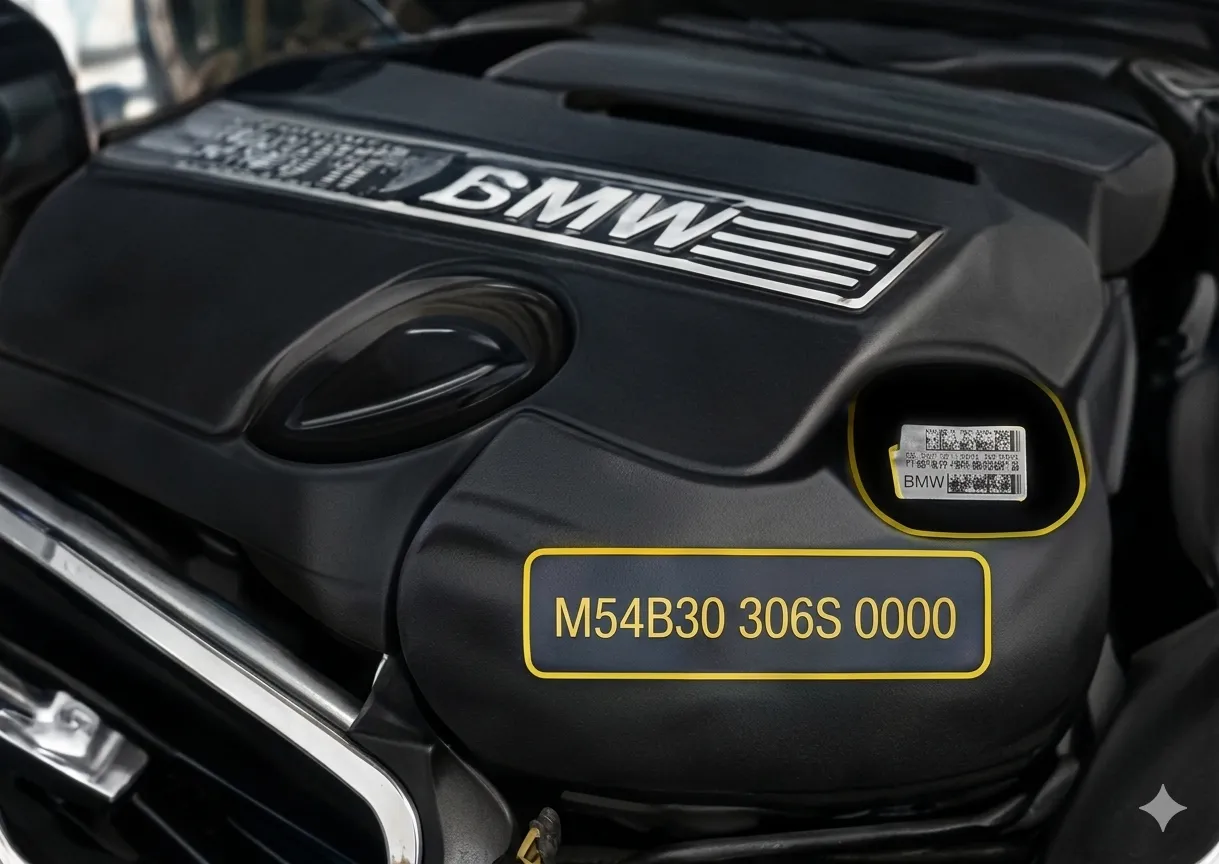
The engine code is cast into the front of the cylinder head or on a black label near the camshaft cover. Look for 'AVB', 'BRT', or similar. Older models may require torch inspection.
Engine code locations per SEAT ELSA Pro Vehicle Identification Guide. V5C field definitions from DVLA Guide to Vehicle Registration. VIN structure compliant with EU Regulation (EC) No 715/2007, Article 7.
A technical breakdown of SEAT's core engine systems including TSI turbocharging, TDI common rail, MQB modular architecture and e-Hybrid electrification with documented reliability impacts. All data sourced from SEAT Technical Service Information, Volkswagen Group ELSA/WIS and EU Regulation (EC) No 715/2007
SEAT's TSI (Turbo Stratified Injection) combines turbocharging with direct petrol injection for enhanced power and efficiency. The EA211 family represents the most widely deployed TSI architecture across SEAT's range.
A turbocharger compresses intake air; direct injection delivers fuel into the combustion chamber at high pressure. Stratified charge operation (in some modes) improves part-load efficiency. Integrated exhaust manifold aids thermal management and reduces turbo lag.

1.2/1.4 TSI (2010)
Twincharger (turbo+supercharger), early tensioner issues
1.0/1.4 TSI (2013)
Belt-driven timing, aluminium block, improved cooling
1.5 TSI (2017)
Miller cycle, ACT cylinder deactivation, GPF
1.5 TSI evo2 (2020)
48V e-Boost integration, improved low-RPM response
Timing belt tensioner wear
Early 1.2/1.4 TSI: premature wear, risk of jump; replace at 210,000 km
Carbon buildup
Direct injection bypasses intake valves; walnut blasting recommended
HPFP wear
High-pressure fuel pump service item at 100,000+ miles
SEAT's TSI (Turbo Stratified Injection) combines turbocharging with direct petrol injection for enhanced power and efficiency. The EA211 family represents the most widely deployed TSI architecture across SEAT's range.
A turbocharger compresses intake air; direct injection delivers fuel into the combustion chamber at high pressure. Stratified charge operation (in some modes) improves part-load efficiency. Integrated exhaust manifold aids thermal management and reduces turbo lag.
1.2/1.4 TSI (2010)
Twincharger (turbo+supercharger), early tensioner issues
1.0/1.4 TSI (2013)
Belt-driven timing, aluminium block, improved cooling
1.5 TSI (2017)
Miller cycle, ACT cylinder deactivation, GPF
1.5 TSI evo2 (2020)
48V e-Boost integration, improved low-RPM response
Timing belt tensioner wear
Early 1.2/1.4 TSI: premature wear, risk of jump; replace at 210,000 km
Carbon buildup
Direct injection bypasses intake valves; walnut blasting recommended
HPFP wear
High-pressure fuel pump service item at 100,000+ miles
All technical descriptions and failure data sourced from SEAT Product Technical Reports, SEAT ELSA/WIS Service Information, and EU Regulation (EC) No 715/2007 on vehicle type-approval.
Track BMW engineering across decades
Expansion into hatchbacks and early diesel adoption for European market demands.

1.2–1.4L inline-4 OHV petrol. Compact transverse layout. Improved efficiency over 600 era. Powered early hatchback models.
1.5–1.8L inline-4 naturally aspirated diesel. Indirect injection. Torque-rich, slow-revving. Introduced diesel to Spanish market.
Engine production years verified via SEAT Product Reports and EU type-approval records
Authoritative data on SEAT's global engine production, plant operations, and strategic partnerships within Volkswagen Group. All figures sourced from SEAT Annual Reports, Volkswagen Group Sustainability Reports, and EU industrial compliance records.
SEAT manufactures and integrates engines primarily at its Martorell facility, with Volkswagen Group-sourced components from German and Polish plants.


SEAT integrates approximately 280,000 engines per year. Note the steady decline in Diesel production due to Euro 6d and WLTP regulations, while e-Boost and e-Hybrid integration rises.
Note: Diesel production has declined steadily due to Euro 6d and WLTP regulations (Regulation (EC) No 715/2007). e-Boost and plug-in hybrid integration rising.
Strategic platform and powertrain sharing across Volkswagen Group brands. SEAT benefits from VW Group's EA211/EA888 architecture, e-Hybrid systems, and MQB platform while maintaining unique calibration and assembly at Martorell.
EA211 1.5 TSI used in SEAT León, Škoda Octavia, Volkswagen Golf with brand-specific tuning
EA211/EA288 blocks built in Germany/Poland, final assembly and calibration at SEAT Martorell
SEAT Platform Strategy Documentation
Shift in production reflects SEAT's electrification strategy and changing consumer demand.
This aligns with Commission Regulation (EU) 2017/1151 (WLTP/RDE) and SEAT's electrification roadmap.
Engine production years verified via SEAT Product Reports and EU type-approval records
The most common questions about engine codes, what they mean, how to find them and how this database works
A SEAT engine code (e.g., CHZJ, DFGA, CRGA) identifies the engine family, fuel type, displacement, and variant. SEAT uses Volkswagen Group coding: EA211 (1.0/1.5 TSI), EA888 (2.0 TSI), EA288 (2.0 TDI). Prefix letters denote fuel/series, numbers indicate displacement/revision. Suffix letters denote calibration for specific models or emissions standards. Source: SEAT ELSA Pro Vehicle Identification Guide.
SEAT has largely phased out new diesel development. The EA288 evo 2.0 TDI remains available in select markets for the León, Tarraco, and Ateca, but production is declining rapidly. SEAT plans to transition entirely to electrified and petrol powertrains by 2030 in line with Volkswagen Group strategy. Source: SEAT Corporate Strategy Report 2023.
The EA211 1.0 TSI (post-2018) and 1.5 TSI evo are widely regarded as SEAT's most reliable modern petrol engines. The EA288 2.0 TDI is also robust but requires strict AdBlue and DPF maintenance. Avoid early EA211 1.2 TSI units (pre-2015) due to timing belt tensioner wear and oil consumption issues.
EA211 petrol engines (1.0/1.5 TSI) use timing belts with a 210,000 km or 10-year replacement interval. EA888 (2.0 TSI) and EA288 (2.0 TDI) use timing chains designed for extended life, though tensioners should be inspected at 150,000 km. Always verify your specific engine code before servicing.
Technically possible within the MQB A0 platform, but complex. Requires ECU remapping, wiring harness modifications, exhaust system changes, and DVLA notification. Not recommended without expert tuning. Ensure compliance with UK MoT emissions and insurance regulations.
On the EA288 engine, the code is stamped on a white label attached to the timing belt cover, visible near the front of the engine bay. It reads 'CRGA', 'DFGA', or similar. Also check the V5C logbook under 'Engine Number' and the data sticker in the boot or service book.
On the UK V5C registration document, look for the 'Engine Number' field (not VIN). This matches the engine code (e.g., CHZJ for 1.0 TSI 95 HP). If the engine was replaced, this may not reflect the current unit. Always verify physically on the engine block.
Modern EA211 TSI engines (2018+) are highly reliable with proper maintenance. Early 1.2/1.4 TSI variants (2012–2017) experienced timing belt tensioner wear and carbon buildup. The 1.5 TSI evo addresses these with Miller cycle operation and improved thermal management. Use VW 504 00/507 00 oil specification.
1.0 TSI: 3-cylinder, 90–110 HP, belt-driven, ideal for city use. 1.5 TSI: 4-cylinder, 130–150 HP, features cylinder deactivation (ACT), Miller cycle, and evo2 mild hybrid option. Both are EA211 family but differ in architecture and efficiency tech. 1.5 TSI offers better motorway refinement and torque.
Yes. The full engine code (e.g., DFGA) is required for ordering correct parts (ECU, turbo, injectors). Using VIN alone can lead to errors due to VW Group platform sharing. Always verify with the physical engine code label on the block.
Yes. High-output variants (2.0 TSI 300 HP Cupra) or engines with known issues can increase premiums. Insurers use engine displacement and power output to assess risk. Always declare the correct engine code to avoid policy invalidation.
The EA211 1.0 TSI is designed for 180,000+ miles with proper maintenance. Known for aluminium block, timing belt, and direct injection. Belt replacement at 210,000 km is critical. Use correct VW specification oil to prevent sludge and cam follower wear.
Yes. All EA211, EA888, and EA288 engines are interference engines. If the timing belt/chain fails, valve and piston collision is likely. Immediate towing required. Adhere strictly to service intervals per SEAT maintenance schedule.
Direct injection TSI engines: 1.0 TSI, 1.4 TSI, 1.5 TSI, 2.0 TSI. Fuel bypasses intake valves, allowing carbon deposits. Symptoms: rough idle, hesitation, misfire codes (P0300). Mitigation: walnut blasting service every 80,000–100,000 miles or use of indirect injection variants where available.
Yes, but must be declared to DVLA. Changing engine code (e.g., petrol to diesel or displacement increase) affects MoT emissions testing, insurance classification, and road tax bands. Source: DVLA Vehicle Registration Guidelines.
Yes. The León e-Hybrid and Ateca e-Hybrid use the EA211 1.4 TSI petrol engine paired with an electric motor and 13 kWh battery. Combined output: 204 HP. Electric-only range: ~38 miles. Calibrated for urban efficiency with regenerative braking and EV mode.
The EA288 evo 2.0 TDI is robust but prone to DPF and EGR issues in short-trip urban driving. Common in León, Tarraco, Ateca. Service interval: 30,000 km or 2 years. Use low-ash oil (VW 507 00) to protect DPF and SCR catalyst. Regular motorway runs aid DPF regeneration.
Positions 4–6 of the VIN indicate engine type for SEAT vehicles. Example: VSSZZZ5FZ... → '5FZ' = EA211 1.0 TSI. Use a SEAT-specific VIN decoder via ELSA or official dealer portal for accuracy. Generic decoders may misinterpret VW Group coding.
Some are. Naturally aspirated 1.4 16V and 1.9 TDI PD (pre-2005) are simpler and easier to repair. However, EA211 and EA288 offer superior efficiency, emissions compliance under Euro 6d, and refined performance. Choice depends on use case: classic restoration vs modern daily driving.
Use SEAT ELSA Pro (Electronic Service Information) or Volkswagen Group Technical Documentation. Public data available in EU type-approval documents via the Vehicle Certification Agency (VCA) database. Source: CELEX:32007R0715.
The EngineCode.uk is an independent technical resource dedicated to providing accurate, non-commercial engine data for BMW and related powertrains. This section outlines our sources, disclaimers, and compliance policies in accordance with Google's E-E-A-T (Experience, Expertise, Authoritativeness, Trustworthiness) guidelines.
EngineCode.uk is operated by Engine Finders UK Ltd as a standalone reference platform. We are not affiliated with SEAT S.A., Volkswagen Group, Cupra, or any other manufacturer or trademark holder. All content is created independently for educational and diagnostic purposes only. The SEAT name, logo, and engine codes are trademarks of SEAT S.A., Martorell, Spain.
All engine and vehicle images used on this site are for technical identification and educational purposes under fair use principles. If you believe any image infringes your copyright, please contact us at copyrights@enginecode.uk. We will review the claim promptly and remove or license the content as required.
EngineCode.uk complies with the UK General Data Protection Regulation (UK GDPR) and the EU GDPR. We do not collect personal data through this platform unless explicitly provided (e.g., contact forms).
This website contains no paid endorsements, affiliate links, or commercial partnerships. We do not sell parts, services, or recommendations. Our mission is to provide accurate, verifiable, and neutral technical data to support vehicle owners, restorers, and technicians across the UK and Europe.
Information accurate as of 2025