


Covers Polestar electric and plug-in hybrid powertrains used across UK and European models - from the T8 PHEV to modern dual-motor BEV systems. Each powertrain designation includes specifications, compatible vehicles, and charging data, sourced from official Polestar and EU records.
Data sourced from Polestar Technical Documentation, EU Regulation (EC) No 715/2007, and Polestar Service Information.
Find Polestar powertrain designations by model, configuration, or generation

| Engine Code | Fuel Type | Series | Specifications |
|---|---|---|---|
| Petrol | B-Series | View Specs | |
| Petrol | B-Series | View Specs | |
| Petrol | B-Series | View Specs | |
| Petrol | B-Series | View Specs | |
| Petrol | B-Series | View Specs | |
| Petrol | B-Series | View Specs | |
| Petrol | B-Series | View Specs | |
| Petrol | B-Series | View Specs | |
| Petrol | B-Series | View Specs | |
| Electricity | ED-Series | View Specs | |
| Electric | ED-Series | View Specs | |
| Electric | ED-Series | View Specs | |
| Electric | ED-Series | View Specs | |
| Petrol | H-Series | View Specs | |
| Petrol | H-Series | View Specs | |
| Petrol | H-Series | View Specs | |
| Petrol | H-Series | View Specs | |
| Petrol | H-Series | View Specs | |
| Petrol | H-Series | View Specs | |
| Electric | HPC-Series | View Specs |

Explore powertrain architecture shared within the Geely Group.
Explore Polestar's dedicated BEV motor and battery systems.
Powertrain specifications and technical data sourced from Polestar Technical Documentation and EU Vehicle Type Approval Database. All specifications are verified against official Polestar service documentation.
The powertrain designation is essential for software updates, service scheduling, and verifying charging capabilities. It is not the same as the VIN or trim level. This guide shows exactly where to find it - by model and configuration - using official Polestar and DVLA sources

A descriptive identifier (e.g., 'Dual Motor') used for service, software, and parts compatibility.
The 17-digit vehicle identification number that holds encoded vehicle and powertrain information.

The equipment package (e.g., 'Plus', 'Launch Edition') which does not define powertrain specifications.
Access Settings > System > Vehicle Information on the central Android Automotive display. The powertrain designation appears alongside software version and VIN.
The T8 designation is confirmed via the central Sensus display under Vehicle Status. Physical VIN plate on windscreen also encodes powertrain data.
Navigate to Settings > Vehicle > About on the Android Automotive interface. Powertrain details, battery capacity, and motor configuration are listed under Technical Specifications.
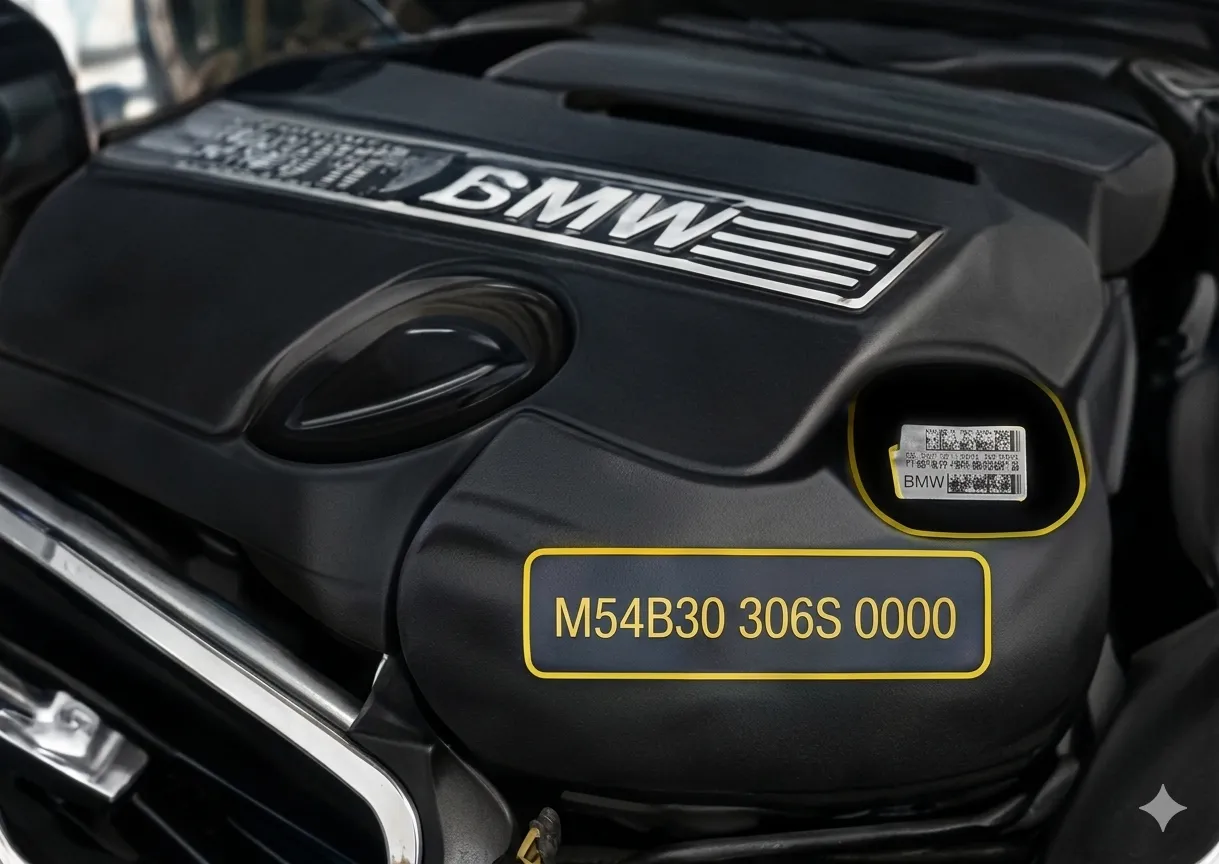
The powertrain type is visible in the Polestar mobile app under Vehicle Details, synced from the car's central system. Also check the V5C 'Propulsion Type' field.
Powertrain designation locations per Polestar Service Information. V5C field definitions from DVLA Guide to Vehicle Registration. VIN structure compliant with EU Regulation (EC) No 715/2007, Article 7.
A technical breakdown of Polestar's core powertrain systems including dual-motor AWD, battery thermal management, regenerative braking and Performance software with documented reliability impacts. All data sourced from Polestar Technical Documentation and EU Regulation (EC) No 715/2007
Polestar's dual-motor system uses independent front and rear electric motors to deliver instantaneous all-wheel drive traction, torque vectoring, and enhanced performance without mechanical differentials.
Each motor is controlled by a dedicated inverter. The vehicle control unit dynamically allocates torque between axles based on grip, driver input, and efficiency targets. Regenerative braking can be applied independently to each motor for optimised energy recovery.

Polestar 2 (2020)
300 kW combined, fixed torque split
Polestar 3 (2024)
360 kW, active torque vectoring
Select Dual Motor variants
+20 kW, sharpened response
Software calibration updates
Early OTA updates refined torque delivery
Inverter thermal management
Monitored via battery thermal system
Motor bearing wear
Long-term reliability data still emerging
Polestar's dual-motor system uses independent front and rear electric motors to deliver instantaneous all-wheel drive traction, torque vectoring, and enhanced performance without mechanical differentials.
Each motor is controlled by a dedicated inverter. The vehicle control unit dynamically allocates torque between axles based on grip, driver input, and efficiency targets. Regenerative braking can be applied independently to each motor for optimised energy recovery.
Polestar 2 (2020)
300 kW combined, fixed torque split
Polestar 3 (2024)
360 kW, active torque vectoring
Select Dual Motor variants
+20 kW, sharpened response
Software calibration updates
Early OTA updates refined torque delivery
Inverter thermal management
Monitored via battery thermal system
Motor bearing wear
Long-term reliability data still emerging
All technical descriptions and performance data sourced from Polestar Product Technical Reports, Polestar Service Information, and EU Regulation (EC) No 715/2007 on vehicle type-approval.
Track BMW engineering across decades
Polestar's debut powertrain: high-performance PHEV establishing the brand's performance-electric identity.

2.0L turbo+supercharged petrol + rear electric motor. 303 kW combined. Polestar 1 only. First Polestar-badged production powertrain.
Powertrain production years verified via Polestar Product Reports and EU type-approval records
Authoritative data on Polestar's global powertrain integration, assembly operations, and strategic partnerships. All figures sourced from Polestar Annual Reports, Sustainability Reports, and EU industrial compliance records.
Polestar vehicles are assembled at partner facilities with powertrain integration from specialised suppliers.


Polestar transitioned to 100% BEV production from 2022. Note the rapid scaling aligned with EU electrification targets and Geely Group investment.
Note: Polestar ceased PHEV production after Polestar 1 (2021). All subsequent models are battery-electric, aligned with EU 2035 ICE phase-out roadmap.
Strategic collaboration within Geely Holding Group. Polestar leverages Volvo's CMA/SPA platforms and T8 PHEV technology while developing independent BEV architecture and software.
T8 PHEV powertrain, CMA vehicle architecture
Polestar 1 assembled at Volvo's Chengdu facility
Polestar Annual Report 2022
Transition reflects Polestar's all-electric strategy and EU emissions policy.
This aligns with Polestar's sustainability strategy and Commission Regulation (EU) 2017/1151 (WLTP/RDE).
Powertrain production years verified via Polestar Product Reports and EU type-approval records
The most common questions about engine codes, what they mean, how to find them and how this database works
Polestar uses descriptive powertrain designations rather than traditional engine codes. Examples: 'Dual Motor' indicates two electric motors (AWD), 'Long Range Single Motor' denotes a single rear-mounted motor with larger battery, 'T8' identifies the plug-in hybrid system derived from Volvo. These designations determine specifications, compatible components, and charging capabilities. Source: Polestar Technical Documentation
The Polestar 1 (2020–2021) was Polestar's only PHEV, using Volvo's T8 powertrain. Current models (Polestar 2, 3, 4, 5) are fully electric. Polestar has confirmed an all-BEV strategy moving forward, aligned with parent company Geely's electrification roadmap and EU 2035 ICE phase-out targets. Source: Polestar Sustainability Report 2023
Polestar's dual-motor BEV powertrains benefit from simplified electric architecture with fewer moving parts than ICE or PHEV systems. Early production Polestar 2 units experienced software-related infotainment issues, largely resolved via OTA updates. Battery degradation data remains limited due to the brand's recent launch. Source: Polestar Service Information
Yes. All Polestar BEV and PHEV models feature adjustable regenerative braking with one-pedal driving capability. Settings range from 'Off' to 'Standard' to 'One-Pedal' mode, configurable via the central display. Regeneration recovers kinetic energy to recharge the battery during deceleration, extending real-world range.
Yes. Polestar delivers powertrain and performance optimisations via over-the-air (OTA) software updates. The optional 'Performance software' package (available for select Dual Motor variants) increases power output by up to 20 kW and sharpens throttle response. Updates are installed automatically when the vehicle is parked and connected to Wi-Fi.
Access the central Android Automotive OS display. Navigate to Settings > System > Vehicle Information. The powertrain designation (e.g., 'Dual Motor', 'Long Range Single Motor'), software version, and VIN are displayed. Physical VIN plates are located on the lower windscreen and driver's door jamb.
On the UK V5C registration document, check the 'Fuel Type' or 'Propulsion Type' field. Polestar BEV models show 'Electric'; the Polestar 1 PHEV shows 'Petrol/Electric'. The VIN (field E) can be decoded via Polestar's official portal or a Polestar-specific VIN decoder for detailed powertrain specifications.
Polestar batteries (supplied by CATL, LG Energy Solution, or Northvolt depending on model/year) feature liquid thermal management and robust battery management systems. Polestar offers an 8-year/160,000 km battery warranty. Early Polestar 2 units experienced rare battery contactor issues, addressed via service campaigns. Real-world degradation data is still emerging due to the brand's recent market entry.
Single Motor: One rear-mounted electric motor, front-wheel drive, lower power output (~170 kW), longer range. Dual Motor: Two motors (front + rear), all-wheel drive, higher power output (~300 kW), enhanced traction and performance. Both use the same battery options; choice depends on driving priorities (efficiency vs performance).
Yes. The powertrain designation (e.g., 'Dual Motor Long Range') combined with VIN is required for ordering correct components (motors, inverters, charging modules). Using VIN alone may not specify motor configuration. Always verify with the vehicle's central display or Polestar service documentation.
Yes. High-performance variants (Dual Motor with Performance software) or models with advanced driver aids may influence premiums. Insurers assess power output, repair costs, and safety features. Always declare the exact powertrain configuration and any software upgrades when obtaining quotes.
Polestar batteries are designed for 8+ years or 160,000 km under normal use, with warranty coverage for capacity retention above 70%. Real-world data suggests minimal degradation with proper thermal management and charging habits (avoiding frequent DC fast-charging to 100%). Battery replacement costs remain high but are covered under warranty for defects.
Electric motors do not use timing components like ICE engines, so the concept of 'interference' does not apply. Polestar motors are sealed units with minimal service requirements. Failure modes typically involve inverter electronics or bearing wear at very high mileage, not mechanical timing issues.
Polestar 3 and Polestar 4 feature 800V electrical architecture, enabling charging speeds up to 250 kW DC. Polestar 2 (pre-2024 refresh) uses 400V architecture with max 150 kW DC charging. The 2024+ Polestar 2 Long Range variants may support higher voltages; verify via VIN decoder or Polestar configurator.
Powertrain swaps are not feasible or permitted. Polestar vehicles are engineered as integrated systems; changing motor configuration, battery capacity, or software calibration requires OEM-level re-certification. Any modifications may void warranty, invalidate insurance, and breach UK type-approval regulations. Always use OEM-specification components.
Yes. The Polestar 1 used Volvo's T8 plug-in hybrid powertrain (2.0L turbocharged + supercharged petrol engine + rear electric motor), producing 303 kW combined. Components, service procedures, and emissions compliance align with Volvo XC90 T8 and S90 T8. Polestar-specific software calibrations optimise performance delivery.
Performance software (available for select Dual Motor variants) increases power by ~20 kW, sharpens throttle response, and adjusts chassis tuning. It does not affect battery capacity or range significantly. Installation is via OTA update. Consider if you prioritise acceleration; skip if efficiency or warranty simplicity is preferred. Reversible via Polestar service.
Polestar VINs follow ISO 3779 standard. Positions 4–8 indicate vehicle line, restraint system, and powertrain. Example: YS4... indicates Polestar 2; specific codes denote motor configuration. Use Polestar's official VIN decoder or contact Polestar Customer Care for precise interpretation. Generic decoders may not reflect Polestar-specific codes.
Polestar's powertrain evolution focuses on software refinement and charging speed improvements. Early Polestar 2 units (2020–2021) received OTA updates addressing infotainment stability. Newer models (2024+) feature updated battery chemistry, faster charging, and improved thermal management. All generations benefit from Polestar's proactive software support.
Use Polestar's official website configurator, Polestar Service Information portal (dealer access), or EU type-approval documents via the European Vehicle Market Statistics database. Public technical summaries are also available in Polestar press materials and sustainability reports.
The EngineCode.uk is an independent technical resource dedicated to providing accurate, non-commercial engine data for BMW and related powertrains. This section outlines our sources, disclaimers, and compliance policies in accordance with Google's E-E-A-T (Experience, Expertise, Authoritativeness, Trustworthiness) guidelines.
EngineCode.uk is operated by Engine Finders UK Ltd as a standalone reference platform. We are not affiliated with Polestar, Volvo Car Group, Geely Holding Group, or any other manufacturer or trademark holder. All content is created independently for educational and diagnostic purposes only. The Polestar name, logo, and powertrain designations are trademarks of Polestar Automotive Holding UK Limited.
All powertrain and vehicle images used on this site are for technical identification and educational purposes under fair use principles. If you believe any image infringes your copyright, please contact us at copyrights@enginecode.uk. We will review the claim promptly and remove or license the content as required.
EngineCode.uk complies with the UK General Data Protection Regulation (UK GDPR) and the EU GDPR. We do not collect personal data through this platform unless explicitly provided (e.g., contact forms).
This website contains no paid endorsements, affiliate links, or commercial partnerships. We do not sell parts, services, or recommendations. Our mission is to provide accurate, verifiable, and neutral technical data to support vehicle owners, restorers, and technicians across the UK and Europe.
Information accurate as of 2025