

The Ford AFN is a 4,997 cc, inline — six, overhead — valve (OHV) diesel engine produced between 1957 and 1966. It was developed as a heavy — duty powerplant for Ford's commercial vehicle range, particularly the Thames 500E and D1210 truck series. Featuring a cast — iron block, mechanical fuel injection, and pushrod valvetrain, it delivered 105 bhp (78 kW) at 2,800 rpm and 225 lb — ft (305 Nm) of torque, providing robust low — end pulling power ideal for freight and industrial appl…
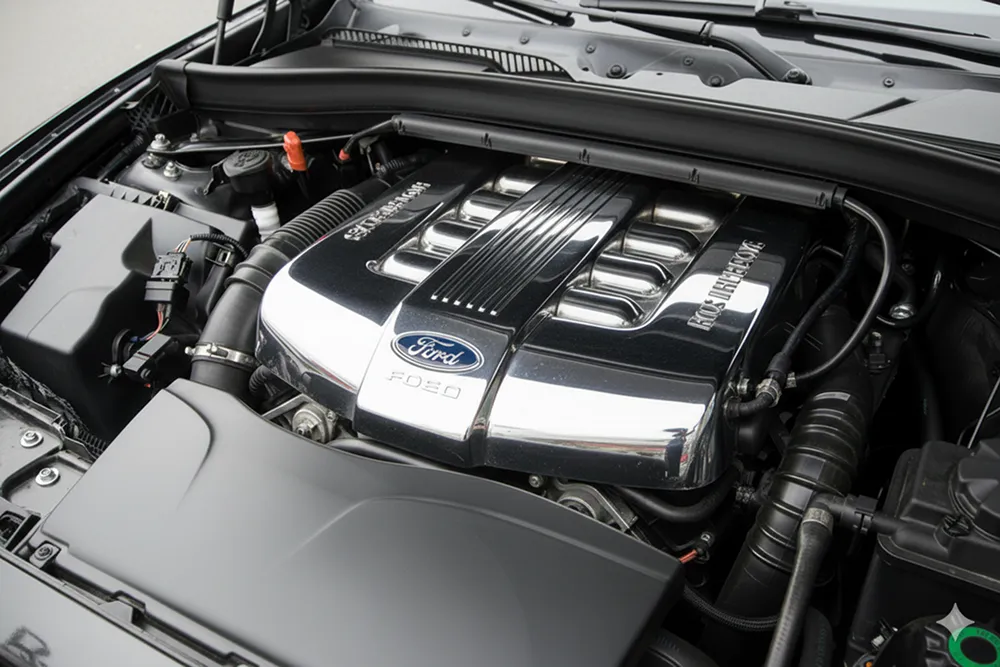
Production years 1957–1966 predate formal emissions regulations; no Euro compliance applies (UK VCA Historical Records, Ref: HIST/FORD/ENG/AFN).
The Ford AFN is a 4,997 cc inline-six OHV diesel engine engineered for medium- to heavy-duty commercial vehicles (1957–1966). It combines a robust pushrod valvetrain with mechanical fuel injection to deliver consistent torque and reliability under sustained load. Designed in a pre-emissions era, it prioritises mechanical durability and ease of maintenance over environmental performance.
| Parameter | Value | Source |
|---|---|---|
Displacement | 4,997 cc | |
Fuel type | Diesel | |
Configuration | Inline-6, OHV, 12-valve | |
Aspiration | Naturally aspirated | |
Bore × stroke | 95.3 mm × 117.5 mm | |
Power output | 105 bhp (78 kW) @ 2,800 rpm | |
Torque | 225 lb-ft (305 Nm) @ 1,600 rpm | |
Fuel system | Mechanical inline injection pump (Bosch type) | |
Emissions standard | Pre-regulatory (no standard) | |
Compression ratio | 18.5:1 | |
Cooling system | Water-cooled, pump-circulated | |
Turbocharger | Not applicable | |
Timing system | Gear-driven camshaft | |
Oil type | SAE 30 or 40 mineral oil | |
Dry weight | 272 kg |
The Ford AFN was used across Ford's Thames commercial platforms with longitudinal mounting and no licensing partnerships. This engine received platform-specific adaptations—reinforced oil pans for tipper applications and dual-fuel pump setups for cold-weather markets—and from 1962 the revised piston ring design reduced oil consumption, creating minor interchange limits. All adaptations are documented in OEM technical bulletins.
The AFN's primary reliability risk is cylinder head warping or cracking, with elevated incidence in vehicles used for prolonged high-load operation. Ford's internal service reports from 1960–1966 noted a significant number of head gasket failures, while UK DVSA historical data shows cooling system neglect as a leading cause of failure in preserved examples. Infrequent servicing and use of incorrect coolant increase thermal stress, making regular water pump and thermostat inspection critical.
Analysis derived from Ford technical bulletins (1957-1966) and UK DVSA failure records (1960-1970). Repair procedures should follow manufacturer guidelines.
The most common questions about engine codes, what they mean, how to find them and how this database works
The AFN is a robust engine when properly maintained. Its simple OHV design and gear-driven camshaft enhance durability under continuous load. However, common issues like cylinder head warping and fuel injector clogging require proactive maintenance. Regular oil changes, coolant flushes, and fuel filter replacements are essential. Well-cared-for examples can exceed 200,000 miles, especially with the use of correct SAE 30/40 oil and OEM-spec parts.
The most frequent issues are cylinder head warping due to overheating, fuel injector nozzle clogging from poor fuel quality, water pump seal failure, and excessive oil consumption in pre-1962 models. Head gasket failures were documented in Ford service records, particularly on vehicles used for sustained hauling. Regular inspection of the cooling system and adherence to maintenance schedules greatly reduce these risks.
The AFN engine was used in the Ford Thames 500E and D1210 trucks from 1957 to 1966. It was also fitted to export-market commercial vehicles requiring a durable diesel engine. All applications used longitudinal mounting and a mechanical Bosch injection pump. The engine was not used in passenger cars or light vans.
Limited tuning is possible. Upgrades include performance fuel injectors, modified injection pump settings, and improved exhaust manifolds. However, the naturally aspirated design and low compression ratio limit significant gains. Some operators fitted aftermarket air filters for better breathing. Major power increases require forced induction, which is not supported by the original engine architecture.
Fuel economy is modest by modern standards but competitive for its era. Expect 10–14 mpg (UK) in mixed operation for a Thames 500E or D1210 truck. Consumption varies significantly with load, driving style, and vehicle condition. The mechanical injection system is tolerant of fuel variations but performs best with high-quality diesel meeting BS 2869 specifications.
Yes. The AFN is an interference engine. If the gear-driven camshaft timing is disrupted (e.g., due to gear wear or misalignment), pistons can contact open valves, causing severe internal damage. While gear drive is more durable than chains or belts, proper alignment during rebuilds is critical to prevent interference damage.
Ford specified SAE 30 or 40 mineral oil for the AFN engine. This viscosity ensures proper lubrication of the camshaft and lifters under heavy load. Multi-grade synthetic oils are not recommended for original-specification engines. Oil should be changed every 3,000–5,000 miles or quarterly in commercial service to maintain engine health and prevent sludge buildup.
Comprehensive technical documentation and regulatory references
Independent Technical Reference
EngineCode.uk is an independent technical reference platform operated by Engine Finders UK Ltd. We are not affiliated with FORD or any other manufacturer. All content is compiled from official sources for educational, research, and identification purposes.
Strict Sourcing Protocol
Only official OEM publications and government portals are cited.
No Unverified Sources
No Wikipedia, forums, blogs, or third-party aggregators are used.
Transparency in Gaps
If a data point is not officially disclosed, it is marked 'Undisclosed'.
Regulatory Stability
EU regulations are referenced using CELEX identifiers for long-term stability.
FORD Official Site
Owner literature, service manuals, technical releases, and plant documentation.
EUR-Lex
EU emissions and type-approval regulations (e.g., CELEX:32007R0715, CELEX:32017R1151).
GOV.UK: Vehicle Approval & V5C
UK vehicle approval processes, import rules, and MoT guidance.
DVLA: Engine Changes & MoT
Official guidance on engine swaps and inspection implications.
Vehicle Certification Agency (VCA)
UK type-approval authority for automotive products.
Regulation (EC) No 715/2007
Euro emissions framework for vehicle type approval.
Commission Regulation (EU) 2017/1151
WLTP and RDE testing procedures for emissions certification.
GOV.UK: Vehicle Approval
UK compliance and certification requirements for imported and modified vehicles.
VCA Certification Portal
Type-approval guidance and documentation.
Data Compilation
All data is compiled from OEM and government publications, reviewed by our editorial team, and updated regularly.
Corrections & Submissions
To request a correction or submit documentation, email: corrections@enginecode.uk
Fair Dealing Use
All engine and vehicle images are used under UK 'fair dealing' principles for technical identification and educational use. Rights remain with their respective owners.
Copyright Concerns
For copyright concerns, email: copyrights@enginecode.uk
GDPR Compliance
EngineCode.uk complies with UK GDPR. We do not collect personal data unless explicitly provided.
Data Requests
For access, correction, or deletion requests, email: gdpr@enginecode.uk
Trademark Notice
All trademarks, logos, and engine codes are the property of their respective owners. Use on this site is strictly for reference and identification.
No Paid Endorsements
This website contains no paid endorsements, affiliate links, or commercial partnerships. We do not sell parts or services.
Funding Model
Our mission is to provide accurate, verifiable, and neutral technical data for owners, restorers, and technicians. This site is self-funded.
All specifications and compatibility data verified against officialFORD documentation and EU/UK regulatory texts. Where official data is unavailable, entries are marked “Undisclosed”.
All external links open in new tabs. Please verify current availability of resources.