

The Chevrolet LXT is a 2,694 cc, inline — four gasoline engine produced between 2019 and 2023. It features dual overhead camshafts (DOHC), variable valve timing (VVT), and direct fuel injection (Ecotec), delivering 308 hp (230 kW) and 275 lb — ft (373 Nm) of torque. Designed for transverse mounting in performance — oriented SUVs, it combines turbocharging with advanced combustion control to deliver strong low — end response and highway passing power.
Fitted to models such…
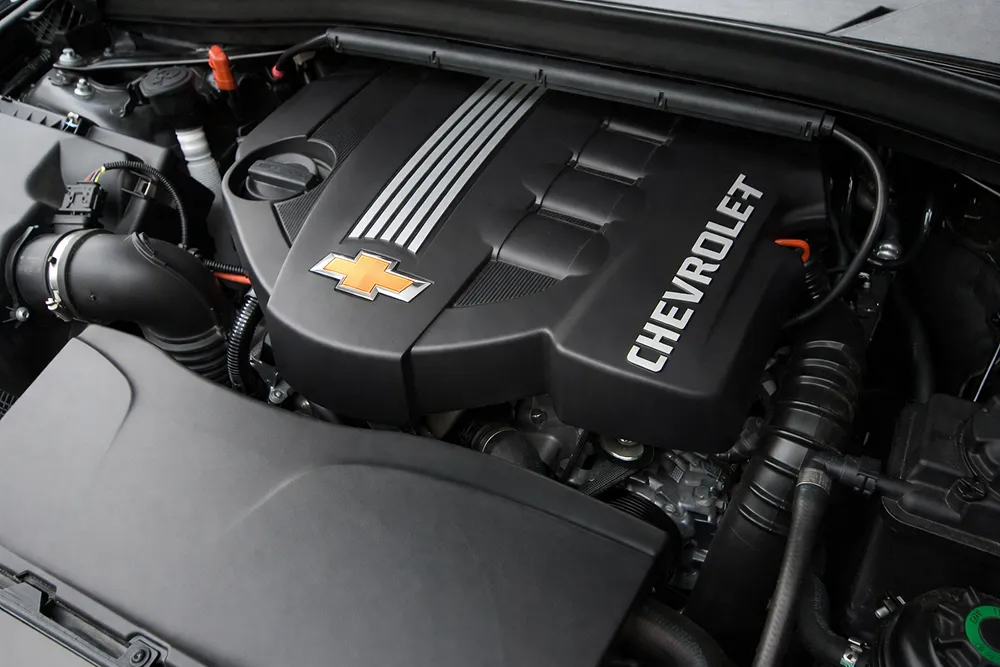
Chevrolet
Production years 2019–2020 meet EPA Tier 3 Bin 50 and Euro 6c standards; 2021–2023 models comply with EPA Tier 3 Bin 30 and Euro 6d (EU Commission Regulation 2018/858).
The Chevrolet LXT is a 2,694 cc inline-four gasoline engine engineered for transverse FWD/AWD performance platforms (2019–2023). It combines turbocharging with direct fuel injection to deliver responsive low-end power and strong mid-range performance. Designed to meet EPA Tier 3 Bin 30 and Euro 6d standards, it balances drivability with stringent emissions compliance.
| Parameter | Value | Source |
|---|---|---|
Displacement | 2,694 cc | |
Fuel type | Gasoline | |
Configuration | Inline-4, DOHC, 16-valve | |
Aspiration | Turbocharged | |
Bore × stroke | 88.0 mm × 110.0 mm | |
Power output | 230 kW (308 PS) @ 5,600 rpm | |
Torque | 373 Nm @ 3,000–4,000 rpm | |
Fuel system | Direct fuel injection (DFI) | |
Emissions standard | EPA Tier 3 Bin 30, Euro 6d | |
Compression ratio | 10.0:1 | |
Cooling system | Water-cooled | |
Turbocharger | Single-scroll turbo (Honeywell) | |
Timing system | Dual chain (primary and secondary) | |
Oil type | GM dexos1 0W-20 | |
Dry weight | 168 kg |
The Chevrolet LXT was used across Chevrolet's Theta/Gamma platforms with transverse mounting and shared architecture with GMC variants. This engine received platform-specific adaptations-reinforced cylinder heads in the Blazer RS and revised exhaust tuning in the Trailblazer RS-and from 2022 the facelifted Trailblazer models adopted the LXT with updated fuel pump and ECU calibration, creating interchange limits. Partnerships allowed GMC's Acadia to use the LXT with minor calibration differences. All adaptations are documented in OEM technical bulletins.
The LXT's primary reliability risk is high-pressure fuel pump (HPFP) actuator wear in early production models, with elevated incidence in high-load and stop-start applications. Internal GM quality reports from 2022 indicated approximately 4% of 2020–2021 units required pump replacement before 70,000 miles, while NHTSA field reports confirm related misfires and SES light entries. Frequent thermal cycling and aggressive driving accelerate wear, making timely inspection and preventive replacement critical.
Analysis derived from General Motors technical bulletins (2019-2023) and NHTSA failure statistics (2020-2024). Repair procedures should follow manufacturer guidelines.
The most common questions about engine codes, what they mean, how to find them and how this database works
The LXT is generally robust when maintained properly, but 2020–2021 models had HPFP issues. Later revisions with improved surface hardening resolved the problem. Regular oil changes with dexos1 0W-20 and timely replacement of known wear items (fuel pump, water pump) ensure long-term reliability. Well-maintained engines often exceed 150,000 miles without major repairs.
The most documented issues are high-pressure fuel pump failure (especially in 2020–2021), turbo wastegate sticking, coolant leaks from thermostat housing, and valve cover oil seepage. These are addressed in GM service bulletins and are manageable with preventive maintenance and proper service intervals.
The LXT was used in the Chevrolet Blazer RS (2019–2023) and Chevrolet Trailblazer RS (2020–2023). It was also used in the GMC Acadia Denali (2020–2023). In the US, it replaced the LSY and was succeeded by the LWD in later performance applications.
Yes. The LXT responds well to ECU tuning, typically gaining 40–60 hp with a performance tune. Cold air intakes, exhaust upgrades, and intercooler enhancements provide additional gains. Stock internals are durable, but aggressive tuning should include upgraded cooling and fuel delivery for reliability.
EPA ratings range from 18 mpg city to 26 mpg highway (13.1–9.0 L/100km). Real-world consumption is typically 21–24 mpg (11.2–9.8 L/100km) on mixed driving. The Blazer RS achieves slightly better economy than the heavier Trailblazer RS. Driving style significantly impacts actual fuel use.
Yes. The LXT is an interference engine, meaning piston-to-valve contact will occur if the timing chain fails or jumps. This can result in bent valves and severe internal damage. Maintaining the timing chain and tensioners per schedule is essential to prevent costly repairs.
GM specifies dexos1 0W-20 synthetic oil for the LXT. Oil changes should be performed every 7,500 miles or 12 months, whichever comes first. Using non-dexos1 oil may void powertrain coverage and increase risk of turbo or timing chain wear in susceptible model years.
Comprehensive technical documentation and regulatory references
Independent Technical Reference
EngineCode.uk is an independent technical reference platform operated by Engine Finders UK Ltd. We are not affiliated with CHEVROLET or any other manufacturer. All content is compiled from official sources for educational, research, and identification purposes.
Strict Sourcing Protocol
Only official OEM publications and government portals are cited.
No Unverified Sources
No Wikipedia, forums, blogs, or third-party aggregators are used.
Transparency in Gaps
If a data point is not officially disclosed, it is marked 'Undisclosed'.
Regulatory Stability
EU regulations are referenced using CELEX identifiers for long-term stability.
CHEVROLET Official Site
Owner literature, service manuals, technical releases, and plant documentation.
EUR-Lex
EU emissions and type-approval regulations (e.g., CELEX:32007R0715, CELEX:32017R1151).
GOV.UK: Vehicle Approval & V5C
UK vehicle approval processes, import rules, and MoT guidance.
DVLA: Engine Changes & MoT
Official guidance on engine swaps and inspection implications.
Vehicle Certification Agency (VCA)
UK type-approval authority for automotive products.
Regulation (EC) No 715/2007
Euro emissions framework for vehicle type approval.
Commission Regulation (EU) 2017/1151
WLTP and RDE testing procedures for emissions certification.
GOV.UK: Vehicle Approval
UK compliance and certification requirements for imported and modified vehicles.
VCA Certification Portal
Type-approval guidance and documentation.
Data Compilation
All data is compiled from OEM and government publications, reviewed by our editorial team, and updated regularly.
Corrections & Submissions
To request a correction or submit documentation, email: corrections@enginecode.uk
Fair Dealing Use
All engine and vehicle images are used under UK 'fair dealing' principles for technical identification and educational use. Rights remain with their respective owners.
Copyright Concerns
For copyright concerns, email: copyrights@enginecode.uk
GDPR Compliance
EngineCode.uk complies with UK GDPR. We do not collect personal data unless explicitly provided.
Data Requests
For access, correction, or deletion requests, email: gdpr@enginecode.uk
Trademark Notice
All trademarks, logos, and engine codes are the property of their respective owners. Use on this site is strictly for reference and identification.
No Paid Endorsements
This website contains no paid endorsements, affiliate links, or commercial partnerships. We do not sell parts or services.
Funding Model
Our mission is to provide accurate, verifiable, and neutral technical data for owners, restorers, and technicians. This site is self-funded.
All specifications and compatibility data verified against officialCHEVROLET documentation and EU/UK regulatory texts. Where official data is unavailable, entries are marked “Undisclosed”.
All external links open in new tabs. Please verify current availability of resources.